
Best GPS fleet tracking small business operations depend on can make the difference between profitable growth and spiraling overhead costs. Small business owners managing fleets of construction equipment, service vehicles, delivery trucks, or rental assets face constant pressure to maximize utilization while minimizing fuel waste, unauthorized use, and equipment theft. Traditional approaches to fleet oversight—manual logs, periodic inspections, and trust-based systems—leave critical gaps that drain resources and create liability exposure.

The challenge intensifies when small business owners consider GPS tracking solutions designed for enterprise-level operations. Complex platforms requiring professional installation, monthly fees per vehicle, and dedicated staff to monitor real-time dashboards simply don’t align with the operational realities of businesses running lean teams. The best GPS fleet tracking small business managers choose delivers visibility and control without the complexity, subscription burden, or installation headaches that accompany conventional systems.
Passive GPS tracking technology has emerged as the practical alternative, offering long-term battery performance and straightforward deployment that fits how small businesses actually operate. Rather than continuous real-time monitoring that drains batteries within days and requires hardwiring into vehicle electrical systems, passive tracking collects location data over extended periods and uploads on demand, enabling business owners to verify equipment location, detect unauthorized movement, and recover stolen assets without ongoing operational overhead.
Why Small Business Fleet Tracking Differs from Enterprise Solutions
Small businesses operate under fundamentally different constraints than large corporations when implementing fleet tracking technology. Enterprise fleet management systems assume dedicated IT staff, substantial upfront capital budgets, and personnel assigned specifically to monitor tracking dashboards throughout business hours. These platforms prioritize granular real-time data—second-by-second location updates, engine diagnostics, driver behavior scoring—that generate value for organizations managing hundreds of vehicles across multiple regions.
The best GPS fleet tracking small business owners implement serves different priorities entirely. A construction company with twelve pieces of equipment spread across three job sites doesn’t need continuous monitoring of idle time and acceleration patterns. That business needs to confirm equipment hasn’t been moved to unauthorized locations overnight, verify assets are at the correct job site each morning, and locate stolen machinery before it disappears beyond recovery. The tracking solution must work without requiring an office manager to log into a platform multiple times daily or assign someone to interpret complex analytics reports.
Installation requirements create another critical distinction. Enterprise systems typically involve professional installation, hardwiring trackers into vehicle electrical systems, and configuration by certified technicians. Small businesses cannot afford to take vehicles out of service for installation appointments or pay per-unit installation fees that multiply across even a modest fleet. Passive GPS trackers that mount magnetically or install in minutes without tools eliminate this barrier entirely, allowing business owners or field supervisors to deploy tracking across their entire fleet during a single afternoon.
Cost structures further separate small business needs from enterprise solutions. Subscription models charging monthly fees per vehicle quickly become prohibitive. A business tracking eight work trucks and four trailers faces ongoing costs that compound month after month, turning what should be a one-time asset protection investment into a perpetual operational expense. The best GPS fleet tracking small business budgets can sustain avoids recurring fees in favor of upfront device costs that deliver years of service without additional payments.
Extended Battery Life as a Non-Negotiable Requirement
Battery performance separates practical small business fleet tracking from solutions that create more work than they eliminate. Real-time GPS trackers that broadcast continuous location updates exhaust batteries within three to seven days, forcing business owners into endless recharge cycles. For a small business managing a dozen vehicles or pieces of equipment, weekly battery maintenance becomes a significant operational burden that undermines the entire purpose of automated tracking.
The mathematics of battery maintenance reveal why short battery life proves unworkable for small business applications. A fleet of ten vehicles with trackers requiring weekly recharging demands 520 battery service events annually. Each event requires locating the vehicle, accessing the tracker, removing it for charging, reinstalling it after charging, and verifying proper function. Even assuming just fifteen minutes per service event, this totals 130 hours of labor annually—more than three full work weeks devoted entirely to battery management rather than revenue-generating activities.
Passive GPS tracking systems with 90-day battery life transform this equation entirely. That same ten-vehicle fleet requires just 40 battery services annually, reducing maintenance labor by 92 percent. More importantly, quarterly battery service aligns naturally with other routine maintenance schedules, allowing tracker battery replacement to occur during oil changes, inspections, or seasonal service appointments rather than demanding dedicated attention.
Extended battery performance also eliminates the single greatest failure mode in fleet tracking: dead trackers that provide no protection when theft occurs. Real-time systems that die after several days leave vehicles unprotected whenever battery service gets delayed by busy schedules, staff turnover, or simple oversight. A 90-day battery life creates a wide margin of safety, ensuring tracking remains operational even when service schedules slip by a week or two. For small business owners juggling multiple responsibilities, this reliability proves essential.
Theft Prevention and Recovery Capabilities for Business Assets

Equipment theft represents an existential threat to small businesses operating with limited capital reserves. Unlike large corporations that absorb theft losses through insurance and depreciation schedules, a small construction company losing a $45,000 excavator or a landscaping business losing three trailers loaded with equipment faces immediate cash flow crisis and potential inability to service existing contracts. The best GPS fleet tracking small business owners deploy must deliver genuine theft recovery capability, not just theft documentation for insurance claims.
Passive GPS tracking provides recovery-focused theft protection by maintaining accurate location data without the battery vulnerabilities that leave real-time trackers dead when thieves sit on stolen equipment for several days before moving it. Professional equipment thieves understand that real-time trackers broadcast for only a few days before batteries die, so they simply park stolen assets in storage facilities or remote locations until trackers go silent. Passive trackers with 90-day battery life remain operational throughout this waiting period, enabling location recovery weeks after the initial theft.
The covert nature of properly installed passive trackers creates another advantage for theft recovery. Real-time systems that hardwire into vehicle electrical systems often connect at standard locations that experienced thieves check and disable. Magnetic-mount passive trackers can be placed in unexpected locations—inside equipment compartments, beneath truck beds, inside trailer frames—where thieves won’t find them during quick inspections. This concealment proves critical during the first 48 hours after theft, when recovered assets are most likely to remain intact and undamaged.
Geofence capabilities extend theft prevention beyond recovery by alerting business owners when equipment moves outside designated areas. A construction company can establish geofences around active job sites and storage yards, receiving immediate notification when equipment leaves authorized locations. For small businesses, these alerts often reveal unauthorized use by employees or subcontractors before actual theft occurs, enabling intervention that prevents both asset loss and the uncomfortable personnel confrontations that follow proven theft.
Asset Utilization Insights That Improve Profitability
Small business profitability depends heavily on maximizing return from capital assets, yet many business owners operate with incomplete visibility into how equipment and vehicles are actually being used. The best GPS fleet tracking small business managers implement reveals utilization patterns that drive better purchasing decisions, identify underperforming assets, and optimize deployment across job sites or service routes.
Equipment rental businesses face particularly acute utilization challenges. Rental inventory that sits idle generates zero revenue while still incurring storage costs, insurance, and depreciation. GPS tracking data showing which equipment categories experience high utilization versus frequent idle time informs purchasing decisions, helping businesses invest capital in high-demand assets rather than accumulating underutilized inventory. A rental company discovering that compact excavators rent constantly while larger models sit idle for weeks can adjust fleet composition accordingly, improving overall return on invested capital.
Service businesses routing vehicles to customer locations benefit from historical location data that reveals inefficient routing patterns. A plumbing company reviewing tracker data might discover that technicians regularly crisscross the service area rather than clustering appointments geographically, wasting fuel and reducing billable hours. While real-time tracking theoretically enables dynamic routing optimization, small businesses rarely have dispatch staff monitoring vehicles continuously. Passive tracking provides the utilization insights needed to improve routing during weekly scheduling without requiring real-time monitoring infrastructure.
Construction companies managing equipment across multiple simultaneous projects often lack clear visibility into where specific assets are deployed. GPS tracking eliminates the common scenario where project managers rent equipment that’s actually sitting idle at another company job site simply because no one knew the equipment was available. The resulting rental cost savings frequently exceed the entire cost of implementing fleet tracking within the first few months of deployment.
Installation Simplicity and Deployment Speed
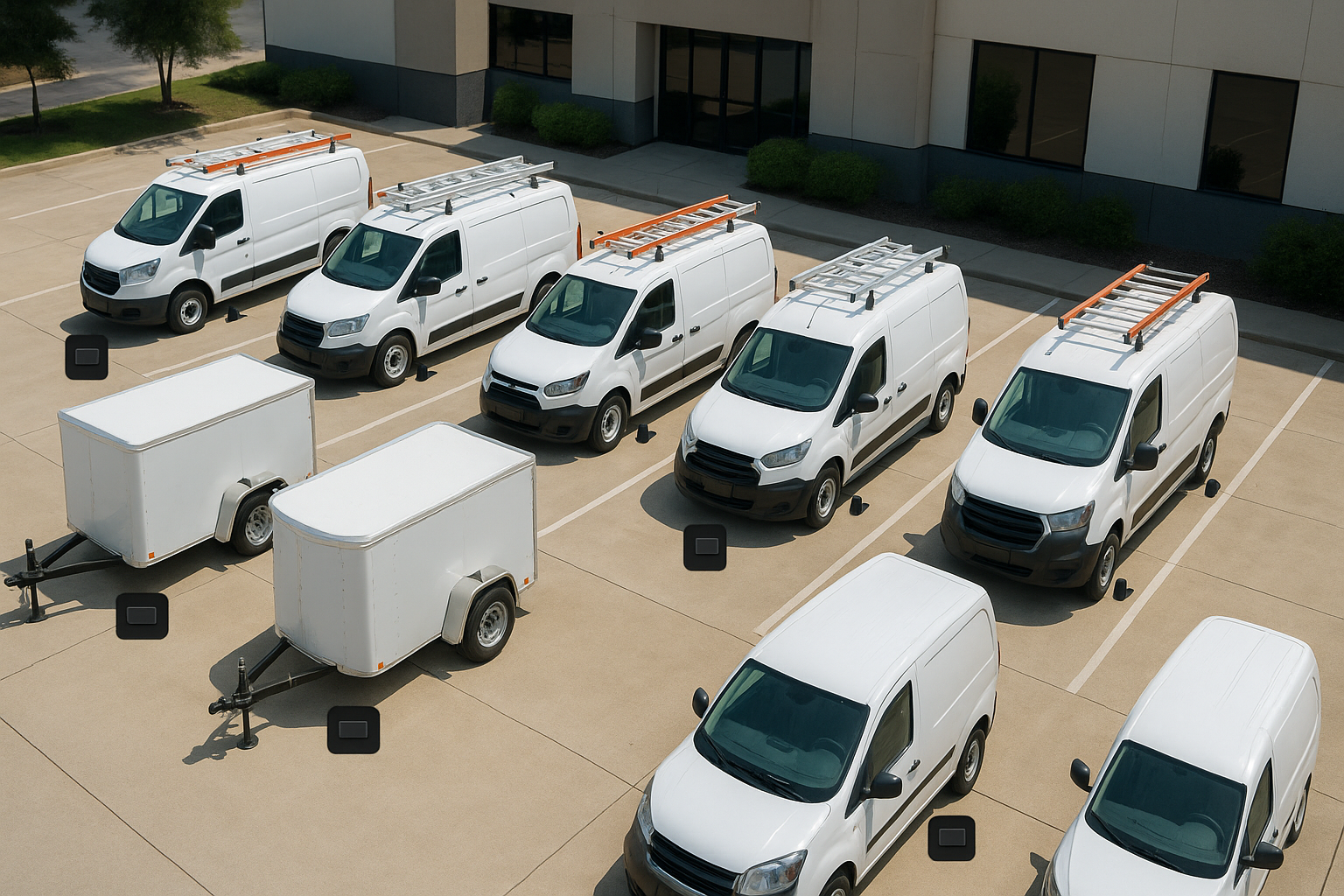
Implementation friction kills more small business technology initiatives than any other factor. Solutions requiring professional installation, complex configuration, or extended deployment timelines never get fully implemented because business owners cannot afford to pull vehicles from service or allocate staff time to lengthy setup processes. The best GPS fleet tracking small business operators choose must enable same-day deployment across the entire fleet without specialized knowledge or tools.
Passive GPS trackers designed for small business use install in minutes per vehicle using magnetic mounting or simple concealment in vehicle compartments. A business owner receiving ten trackers can deploy the entire fleet tracking system in a single afternoon, placing devices on vehicles during routine end-of-day parking or while equipment sits at a job site. No appointment scheduling with installation technicians, no coordination of vehicle availability, no waiting weeks for professional installers to work through a deployment queue.
The absence of hardwiring requirements eliminates both installation complexity and the permanent modifications that complicate eventual vehicle resale or equipment disposal. Businesses that regularly turn over fleet vehicles every few years benefit particularly from tracking systems that transfer instantly from old vehicles to new ones without requiring reinstallation labor or leaving abandoned wiring in sold vehicles. A magnetic-mount tracker simply moves from the traded-in work truck to its replacement in seconds.
Configuration simplicity matters equally. Small business owners cannot invest hours learning complex software platforms or configuring detailed tracking parameters. Effective passive GPS systems enable basic setup through simple mobile apps or web portals, allowing users to name vehicles, set basic geofences, and access location data within minutes of activation. Advanced features can remain available for users who want deeper functionality, but core theft protection and location verification must work immediately without configuration complexity.
Total Cost of Ownership for Small Business Budgets
Budget constraints force small business owners to evaluate technology investments through total cost of ownership rather than focusing solely on upfront purchase price. The best GPS fleet tracking small business financial planning accommodates must deliver years of value without the recurring subscription fees that transform affordable initial costs into budget-draining long-term expenses.
Real-time GPS tracking platforms typically charge monthly subscriptions ranging from modest per-vehicle fees to substantial platform charges. A small business tracking ten vehicles might face subscription costs that accumulate to thousands of dollars annually, continuing indefinitely for as long as tracking remains active. Over a five-year period, these subscriptions often exceed the value of the tracking hardware itself multiple times over, creating a cost structure that becomes difficult to justify when business conditions tighten.
Passive GPS tracking systems avoid subscription dependency by operating on demand rather than broadcasting continuously. Without the infrastructure costs of maintaining real-time data networks and monitoring platforms, passive systems can deliver location data through standard cellular networks at costs absorbed into device pricing rather than pushed to customers through monthly billing. This structure aligns far better with small business cash flow realities, converting ongoing operational expenses into one-time capital investments that deliver value for years.
Hidden costs deserve equal attention when evaluating total ownership expenses. Installation labor, whether performed by professional technicians or internal staff, represents real cost that favors systems with simple deployment. Battery replacement costs multiply across fleet size and tracking duration, making battery longevity a significant economic factor. Support and troubleshooting costs—both the fees charged by vendors and the internal time spent resolving issues—add substantially to total cost for complex platforms that require ongoing attention.
The most economically efficient approach for small business fleet tracking combines upfront device costs with minimal installation labor, extended battery life, and elimination of recurring subscription fees. This structure enables accurate cost projection during budgeting, avoids the unpleasant surprises of escalating subscription fees, and ensures that tracking remains economically viable even during difficult business periods when cutting recurring expenses becomes necessary.
Practical Features Small Business Fleet Managers Actually Use
Feature bloat plagues GPS tracking platforms designed for enterprise customers, creating complexity that obscures the core functionality small businesses actually need. The best GPS fleet tracking small business owners implement focuses on practical capabilities that address real operational challenges rather than impressive feature lists that go unused because they require dedicated personnel to manage.
Location verification stands as the single most valuable feature for small business fleet tracking. Business owners need to quickly confirm where vehicles and equipment are currently located, whether verifying that a service truck arrived at a customer site, checking that construction equipment remains at the job site overnight, or confirming that a trailer is at the designated storage yard. This fundamental capability prevents disputes, enables quick response when equipment goes missing, and provides peace of mind without requiring continuous monitoring.
Movement alerts deliver immediate value by notifying owners when vehicles or equipment move unexpectedly. A landscaping company setting movement alerts for trailers parked at the business location overnight receives instant notification if someone hitches and moves a trailer, enabling immediate response that often prevents theft completion. Similarly, construction companies receive alerts when equipment moves outside business hours, revealing unauthorized use before it becomes a serious problem.
Historical location data helps small businesses understand utilization patterns and verify employee activity without intrusive real-time surveillance. A service business can review where vehicles traveled throughout the week, confirming service calls were completed and identifying routing inefficiencies. This historical approach provides accountability and optimization insights without requiring managers to watch real-time dashboards—a subtle but important distinction that respects employee autonomy while still providing business oversight.
Battery status monitoring prevents the primary failure mode of GPS tracking systems by alerting owners when batteries approach depletion. Rather than discovering a dead tracker when theft occurs, businesses receive advance warning that enables planned battery service during convenient maintenance windows. This proactive approach keeps tracking systems operational continuously without emergency interventions.
Geofencing capabilities enable small businesses to establish virtual boundaries around job sites, storage yards, and service territories, receiving alerts when vehicles or equipment cross these boundaries. A rental company can geofence customer locations, confirming rented equipment remains where it belongs. A construction company can geofence active project sites, detecting when equipment moves unexpectedly. These boundaries create automated monitoring without requiring active oversight.
Frequently Asked Questions About GPS Fleet Tracking for Small Business
How much does GPS fleet tracking cost for a small business?
GPS fleet tracking costs for small businesses vary significantly based on the tracking technology and pricing model. Real-time tracking systems typically charge monthly subscription fees per vehicle, which can accumulate to substantial annual costs for even modest fleets. Passive GPS tracking systems often use upfront device pricing without recurring subscriptions, making total cost of ownership more predictable and typically lower over multi-year periods. Small businesses should calculate total five-year costs including devices, installation labor, battery maintenance, and any subscription fees to accurately compare options.
What is the difference between passive and real-time GPS tracking?
Passive GPS tracking collects and stores location data over extended periods, uploading information on demand or at scheduled intervals, enabling 90-day battery life and eliminating subscription requirements. Real-time GPS tracking broadcasts location updates continuously, providing second-by-second vehicle monitoring but requiring frequent battery charging and typically demanding monthly subscription fees. For small businesses, passive tracking delivers essential theft recovery and location verification capabilities without the operational overhead and ongoing costs of real-time systems.
Can GPS trackers help recover stolen construction equipment?
GPS trackers significantly improve stolen equipment recovery rates by providing accurate location data that enables law enforcement to locate and retrieve stolen assets. Passive GPS trackers with extended battery life prove particularly effective because they remain operational for months after theft, even when thieves delay moving equipment to defeat short-battery real-time trackers. Covert installation in unexpected locations prevents thieves from finding and removing trackers during the critical first days after theft when recovery prospects are highest.
Do GPS fleet trackers require professional installation?
Installation requirements vary by tracker type. Real-time systems that hardwire into vehicle electrical systems typically require professional installation, taking vehicles out of service and incurring per-unit installation fees. Passive GPS trackers designed for small business use generally feature magnetic mounting or simple placement installation that business owners can complete in minutes without tools or technical knowledge. This installation simplicity enables same-day deployment across entire fleets without professional assistance or vehicle downtime.
How long do GPS tracker batteries last in fleet tracking applications?
Battery life varies dramatically based on tracking technology. Real-time GPS trackers that broadcast continuous location updates typically exhaust batteries within three to seven days, requiring weekly recharging that becomes a significant maintenance burden for small business fleets. Passive GPS tracking systems achieve 90-day battery life by collecting data over extended periods rather than broadcasting continuously, reducing annual battery service events by more than 90 percent and ensuring trackers remain operational even when maintenance schedules slip.
Implementing Fleet Tracking That Matches Small Business Operations
Small business fleet tracking succeeds when the technology aligns with how these businesses actually operate rather than forcing operational changes to accommodate complex platforms. The best GPS fleet tracking small business managers deploy delivers theft protection, utilization insights, and location verification through systems that install in minutes, operate for months on single battery charges, and avoid the subscription costs that turn affordable solutions into long-term budget drains. Business owners managing construction equipment, service vehicles, delivery trucks, or rental assets gain visibility and control without hiring additional staff, learning complex software platforms, or pulling vehicles from service for professional installation.
The fundamental advantage of passive GPS tracking for small business applications lies in matching technology capabilities to actual business requirements. Most small businesses need to verify equipment location daily, detect unauthorized movement immediately, and recover stolen assets reliably—not monitor second-by-second vehicle movements throughout business hours. Passive tracking delivers these essential capabilities through extended battery performance and straightforward deployment that fits naturally into existing operations. The elimination of recurring subscription fees further ensures that fleet tracking remains viable during all business conditions, converting what could be an ongoing operational expense into a one-time capital investment that protects assets for years.
Small business owners ready to implement fleet tracking that protects assets without operational complexity can explore passive GPS tracking solutions designed specifically for small business fleet management. The combination of 90-day battery life, simple magnetic installation, and subscription-free operation delivers the theft protection and utilization insights small businesses need without the monitoring overhead and recurring costs that enterprise platforms demand.