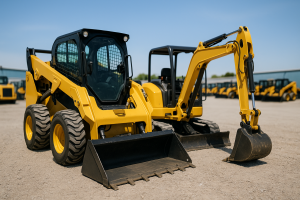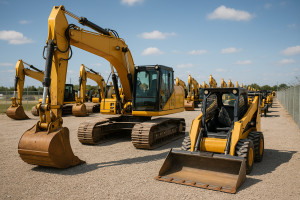

GPS tracker for construction equipment has become essential for contractors and fleet operators managing valuable assets across multiple job sites. Heavy machinery theft costs the construction industry significant losses annually, while equipment sitting idle at remote locations drains profitability. Fleet managers face constant pressure to know where equipment is located, prevent unauthorized use, and maximize asset utilization without adding administrative burden.

Passive GPS tracking solutions address these challenges by providing reliable location data without requiring constant power from vehicle batteries or complex installation procedures. Unlike traditional tracking systems that drain equipment batteries within days, modern passive trackers equipped with up to 5-year battery life life deliver uninterrupted monitoring throughout an entire construction season. This technology empowers operations directors to protect capital investments, optimize equipment deployment, and reduce insurance premiums while maintaining focus on project delivery rather than asset management.
Construction companies managing excavators, bulldozers, skid steers, generators, and other high-value machinery need tracking solutions that withstand harsh job site conditions while delivering actionable intelligence. The right GPS tracker for construction equipment transforms asset management from reactive crisis response into proactive operational strategy.
Why Construction Equipment Requires Specialized GPS Tracking Solutions
Construction machinery operates in environments fundamentally different from standard commercial vehicles, creating unique tracking requirements that generic GPS solutions cannot adequately address. Equipment frequently moves between job sites with inconsistent cellular coverage, sits idle for extended periods between projects, and faces exposure to extreme temperatures, dust, moisture, and physical impacts that would disable consumer-grade trackers within weeks.
Specialized GPS trackers for construction equipment must function reliably without connection to the machine’s electrical system, as many operators prefer avoiding any modification to equipment wiring that could void manufacturer warranties or create maintenance complications. Battery-powered passive tracking devices eliminate installation complexity while providing the extended operational duration necessary for equipment that may remain stationary at remote sites for weeks between movements.
The theft profile of construction equipment also differs significantly from vehicle theft patterns. Criminals targeting heavy machinery often transport stolen equipment to remote storage locations or across state lines before operators notice the loss, making immediate theft detection and historical location data critical for recovery. Standard vehicle trackers designed for daily commuter patterns lack the battery endurance and rugged construction necessary for equipment that operates sporadically across diverse environments.
Equipment rental companies face additional tracking challenges, needing to verify that customers use machinery within authorized geographic areas and return assets on schedule. Passive GPS tracking provides rental operators with location confirmation without requiring customer interaction or complex telematics integration, streamlining fleet management while reducing disputes over equipment usage and return conditions.
Extended Battery Life: The Critical Advantage for Equipment Tracking
The up to 5-year battery life life specification separates professional construction equipment tracking solutions from inadequate alternatives that require weekly recharging or frequent battery replacements. Construction machinery often remains stationary at secure storage yards or remote job sites for extended periods, making frequent physical access for battery maintenance impractical and labor-intensive.
Fleet managers overseeing dozens or hundreds of equipment pieces cannot dedicate staff time to tracking device maintenance schedules. A GPS tracker for construction equipment with quarterly battery service intervals aligns with natural equipment maintenance cycles, allowing operators to replace or recharge tracking device batteries during scheduled service appointments rather than implementing separate maintenance protocols specifically for tracking hardware.
Extended battery performance also proves essential during theft scenarios, as stolen equipment may sit hidden at criminal storage locations for weeks before resale attempts. Trackers with short battery life may expire before law enforcement can coordinate recovery operations, effectively rendering the tracking investment worthless precisely when it matters most. Ninety-day battery capacity ensures location data remains available throughout the entire theft-to-recovery timeline.
This extended operational duration stems from passive tracking architecture rather than passive continuous monitoring. By recording location data at strategic intervals rather than constantly transmitting signals, passive GPS trackers conserve battery power while still capturing comprehensive movement patterns and current location information. This approach delivers the critical intelligence fleet managers need for theft prevention and asset utilization analysis without the battery drain inherent in continuous active tracking systems.
For equipment operating in remote areas with limited cellular connectivity, extended battery life provides additional value by allowing the tracker to store location data locally until cellular service becomes available for data transmission. This buffering capability ensures no location gaps appear in the tracking record, even when equipment moves through areas with challenging signal conditions.
Theft Prevention and Asset Recovery for High-Value Machinery

Construction equipment represents substantial capital investment, with individual machines often valued well into six figures. Theft of heavy machinery continues plaguing the construction industry, driven by strong black market demand and the difficulty of securing equipment at dispersed job sites. GPS tracking technology transforms theft risk management by enabling rapid response when unauthorized equipment movement occurs and dramatically improving recovery rates for stolen assets.
The passive GPS tracker for construction equipment creates a silent security layer that operates invisibly to potential thieves. Unlike visible steering wheel locks or other physical deterrents that criminals can identify and defeat, discreetly installed tracking devices provide no external indication of their presence. Thieves who successfully transport stolen equipment away from job sites remain unaware that their location and movement patterns are being continuously documented.
When equipment disappears from its expected location, fleet managers can immediately access last known position data and movement history, providing law enforcement with actionable intelligence rather than vague descriptions of missing property. This specific location information dramatically accelerates recovery operations, often enabling police to locate stolen equipment within hours rather than the weeks or months typical for untracked machinery.
Beyond outright theft, GPS tracking deters unauthorized equipment use by employees, subcontractors, or customers. Construction companies have discovered equipment being used on side jobs without authorization, rental customers extending usage beyond contracted periods, or operators taking machinery home overnight against company policy. Location monitoring establishes accountability and provides definitive evidence of equipment usage patterns that protect company assets and clarify disputes.
Insurance carriers recognize the loss prevention value of GPS tracking technology, with many providers offering premium discounts for fleets equipped with tracking devices on high-value assets. The combination of reduced theft losses and lower insurance costs often generates return on investment that exceeds the tracking system cost within the first year of implementation, making equipment tracking financially compelling independent of the operational benefits.
Optimizing Equipment Utilization Across Multiple Job Sites
Construction fleet managers face constant challenges determining which equipment sits idle, which machines could be redeployed to different projects, and whether rental equipment is truly necessary or if owned assets could fulfill project requirements. GPS tracking for construction equipment transforms these guessing games into data-driven decisions that directly impact profitability and operational efficiency.
Passive GPS tracking reveals actual equipment utilization patterns, showing fleet managers which machines consistently remain productive and which assets generate minimal return on investment. A GPS tracker for construction equipment deployed across an entire fleet creates visibility into usage patterns that inform strategic decisions about equipment purchases, disposals, and rental versus ownership economics.
Many construction companies discover they own redundant equipment capacity once tracking data reveals that multiple similar machines remain idle while projects rent additional capacity. By redistributing existing equipment more effectively based on actual location and usage data, operators reduce rental expenses and improve return on owned asset investment. The ability to quickly locate specific equipment types when project needs arise eliminates wasted time searching across multiple yards and job sites.
Project managers benefit from knowing exactly when equipment arrives at job sites and how long machinery remains on location, enabling better coordination with subcontractors and more accurate project timeline estimates. Equipment delivery disputes become easily resolved through definitive location records, while billing accuracy improves when rental charges can be verified against actual equipment presence at customer locations.
For companies operating across regional or national footprints, GPS tracking enables centralized visibility into geographically dispersed assets that would otherwise require constant phone calls and manual reporting from site supervisors. Operations directors can monitor equipment distribution across all projects from a single interface, identifying opportunities to move underutilized assets between regions and ensuring high-value equipment generates maximum productivity regardless of location.
Installation Simplicity and Minimal Equipment Modification

Construction fleet managers require GPS tracking solutions that deployment teams can install quickly without specialized technical expertise or modifications to equipment electrical systems. The passive GPS tracker for construction equipment meets this requirement through self-contained battery power and mounting methods that avoid any alteration to machine wiring or structure.
Magnetic mounting cases enable secure attachment to metal equipment frames in concealed locations that protect devices from weather exposure and casual discovery. Installation typically requires only minutes per machine, with no need to schedule equipment downtime or engage mechanics for complex integration work. This simplicity proves essential for fleet operators managing dozens or hundreds of equipment pieces who cannot afford extensive installation labor or disruption to equipment availability.
The absence of hard-wired connections to equipment electrical systems eliminates concerns about warranty implications or interference with machine electronics. Equipment manufacturers increasingly incorporate sophisticated electronic controls and proprietary diagnostic systems that they strongly discourage customers from modifying. Battery-powered GPS trackers respect these manufacturer guidelines while still providing comprehensive location monitoring capabilities.
For equipment rental companies that frequently turn over inventory, easily transferable tracking devices provide flexibility that permanently installed systems cannot match. When rental equipment sells or leaves the fleet, operators simply remove the GPS tracker and redeploy it to replacement machinery within minutes, maximizing tracking hardware utilization and eliminating stranded technology investment in equipment no longer owned.
Straightforward installation also facilitates rapid fleet-wide tracking deployment. Companies can equip their entire construction equipment inventory with GPS tracking within days rather than the weeks or months required for complex telematics systems requiring professional installation. This deployment speed enables immediate theft protection and utilization visibility rather than phased rollouts that leave portions of the fleet unprotected during extended implementation periods.
Weatherproof Design for Harsh Construction Environments
Construction equipment operates in conditions that quickly destroy consumer electronics, from concrete dust and mud to temperature extremes and physical impacts. GPS trackers designed for construction applications must withstand these environmental challenges while maintaining reliable performance throughout multi-year service lives.
Industrial-grade GPS trackers for construction equipment feature sealed enclosures that meet or exceed IP67 waterproof ratings, protecting internal electronics from water immersion, pressure washing, and dust infiltration. These rugged housings enable trackers to function reliably whether mounted on excavators working in standing water, generators operating in desert heat, or equipment stored through winter in northern climates.
Temperature specifications for construction-grade trackers accommodate the extreme ranges equipment encounters, from summer job sites where direct sun exposure creates surface temperatures exceeding 150°F to winter storage where temperatures plunge well below zero. Unlike consumer GPS devices that malfunction outside narrow temperature bands, professional equipment trackers maintain full functionality across these extremes without performance degradation.
Vibration resistance ensures trackers continue operating despite the constant jarring and impacts inherent in construction equipment operation. Bulldozers, excavators, and other heavy machinery generate substantial vibration during normal use, while transport over rough terrain subjects equipment and attached accessories to repeated shocks that would quickly disable inadequately engineered electronics.
The combination of weatherproof construction and extended battery life creates maintenance-free operation that aligns with the realities of construction fleet management. Fleet managers need tracking solutions that require attention only during scheduled equipment service intervals rather than creating ongoing maintenance burdens that drain staff time and reduce tracking system reliability through neglected upkeep.
Cost-Effective Protection for Equipment Fleets of Any Size
Construction companies ranging from single-owner contractors with a few pieces of equipment to national firms managing thousands of assets need GPS tracking solutions that deliver strong return on investment without requiring enterprise-scale budgets or long-term service contracts. The economics of passive GPS tracking for construction equipment support profitable deployment across fleet sizes from individual machines to comprehensive corporate programs.
The absence of installation labor costs immediately differentiates passive GPS trackers from complex telematics systems requiring professional installation at hourly rates that can exceed the tracker hardware cost. Fleet managers can personally install tracking devices across small equipment inventories in an afternoon, or task existing maintenance staff with deployment across larger fleets without specialized training or equipment.
Subscription pricing models for passive GPS tracking services typically operate on straightforward per-device monthly fees without hidden charges for location updates, API access, or user accounts. This transparent pricing enables accurate budget forecasting and eliminates surprise costs that plague some enterprise fleet management systems. Construction companies can precisely calculate tracking program costs based on equipment count without complex pricing tiers or feature restrictions.
The theft prevention value alone often justifies GPS tracker investment, as recovering a single stolen machine typically covers tracking costs for an entire fleet for multiple years. Beyond theft recovery, the operational improvements from enhanced equipment utilization, reduced rental expenses, and eliminated search time for misplaced assets generate ongoing returns that compound annually.
Small contractors gain enterprise-level asset visibility at accessible price points, while larger construction firms achieve per-unit costs that make comprehensive fleet tracking economically compelling even for lower-value equipment like generators and compressors that previously went untracked due to cost constraints. This scalability ensures appropriate protection for assets regardless of company size or fleet composition.
Geofencing and Movement Alerts for Proactive Fleet Management
Modern GPS tracking platforms provide construction fleet managers with automated alert capabilities that transform passive location monitoring into proactive security and operational management tools. Geofencing technology establishes virtual boundaries around job sites, storage yards, or authorized operating regions, triggering immediate notifications when equipment crosses these boundaries without authorization.
These automated alerts eliminate the need for manual daily equipment checks, with the GPS tracker for construction equipment autonomously monitoring machine locations and notifying fleet managers only when exceptions occur. An excavator leaving a job site after hours immediately generates an alert, enabling rapid response to potential theft while the machine remains within recovery range rather than discovering the loss hours or days later during the next scheduled site visit.
Movement detection alerts provide similar proactive notification when equipment begins moving after extended stationary periods. Construction companies storing valuable machinery at remote sites or equipment yards receive immediate notification if machines start moving during non-working hours, often enabling theft intervention before criminals successfully transport equipment beyond practical recovery distance.
Geofencing capabilities also support operational management by confirming equipment delivery to customer job sites and alerting managers when machines depart project locations. Rental companies use these features to verify that customers maintain equipment within contracted service areas and return machines on schedule, reducing disputes and enabling proactive follow-up when contract terms appear at risk.
Customizable alert parameters ensure fleet managers receive relevant notifications without overwhelming alert fatigue from excessive messages. Operators can establish different geofence sizes, alert schedules, and notification recipients based on equipment type, value, and operational patterns, ensuring the tracking system enhances rather than burdens daily fleet management workflows.
Frequently Asked Questions About GPS Tracking for Construction Equipment
How long does installation take for a GPS tracker on construction equipment?
Installation of passive GPS trackers on construction equipment typically requires only 5-10 minutes per machine. The process involves selecting a concealed mounting location on the equipment frame or body, cleaning the mounting surface, and securing the tracker using magnetic or adhesive mounting. No wiring, electrical connections, or specialized tools are necessary, allowing fleet managers or maintenance staff to deploy trackers across entire equipment inventories without professional installation services or significant equipment downtime.
Will a GPS tracker drain my equipment battery?
Passive GPS trackers for construction equipment operate on self-contained internal batteries rather than connecting to equipment electrical systems, eliminating any possibility of draining machine batteries. These tracking devices contain dedicated battery packs designed for 90-day operational duration, functioning completely independently from the construction equipment’s power system. This battery-powered design prevents electrical interference with equipment electronics while ensuring tracking continues even when machines are powered off or stored long-term.
Can GPS trackers work in areas with poor cellular coverage?
GPS trackers designed for construction equipment function effectively in areas with limited cellular connectivity by storing location data internally when cellular signals are unavailable, then transmitting stored information once the equipment moves to areas with adequate coverage. The GPS satellite positioning system operates independently from cellular networks, allowing trackers to accurately record equipment locations regardless of cellular signal strength. When cellular connectivity resumes, accumulated location data uploads to the tracking platform, ensuring complete movement history without coverage gaps.
What happens if someone finds and removes the GPS tracker?
Professional GPS trackers for construction equipment employ discreet installation in concealed locations that make casual discovery unlikely. Fleet managers typically mount devices in hidden areas of equipment frames or enclosures where they blend with existing machinery components. The tracking platform maintains historical location data even if a device is removed, providing law enforcement with movement patterns and last known locations that assist recovery efforts. Many fleet operators deploy multiple trackers on highest-value equipment, ensuring backup location monitoring if thieves discover and remove one device.
How does GPS tracking reduce construction equipment operating costs?
GPS tracking reduces construction equipment operating costs through multiple mechanisms: preventing theft losses that force expensive replacement purchases or rental substitutions; optimizing equipment utilization by identifying idle assets that can be redeployed rather than renting additional machinery; reducing insurance premiums through carrier discounts for tracked equipment; eliminating staff time wasted searching for equipment across multiple job sites; and improving maintenance scheduling through accurate usage monitoring. Many fleet operators report that tracking system costs are recovered within the first year through these combined savings, with subsequent years generating pure operational benefit.
Protecting Construction Assets With Purpose-Built GPS Tracking Technology
Construction equipment represents critical capital investment that directly impacts project delivery capability and company profitability. GPS tracking solutions specifically designed for heavy machinery and construction assets provide fleet managers with the visibility, theft protection, and utilization intelligence necessary to maximize equipment return on investment while minimizing loss risk. The combination of extended up to 5-year battery life life, weatherproof industrial construction, and simple installation without equipment modification creates a practical tracking solution aligned with the operational realities of construction fleet management.
From preventing catastrophic theft losses to optimizing equipment deployment across multiple projects, passive GPS tracking delivers measurable value that extends well beyond simple location monitoring. Construction companies implementing comprehensive tracking programs gain competitive advantages through improved asset utilization, reduced operating costs, and enhanced security that protects against the equipment losses that can threaten business viability. The technology transforms construction equipment management from reactive crisis response to proactive strategic asset optimization that directly contributes to project profitability and operational efficiency.
Fleet managers seeking reliable protection for valuable construction assets should explore passive GPS trackers for construction equipment offering the extended battery life and rugged design necessary for demanding job site environments.