
GPS equipment tracking has become essential for construction companies, rental operations, and industrial businesses managing valuable assets across multiple job sites. When excavators, generators, compressors, and other heavy equipment move between locations or sit unattended overnight, the risk of theft and misplacement increases dramatically. Without visibility into equipment location and usage patterns, companies face unnecessary replacement costs, project delays, and underutilized assets that drain profitability.

The challenge extends beyond simply knowing where equipment is located. Fleet managers need reliable tracking solutions that work in remote areas without constant power sources, survive harsh job site conditions, and provide actionable data without creating additional administrative burden. Traditional monitoring approaches that require frequent battery changes or complicated installation procedures often fail to deliver consistent results, leaving equipment vulnerable during critical periods.
A battery-powered GPS tracker can provide periodic location reports without a connection to the equipment battery. This guide covers reporting frequency, power, placement and costs, with a practical checklist for evaluating a tracker on your own equipment.
Piritiz equipment tracking: key specifications
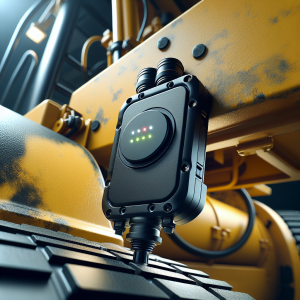
The Piritiz reusable tracker provides 20–30 location updates per day, a 5-year battery and IP67 protection. It costs $19.95 for the device, plus a monthly or prepaid tracking plan. It is intended for periodic asset-location checks rather than second-by-second dispatch.
| Item | Confirmed detail |
|---|---|
| Battery life | 5 years |
| Location reporting | 20–30 updates per day |
| Protection rating | IP67 |
| Coverage | Worldwide; check suitability for your intended operating locations before deployment |
| Device price | $19.95 |
| Tracking service | $9.95/month, or prepaid $55/6 months, $95/1 year, $170/2 years |
| Hardware warranty | 1 year, handled by PIRITIZ LLC |
For product details, see the equipment tracker page. These specifications apply to the reusable model; the disposable tracker has a different battery life and service arrangement.
How GPS Equipment Tracking Systems Protect High-Value Assets
The primary value proposition for GPS equipment tracking centers on theft prevention and rapid recovery. Heavy equipment theft represents a significant threat to construction and industrial operations, with stolen machinery often disappearing across state lines or being dismantled for parts within hours of disappearing from job sites. When equipment lacks tracking capabilities, recovery becomes nearly impossible once the asset leaves the immediate area.
Battery-powered trackers can report equipment locations at intervals while operating independently of machine power. Piritiz reusable trackers provide 20–30 location updates per day. Check the timestamp of each location before using it to plan a collection or site visit; a periodic report is not a second-by-second view of the machine.
Treat tracking as one part of equipment security, alongside an asset register, controlled access and secure storage. If equipment is missing, preserve the latest reported location and timestamp for the authorities. Location information does not guarantee recovery, prevent damage or automatically reduce an insurance premium; confirm any policy benefit with your insurer.
Beyond theft scenarios, GPS equipment tracking helps businesses identify unauthorized usage or unexpected movement patterns that may indicate equipment misappropriation by employees or contractors. Location data reveals when assets move outside authorized areas or operate during non-business hours, enabling managers to address policy violations before they escalate into larger problems. This visibility creates accountability throughout the organization and helps maintain control over valuable resources.
Optimizing Equipment Utilization Through Location Intelligence
Many businesses discover that their most significant tracking benefits come not from theft prevention but from optimizing how equipment gets utilized across projects. Construction companies and rental operations frequently struggle with asset allocation, unsure which equipment sits idle at one location while project teams at another site arrange expensive rentals for identical machinery. This inefficiency stems from lack of visibility into up-to-date asset availability and location.
GPS equipment tracking transforms asset management by providing fleet managers with complete visibility into where every piece of equipment currently resides. When a project manager needs a specific compressor or lift, dispatchers can quickly identify the nearest available unit rather than assuming equipment remains at its last known location. This capability reduces unnecessary rental expenses, eliminates wasted trips to retrieve equipment from incorrect locations, and ensures optimal distribution of assets across active projects.
Historical location data reveals utilization patterns that inform smarter purchasing and disposal decisions. Equipment that rarely moves from storage yards represents capital tied up in underperforming assets that could be sold or redeployed. Conversely, high-demand equipment that constantly shuttles between sites may justify additional purchases to reduce bottlenecks and rental costs. These insights enable data-driven fleet management decisions that align equipment inventory with actual operational needs.
Piritiz reusable trackers have a 5-year battery life. For an equipment deployment, record the installation date, device identifier and equipment identifier together. Include a check of the device attachment and latest location report in your normal asset checks; the tracker does not require a quarterly battery-replacement routine.
Battery Life Considerations for Long-Term Equipment Monitoring

The operational reality of construction and industrial equipment creates unique challenges for GPS tracking implementation. Unlike fleet vehicles that return to central facilities daily where tracking devices can be recharged, heavy equipment often remains at remote job sites for weeks or months at a time. Access to power sources is limited, and the expectation that staff will regularly service tracking devices proves unrealistic in fast-paced operational environments.
For Piritiz reusable equipment trackers, the confirmed battery life is 5 years. The tracker provides 20–30 location updates per day and operates without wiring into the equipment power supply. Battery life and paid tracking service are separate: buying the device does not include five years of service.
Battery longevity also impacts the total cost of ownership for GPS equipment tracking systems. Frequent battery replacements require either dedicated staff time or third-party service visits, both of which add recurring expenses that accumulate over the tracking system’s operational lifetime. Devices engineered for extended operation on a single charge reduce these ongoing costs while improving reliability, since each service intervention represents an opportunity for device damage, incorrect reinstallation, or temporary tracking loss.
Reporting frequency is one factor to compare when evaluating battery-powered tracking. A tracker that sends periodic location reports serves a different need from a system used for second-by-second dispatch. Read the continuous versus periodic GPS tracking guide and match the reporting schedule to the decisions you need to make.
Installation and Deployment Strategies for Different Equipment Types
Successful GPS equipment tracking implementation requires thoughtful consideration of where and how tracking devices get mounted on diverse machinery. Heavy equipment presents varied installation challenges depending on size, design, access to power, and exposure to environmental conditions. Excavators offer different mounting opportunities than towable generators, and each equipment category demands installation approaches that balance device protection with signal reliability.
Concealed installation locations provide theft prevention advantages by making tracking devices difficult for thieves to locate and disable. Equipment with enclosed compartments, battery boxes, or structural cavities offers ideal hiding spots that protect devices from discovery while maintaining adequate satellite signal reception. The balance between concealment and signal strength requires testing different positions on representative equipment to identify locations that deliver consistent tracking performance without compromising device security.
Magnetic mounting systems simplify deployment on equipment with steel frames and bodies, enabling quick installation without drilling or permanent modifications. This approach proves particularly valuable for rental operations where equipment frequently changes hands and tracking devices need to transfer between units. Magnetic attachments also facilitate temporary tracking during high-risk periods, such as when equipment sits at unsecured job sites overnight or during weekend shutdowns when theft risk peaks.
Weather resistance represents another critical installation consideration. GPS equipment tracking devices must withstand rain, mud, dust, temperature extremes, and vibration exposure inherent to construction and industrial environments. Rugged enclosures with appropriate IP ratings ensure tracking devices continue functioning reliably despite harsh conditions that would disable consumer-grade electronics. Installation locations should further protect devices from direct water exposure and mechanical impacts while maintaining clear views of the sky for satellite signal acquisition.
Equipment tracking deployment checklist
- Match the reporting schedule to the task. Decide whether you need periodic site-location checks or a dispatch view that refreshes much more frequently.
- Start with a representative machine. Test the proposed placement on the type of equipment you actually operate, including its normal parking and working locations.
- Record the assignment. Keep a simple register containing the equipment ID, tracker ID, installation date, responsible person and service-plan renewal date.
- Verify the report. Compare a received location and its timestamp with the machine’s known location. Repeat after moving the machine to another normal operating site.
- Check the attachment. Choose a position that avoids moving components, direct impact and interference with normal equipment operation. IP67 is not confirmation of a particular operating-temperature range.
- Keep operational records separate. Use booking, inspection and service records to determine availability and maintenance needs. A position report alone does not measure engine hours or diagnose faults.
- Review before expanding. Assess whether the location information answers the questions your team needs answered before adding the rest of the equipment fleet.
Choosing Between Asset Tracking and Fleet Tracking Approaches

Businesses evaluating GPS equipment tracking solutions encounter different product categories designed for distinct use cases. Understanding the differences between asset tracking and fleet tracking helps organizations select systems aligned with their operational requirements and avoid paying for capabilities that provide limited value in their specific context.
Fleet tracking systems typically emphasize continuous visibility, periodic location updates, and detailed movement history. These solutions work well for vehicles that operate daily routes, return to central facilities regularly, and have onboard power systems that support always-on tracking devices. The constant connectivity enables dispatching optimization, route efficiency analysis, and immediate alerts for unauthorized usage. However, the power requirements and subscription costs associated with continuous tracking make this approach impractical for heavy equipment that sits idle for extended periods.
Asset tracking can focus on periodic position reports for equipment that moves between storage yards and job sites. Piritiz provides 20–30 updates per day, a 5-year battery and an IP67 rating on the reusable tracker. Location reports should be checked alongside your booking and maintenance records: a machine’s location alone does not establish whether it is available, running or due for service.
The cost structures differ substantially between these approaches. Fleet tracking systems with continuous connectivity typically require higher monthly subscription fees to support cellular data transmission and up-to-date platform access. Asset tracking solutions emphasize lower operating costs and simplified maintenance, with longer service intervals and reduced data transmission requirements. For businesses managing dozens or hundreds of equipment units, these cost differences compound significantly over multi-year deployments.
Hybrid approaches have emerged that combine elements of both tracking methodologies. Some GPS equipment tracking systems offer configurable reporting intervals that balance battery life against visibility needs. During high-risk periods or when equipment operates in theft-prone areas, reporting frequency can increase to provide enhanced monitoring. During routine operations at secured facilities, devices shift to power-conservation modes that extend battery life. This flexibility enables businesses to optimize tracking strategies based on current risk profiles and operational requirements.
Integration with Equipment Management and Inventory Systems
GPS equipment tracking delivers maximum value when location intelligence integrates with broader business systems used for asset management, maintenance scheduling, and project planning. Standalone tracking platforms provide location visibility, but integrating that data with enterprise resource planning (ERP) systems, computerized maintenance management software (CMMS), and project management tools creates actionable workflows that improve operational efficiency.
When equipment location data flows automatically into inventory management systems, dispatchers gain location visibility into asset availability without manually checking separate tracking platforms. Project managers planning equipment needs can see which assets sit available at nearby locations versus those committed to other jobs or undergoing maintenance. This integration eliminates communication gaps and redundant data entry while ensuring location information remains current across all business systems.
Maintenance coordination benefits significantly from GPS tracking integration. When equipment reaches predetermined usage thresholds or scheduled service intervals, maintenance systems can automatically identify asset locations and route service technicians efficiently. Rather than coordinating equipment returns to central shops for routine maintenance, mobile service teams can reach equipment at job sites with parts and tools ready for the specific units requiring attention. This approach minimizes equipment downtime and keeps productive assets working rather than sitting in maintenance queues.
Billing and utilization reporting gain accuracy through integrated GPS equipment tracking. Rental operations can verify equipment presence at customer locations and generate usage reports for billing purposes. Construction companies with multiple divisions or profit centers can accurately allocate equipment costs based on which projects actually utilized specific assets. This financial visibility improves job costing accuracy and enables better profitability analysis at both project and portfolio levels.
Application programming interfaces (APIs) enable custom integrations between GPS tracking platforms and proprietary business systems. Organizations with specialized workflows or unique operational requirements can build automated processes that leverage location data alongside other business information. Whether triggering alerts when equipment enters restricted areas, generating compliance reports for regulatory requirements, or feeding location data into predictive analytics models, API access enables sophisticated applications beyond standard tracking platform capabilities.
Evaluating Total Cost of Ownership for Equipment Tracking Programs
The financial analysis for GPS equipment tracking extends beyond initial device costs to encompass subscription fees, installation labor, ongoing maintenance, and infrastructure requirements. A comprehensive total cost of ownership calculation reveals the long-term investment required to maintain tracking coverage across equipment fleets and helps businesses compare different solution approaches on equivalent terms.
Compare the total cost of the actual models under consideration: hardware, service or activation, installation, any documented battery maintenance, replacement and staff time. A higher purchase price does not by itself demonstrate greater reliability or a lower lifetime cost. For Piritiz, use the model-specific prices and battery details in the comparison above.
Subscription fees for cellular connectivity and platform access accumulate as significant ongoing expenses. Monthly or annual charges per device multiply across large equipment fleets, making subscription pricing structures a critical evaluation factor. Some providers charge flat rates regardless of data usage, while others implement tiered pricing based on reporting frequency or feature access. Organizations should model subscription costs over typical device lifespans to understand multi-year financial commitments beyond initial procurement budgets.
Installation and deployment labor adds costs that vary based on equipment types, mounting complexity, and whether businesses use internal staff or third-party installers. Simple magnetic-mount devices that field personnel can install in minutes generate minimal labor costs, while installations requiring custom brackets, wiring, or concealment may demand specialized technicians and extended service times. Battery replacement and device maintenance create recurring labor expenses that should factor into total ownership calculations, particularly for tracking systems with short battery life requiring frequent service visits.
Build an equipment-tracking business case from your own figures. Record deployment cost and staff time, then measure changes such as time spent locating assets or avoidable rentals. Keep potential theft-loss scenarios separate from realized savings. Include an insurance discount only if your insurer confirms eligibility and the amount. This prevents a hypothetical recovery or an assumed premium reduction from being presented as a guaranteed return.
Frequently Asked Questions About GPS Equipment Tracking
How does GPS equipment tracking work without external power sources?
A battery-powered tracker operates independently of the equipment power supply. Piritiz reusable trackers have a 5-year battery life and provide 20–30 location updates per day, without wiring into the machine. Tracking service is purchased separately from the device.
Can GPS trackers work in areas without cellular coverage?
GPS equipment tracking devices can record location data anywhere with clear views of GPS satellites, which includes most outdoor environments regardless of cellular coverage. However, transmitting that location data to tracking platforms typically requires cellular connectivity. Devices operating in areas without cellular coverage store location records internally until moving into coverage areas where accumulated data uploads automatically. This ensures complete tracking history even when equipment works in remote locations temporarily beyond cellular networks.
What is the difference between passive and active GPS tracking for equipment?
Passive GPS tracking devices record location data at scheduled intervals and transmit information in batches, prioritizing extended battery life over periodic updates. This approach works well for heavy equipment that remains at job sites for extended periods and doesn’t require minute-by-minute monitoring. Active tracking provides continuous periodic location updates with immediate alerts, but requires frequent recharging or permanent power connections. For construction and industrial equipment, passive tracking delivers essential visibility while maintaining practical battery life for long-term deployments.
How accurate is GPS tracking for locating stolen equipment?
GPS tracking technology typically provides location accuracy within 10-30 feet under normal conditions with clear satellite visibility. This precision enables law enforcement to identify specific properties or areas where stolen equipment is located, dramatically improving recovery chances compared to having no location information. Accuracy can vary based on factors like satellite availability, surrounding structures, and environmental conditions, but modern GPS receivers deliver sufficient precision for effective theft recovery operations and asset location confirmation.
What type of equipment benefits most from GPS tracking?
High-value equipment with elevated theft risk and frequent movement between locations gains the greatest benefit from GPS tracking. Excavators, skid steers, generators, welders, compressors, light towers, and towable equipment represent prime candidates due to their value, portability, and vulnerability when left at job sites. Rental equipment that changes locations frequently also benefits significantly from tracking to prevent loss, verify customer locations, and optimize fleet distribution. Any equipment where replacement costs exceed tracking system expenses by substantial margins justifies tracking implementation.
Making GPS Equipment Tracking Work for Your Operations
GPS equipment tracking represents a strategic investment that protects valuable assets while enabling smarter fleet management decisions based on accurate location intelligence. The technology has matured to address the practical challenges that construction companies, rental operations, and industrial businesses face when deploying tracking systems across diverse equipment types operating in demanding environments. Extended battery life eliminates maintenance burdens that undermined earlier tracking approaches, while ruggedized devices withstand the harsh conditions inherent to job sites and industrial facilities.
The business case extends beyond theft prevention to encompass utilization optimization, reduced rental expenses, improved asset allocation, and enhanced operational efficiency. Organizations that implement comprehensive GPS equipment tracking gain visibility into how assets actually get used, where inefficiencies exist, and which equipment investments deliver the strongest returns. This intelligence transforms equipment management from reactive problem-solving into proactive strategy that aligns fleet composition with operational requirements. Combined with theft deterrence and rapid recovery capabilities, tracking systems deliver returns that far exceed implementation costs for businesses managing significant equipment inventories across multiple locations.
Compare the Piritiz reusable equipment tracker with your site requirements. The device is $19.95, with service at $9.95/month or prepaid at $55 for 6 months, $95 for 1 year or $170 for 2 years. See the monthly and prepaid cost comparison for worked examples.