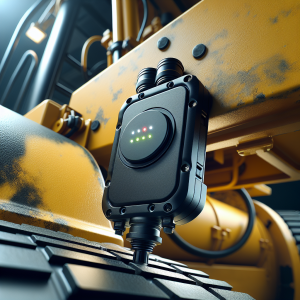
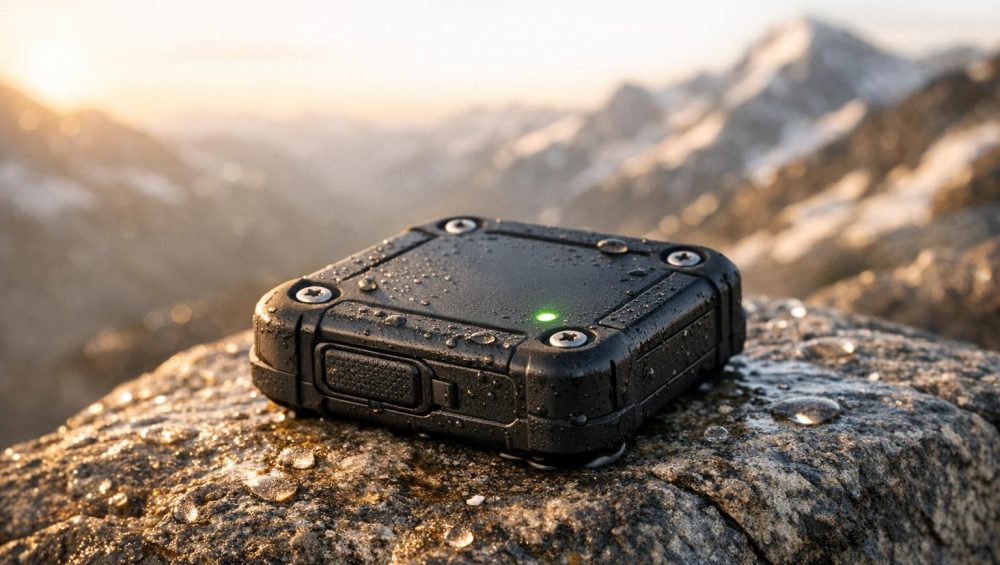
Wireless GPS trackers are designed to operate reliably in tough environments, such as extreme temperatures, remote areas, and construction sites. These devices help businesses monitor equipment, prevent theft, and optimize fleet operations. Key features include:
- Durable Design: Waterproof and impact-resistant enclosures (IP67/IP69K) protect against dust, water, and physical damage.
- Temperature Tolerance: Functionality from -40°F to 176°F, with batteries designed for extreme conditions.
- Battery Efficiency: long-lasting power with modes like deep sleep, enabling 5 years of reliable tracking without constant recharging.
- Reliable Connectivity: Dual networks (GNSS and cellular) for uninterrupted tracking, even in remote areas.
- Advanced Sensors: Track movement, temperature, humidity, and impacts to safeguard sensitive cargo.
- Geofencing Alerts: Notifications when assets move outside designated areas.
These trackers combine rugged construction with smart power management, ensuring reliable performance in the harshest conditions. Whether you’re protecting your fleet or monitoring valuable equipment, these devices offer a practical solution for security.
GL601: Solar GPS Tracker Built for Harsh Environments
sbb-itb-4827db2
Main Parts of Wireless GPS Trackers
Wireless GPS trackers depend on a few key components working seamlessly to provide accurate location data. These parts are designed to withstand tough environments, ensuring the trackers stay reliable even when other electronics might fail.
GPS Receiver and Cellular Modem
The GPS receiver determines location by using satellite signals through a process called trilateration. Many receivers are compatible with multiple satellite constellations, which helps maintain a strong and consistent signal .
The cellular modem is responsible for sending location data to a monitoring platform. It uses networks like 4G LTE, 5G, or LTE Cat M1/NB1 for transmission. If the device loses cellular coverage, it stores location data in its internal memory until the connection is restored. This ensures uninterrupted tracking .
Battery-Powered Design
These trackers typically use two types of batteries. Rechargeable lithium-ion batteries are perfect for frequent updates, while high-capacity non-rechargeable batteries are better suited for long-term use. This flexibility makes them ideal for monitoring remote assets like trailers or equipment that isn’t regularly in use .
Sensors and Microcontrollers
The microcontroller acts as the brain of the device. It processes satellite signals, manages tracker settings like update intervals, and optimizes power usage. It also works with built-in sensors to trigger alerts when specific events occur.
MEMS sensors (micro-electro-mechanical systems) play a crucial role here. Accelerometers can detect motion, vibration, or impacts, which allows the tracker to wake from sleep mode when movement starts or send instant alerts if tampering is detected . Some trackers go a step further by including temperature and humidity sensors, making them ideal for monitoring delicate cargo . Adjusting the ping intervals – ranging from 30 seconds to 5 minutes – helps conserve battery life without sacrificing tracking accuracy.
How GPS Trackers Work in Rugged Environments
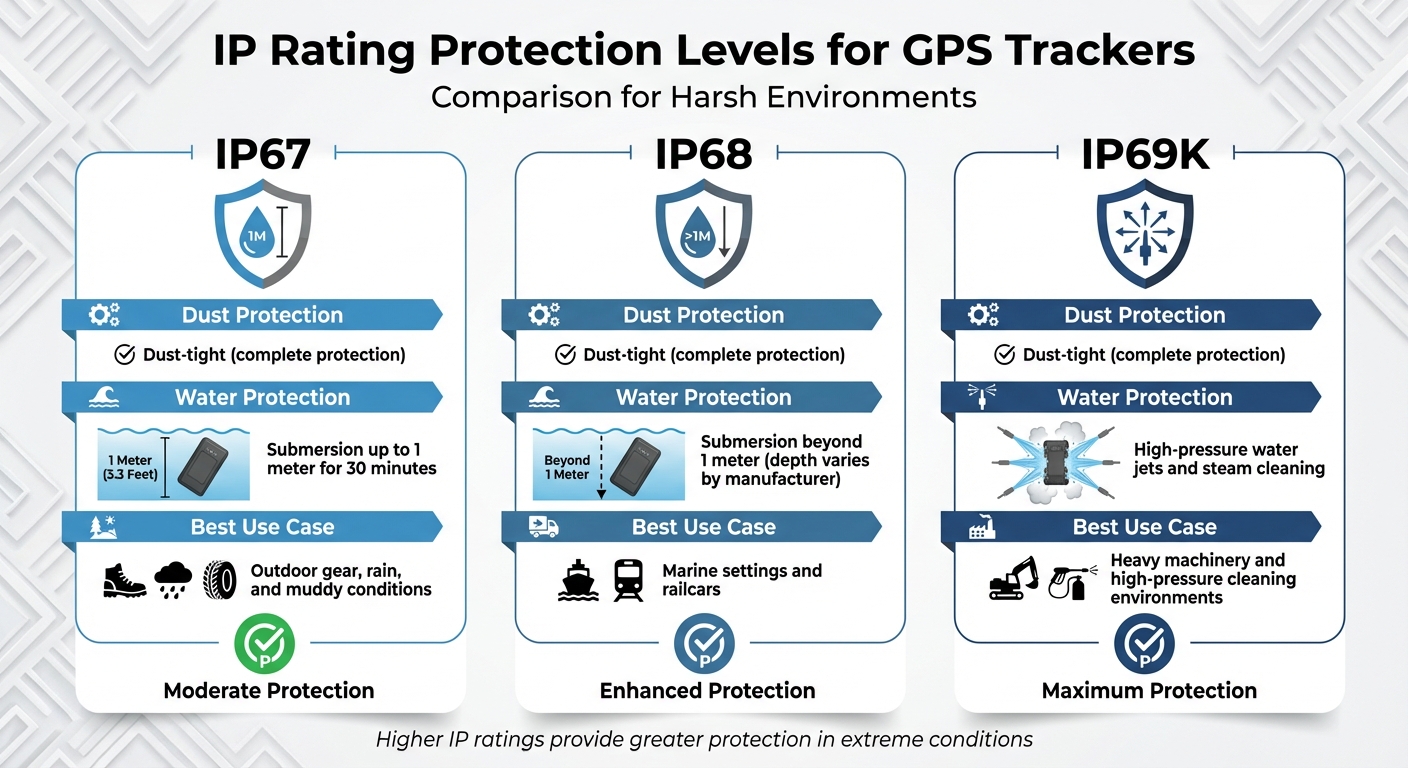
IP Rating Comparison Chart for GPS Trackers in Harsh Environments
Once the basic functionality of GPS trackers is established, they are further equipped with specific features to thrive in extreme conditions – whether on a scorching desert construction site or icy winter roads. Let’s dive into how these devices are engineered to maintain connectivity and withstand harsh environments.
Signal Acquisition and Data Transmission
GPS trackers rely on the Global Navigation Satellite System (GNSS) network, using signals from at least three satellites to determine latitude, longitude, elevation, and time with precision. In remote locations – like deserts, oceans, or dense forests – where cellular coverage is sparse, satellite-only trackers step in. These devices use satellite networks, such as Iridium, to transmit data directly, bypassing the need for mobile towers.
"Satellite only trackers really come into their own when you are looking at long haul tracking – such as cargo containers moving across land or sea where mobile signal can’t reach." – BrickHouse Security
Advanced models offer message assurance technology, ensuring data is repeatedly transmitted until delivery is confirmed. Additionally, hybrid location technology combines GNSS with Wi-Fi Sniffing, enabling reliable tracking even as assets transition between indoor and outdoor spaces where GPS signals might falter. For off-grid applications, dual-power systems – featuring solar rechargeable batteries and high-capacity backups – can provide up to 10 years of operation with minimal maintenance. These robust transmission methods ensure dependable, movement-triggered tracking regardless of the environment.
Waterproof and Impact-Resistant Construction
To endure rugged conditions, GPS trackers are built with sealed, tamper-resistant housings that protect against dust, mud, and water. The IP rating indicates the level of protection offered. For example, an IP67 rating means the device is completely dust-tight and can survive submersion in up to 3.3 feet (1 meter) of water for 30 minutes. For even tougher environments, IP69K-rated trackers can withstand high-pressure water jets and steam cleaning.
| IP Rating | Dust Protection | Water Protection | Best Use Case |
|---|---|---|---|
| IP67 | Dust-tight | Submersion up to 1m for 30 minutes | Outdoor gear, rain, and muddy conditions |
| IP68 | Dust-tight | Submersion beyond 1m (depth varies) | Marine settings and railcars |
| IP69K | Dust-tight | High-pressure/steam jets | Heavy machinery and high-pressure cleaning |
Many rugged trackers also feature reinforced casings and protective rubber bumpers, which help absorb shocks from impacts or drops on uneven terrain. Additionally, built-in antennas reduce the risk of damage compared to external ones, which can break or snag during use.
Temperature Tolerance
Industrial-grade GPS trackers are designed to function in extreme temperatures, ranging from -40°F to 176°F (-40°C to 80°C). To ensure reliability, manufacturers conduct Highly Accelerated Life Testing (HALT), exposing the devices to rapid temperature changes and intense vibrations to identify potential weak points before mass production.
"Our GT family of devices have been HALT tested to prove our unmatched durability in extreme conditions." – Geoforce
Specialized Lithium or Lithium Thionyl Chloride (LTC) batteries are used to maintain consistent performance in extreme climates. Sealed housings with IP67 to IP69K ratings prevent condensation or moisture buildup during sudden temperature shifts. Some models even come equipped with internal thermal sensors that monitor the device’s temperature and send alerts if it crosses safe operating limits.
Battery Management for Extended Operation
In rugged environments where maintenance is infrequent, managing battery power effectively is crucial for ensuring reliable GPS tracking. Operating in harsh conditions requires a balance between maintaining tracking accuracy and minimizing energy usage.
Sleep Modes and Interval Reporting
GPS trackers generally operate in three modes: Active, Standby, and Deep Sleep. Each mode has a distinct energy profile:
- Active Mode: Consumes 150–300 mA, which can drain a 5,000 mAh battery in just 16–33 hours.
- Standby Mode: Reduces consumption to 15–50 mA, with updates sent at intervals of 1 to 15 minutes.
- Deep Sleep Mode: Drops usage to an ultra-low 0.1–5 mA, enabling the battery to last for months or even years.
Switching efficiently between these modes is key to long-term deployments. For instance, in Deep Sleep Mode, a low-power accelerometer can wake the tracker when movement is detected, conserving energy by activating full functionality only when necessary [31, 33]. Users can further optimize battery life by adjusting the reporting interval to match their needs. Frequent updates, like 1-second intervals for movement-triggered tracking, can deplete a battery 100 times faster than hourly updates. Switching from 30-second updates to once-daily check-ins can dramatically extend operation from days to months.
"It’s not just about battery size; it’s about how efficiently that battery’s power is used to keep your vehicle secure." Shop our tracking devices
– CarLock
Modern GPS trackers also benefit from low-power wide-area networks (LPWAN) technologies like LTE-M and NB-IoT, which consume 70% less current compared to standard LTE modules. Additionally, newer GNSS chipsets, such as the u-blox M10, use 50% less power than their predecessors. However, extreme cold can impact battery performance, with lithium batteries losing about 20% of their capacity at 0°C (32°F).
Smart power management isn’t just about extending battery life – it also supports advanced security features.
Tamper Alerts and Up-to-Date Monitoring
Security functions are designed to work hand-in-hand with power-saving strategies. Low-power accelerometers can trigger alerts when movement or tampering is detected, eliminating the need for constant GPS or cellular polling. Some devices even incorporate light sensors to detect when their casing is opened, adding another layer of protection without significant energy drain.
Efficient firmware further reduces power consumption by limiting the time spent searching for a GPS signal. For example, if the device cannot acquire a satellite fix within 30 to 60 seconds, it stops searching to save energy. Instead, it may report the last known location or rely on a rough estimate from nearby cell towers. This prevents unnecessary battery drain when the tracker is in challenging environments, such as underground, inside a metal container, or deep in a forest. For optimal performance, placing the tracker in an open area with a clear view of the sky allows for hot starts – reacquiring satellites in seconds – rather than energy-intensive cold starts, which can take minutes.
"Every wake cycle burns credit; every retry and cold start adds unplanned cost."
– Apple Ko, VP Global Product Sales & Biz Dev, Eelink IoT Solutions
Installation and Movement-Triggered Tracking
Simple Mounting Options
Wireless GPS trackers are built for easy setup and flexibility. Magnetic mounts are perfect for quick attachment to metal surfaces, making it simple to move the device between vehicles. For a more secure, permanent installation, use #10 stainless steel screws, which provide a strong, vibration-resistant hold. If drilling isn’t an option, polyurethane adhesives, like 3M Marine 5200, offer a solid alternative.
To ensure proper signal reception, position the antenna facing upward and avoid placing the tracker in fully metal-enclosed spaces, as this can block the GPS signal. Mounting the tracker on a vehicle’s metal frame often works well since GPS signals can reflect off the road surface to reach the receiver. Before completing the installation, check the device’s cellular and GPS indicator lights. A slow blink (every 3–4 seconds) confirms a proper connection.
Once the tracker is securely mounted, the next step is connecting it to your mobile app for movement-triggered tracking.
| Mounting Method | Best For | Tools/Materials Needed |
|---|---|---|
| Magnetic Mount | Quick setup and transferring between vehicles | High-strength magnetic case |
| Self-Tapping Screws | Permanent installation on metal surfaces | Power drill, #10 stainless steel screws |
| Industrial Adhesive | Non-drilling installation | Polyurethane adhesive (e.g., 3M Marine 5200) |
| Thru-Bolt | Heavy-duty exterior mounting on machinery | Drill, #10 stainless steel bolts, locking nuts |
Mobile App Integration
Once installed, the GPS tracker connects to a mobile app for 24/7 monitoring. Start by creating an account and selecting a subscription plan. Piritiz offers options starting at $9.95 per month for a month-to-month plan, or $7 per month with a two-year prepaid plan. After signing up, download the app for iOS or Android and enter the device’s serial number to link it to your account.
The app provides movement tracking on an interactive map, with updates typically occurring every 1 to 5 minutes. It also includes features like geofences – virtual boundaries that send notifications when assets enter or leave specified areas. Additional tools let fleet managers monitor battery levels, review past routes with breadcrumb playback, and receive tamper alerts if the device is removed. One fleet manager praised the app for its simplicity and reliability in monitoring equipment.
Piritiz Tracking Devices: Built for Harsh Conditions
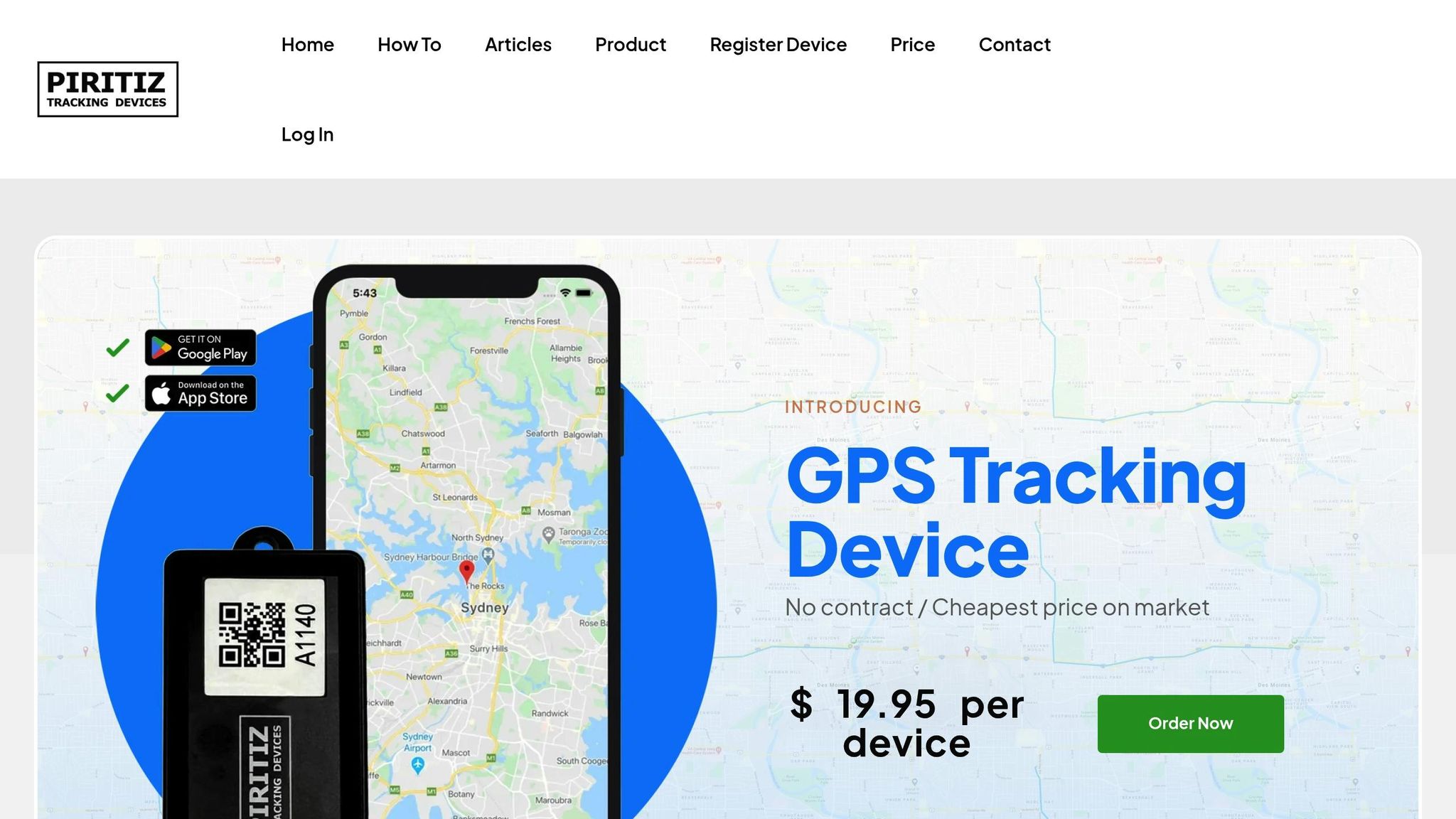
Piritiz tracking devices stand out with their rugged design and reliable performance, tailored for demanding outdoor environments.
Waterproof and Durable Construction
Designed to endure tough conditions, Piritiz GPS trackers are perfect for environments like construction sites and marine applications. Their waterproof and dust-resistant build removes the need for external wiring, reducing potential failure points. Compact at 2.75 x 1.75 x 1 inches and weighing just 3.52 ounces, they can be discreetly installed on trailers, heavy machinery, and rental equipment.
The wireless, tool-free mounting system makes installation quick and hassle-free. Once in place, the tracker operates seamlessly on various equipment types, including reefers, flatbeds, dump trailers, chassis, and agricultural machinery. Amazon users have rated the device 4.0 out of 5 stars, often highlighting its long-lasting battery and compact design. This durability ensures Piritiz trackers excel in conditions where others might falter.
5-Year Battery Life and Affordable Plans
Piritiz trackers boast up to 5 years of battery life, with plans starting at just $7 per month on a two-year prepaid plan. This extended battery life is made possible by advanced energy management, which adjusts location updates based on movement and cellular coverage. While extreme temperatures may influence performance, occasional checks can help maintain reliability.
For remote or rarely serviced equipment, this longevity is a game-changer. At $19.95 per unit, these trackers provide a budget-friendly solution for monitoring assets over long periods. As Vitaliy, a small business owner, shared:
"As a small trucking business owner, I needed a reliable and user-friendly tracker – and the Piritiz GPS Tracker has been just that. Installation was a breeze, and the long-lasting battery is a game-changer."
Up-to-Date Monitoring for Fleet Management
The Piritiz system offers continuous 24/7 monitoring through its mobile app, available for both iOS and Android. This enables theft recovery, efficient fleet management, and asset tracking. The platform also provides movement alerts and location updates without excessive battery drain from constant movement tracking. James, a user, recounted:
"Last week we couldn’t find our trailer, we thought it was stolen. Using tracker we found out that it was just towed."
With accurate location updates and proof of location, fleet managers can prevent theft and streamline operations across multiple sites. Even if equipment sits idle for months, the tracker remains active, ready to assist with recovery when needed. These features make Piritiz trackers a dependable choice for managing assets in challenging environments.
Conclusion
Wireless GPS trackers designed for tough environments offer reliability that fleet managers and business owners can count on for years. With rugged, waterproof construction and the ability to function in extreme temperatures ranging from -40°F to 176°F, these devices are built to endure. Their battery-powered designs can last up to 5 years, while the wireless setup and magnetic mounting make installation quick and hassle-free. Plus, motion-activated updates help conserve battery life, striking a balance between efficiency and performance. This makes them an excellent choice for best GPS trackers for trailers, heavy equipment, and remote assets that aren’t suited for hardwiring.
For industries like construction, logistics, and equipment rentals, these trackers help recover stolen property faster and lower operational costs. Features like movement-based monitoring and geofencing alerts provide the visibility needed to safeguard valuable assets across multiple locations.
In short, these trackers combine durability with ease of use. Whether you’re overseeing a large fleet spread across states or keeping tabs on equipment at job sites, they deliver the protection you need with minimal upkeep. Built to withstand tough conditions, they allow you to focus on running your business, knowing your assets are secure 24/7.
FAQs
How do wireless GPS trackers stay connected in tough environments?
Wireless GPS trackers are engineered to stay connected, even in tough environments, thanks to advanced communication technologies like GSM, Wi-Fi, and satellite networks. These technologies ensure location data is transmitted reliably, even in areas with little to no cellular coverage. Satellite-enabled trackers are especially useful in remote locations since they communicate directly with satellites, eliminating the need for ground-based networks.
Built to endure harsh conditions, these devices feature durable, waterproof casings and long-lasting batteries, ensuring they stay functional in rugged settings. This sturdy design, paired with dependable communication systems, makes GPS trackers effective for monitoring vehicles, trailers, or equipment in extreme or remote areas.
How do these GPS trackers maintain such a long battery life?
These GPS trackers come equipped with smart power-saving features to extend battery life. With capabilities like motion-activated tracking, energy-efficient components, and deep sleep modes, they conserve energy when idle. They also rely on low-power communication networks, enabling them to function for long durations – sometimes up to 5 years – without needing frequent recharges.
This makes them perfect for keeping tabs on vehicles, trailers, or equipment located in remote or tough-to-access areas where regular charging isn’t feasible.
How do wireless GPS trackers perform in extreme environments?
Wireless GPS trackers are built to perform dependably, even in tough conditions like extreme weather or rugged terrain. Many of these devices come with sturdy, waterproof casings that shield them from water, dust, and debris, keeping them operational in harsh environments. Designed with high-grade materials and tightly sealed components, they are well-suited for challenging settings such as construction sites or remote areas.
What sets these trackers apart is their ability to handle extreme temperatures, from freezing cold to intense heat. Equipped with long-lasting batteries and wireless functionality, they provide a reliable way to monitor assets like vehicles, trailers, or equipment in demanding situations. These features ensure uninterrupted tracking and added security, no matter the environment.