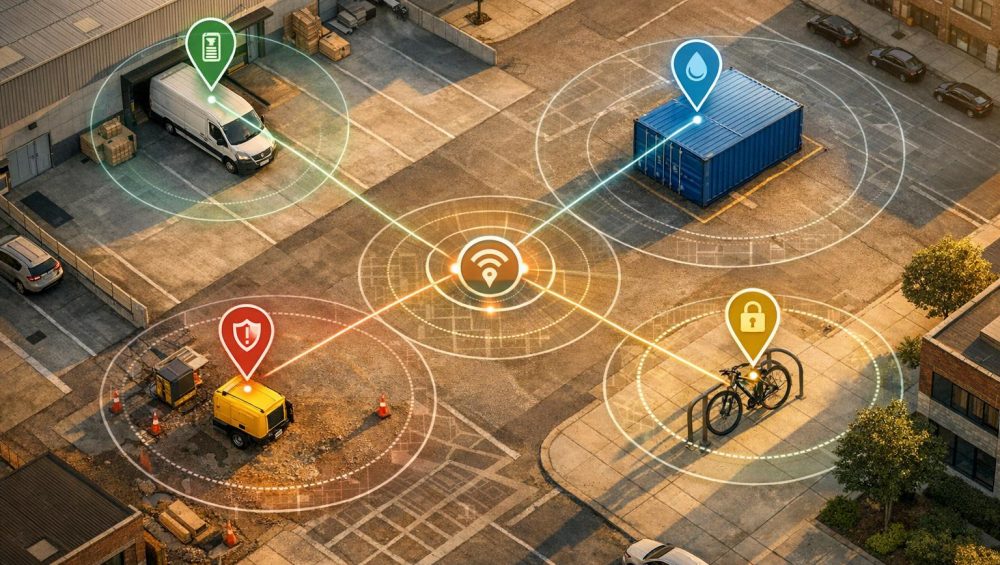
Want to protect your assets and improve efficiency? Multi-asset GPS trackers are the solution. Whether you’re managing vehicles, equipment, or trailers, these devices offer movement-triggered tracking, theft prevention, and operational insights – all while saving time and money.
Key Features to Consider:
- Movement-Triggered Tracking: Locate assets instantly with map view updates and alerts.
- Long Battery Life: Devices can last up to 5 years, reducing maintenance hassle.
- Durable & Waterproof Design: Built to withstand harsh conditions like rain, mud, and extreme temperatures.
- Wireless Installation: Quick and easy setup without special tools.
- Movement & Tamper Alerts: Immediate notifications for unauthorized activity.
- Geofencing: Set virtual boundaries for better monitoring and security.
- Mobile App Integration: Manage assets on-the-go with location data and alerts.
- Flexible Pricing Plans: No contracts, affordable monthly rates, and no hidden fees.
- Fleet Management Tools: Optimize routes, monitor driver behavior, and schedule maintenance.
- 24/7 Access: Always know where your assets are, anytime, anywhere.
Example: A construction company recovered $125,000 worth of stolen equipment in just 3 hours, thanks to instant alerts and tracking.
These features make GPS trackers a smart investment for reducing theft, improving efficiency, and protecting your bottom line.

10 Essential Features of Multi-Asset GPS Trackers
Selecting the Right Asset Tracking Device | OnAsset‘s Paul Rodwell
sbb-itb-4827db2
1. Up-to-Date Location Tracking
When a trailer heads out or equipment moves unexpectedly during off-hours, getting immediate alerts becomes crucial. Forget outdated logs or endless phone calls – up-to-date map updates refresh every few seconds, letting you see live coordinates on your screen without delay.
GPS tracking devices can significantly reduce theft losses, with recovery rates for stolen assets soaring to 93% when active tracking is in place, compared to just 11% for untracked items. For example, one construction company recovered $125,000 worth of stolen equipment in just 3 hours by relying on automated movement alerts and location data. This kind of rapid response is only possible with continuous monitoring.
Up-to-date tracking isn’t just about security – it also streamlines operations. Dispatchers can reroute vehicles to avoid traffic, managers can reassign idle equipment to new job sites, and customers can receive accurate ETAs instead of vague estimates. Research shows that up-to-date shipment tracking can cut delays by up to 58% and reduce operational costs by about 15%. These benefits depend on the precision of the tracking technology.
Modern GPS systems ensure highly accurate location data. Advanced GPS receivers can pinpoint locations within 2.5 to 3 meters under optimal conditions. Meanwhile, dual-frequency chips further enhance accuracy, reducing errors from 10 meters down to less than 3 meters. For high-value assets or during high-risk times, increasing the ping frequency to every 10–30 seconds provides even more detailed visibility.
Piritiz tracking devices leverage this precision, offering 24/7 access through a mobile app. This means you’re always just a few taps away from knowing exactly where your vehicles, trailers, or equipment are. Whether managing a construction fleet or keeping an eye on stored recreational vehicles, this instant visibility eliminates guesswork and provides complete peace of mind.
2. Long Battery Life
Skipping battery recharges can throw tracking programs off course. When devices lose power during busy times, they stop working – and if an asset moves or gets stolen during that downtime, your investment in tracking takes a big hit. For remote assets like underground generators, storage containers, or trailers parked far away, frequent battery replacements aren’t just inconvenient – they can be nearly impossible. That’s why strong battery performance is just as important as movement-triggered tracking when it comes to protecting your assets.
"Maintenance is the constraint that quietly makes or breaks most tracking programs." – Mitch Belsley, Contributor, GPX
Battery life plays a key role in tracking reliability. For example, doubling how often a device sends updates (ping frequency) can cut its battery life in half. That’s why finding the right balance for update intervals is so important. Stationary assets might only need one check-in per day, while active equipment could require more frequent updates. Devices that transmit just once daily can last up to 10 years on a single battery. However, extreme cold can reduce the efficiency of lithium-ion batteries by as much as 20%.
Piritiz tracking devices, priced at $19.95 each, come with subscription plans ranging from $7 to $9.95 per month. These devices offer wireless, waterproof tracking for vehicles, trailers, and equipment. With advanced energy management, they provide up to 5 years of battery life. For assets exposed to harsh temperatures, the company suggests annual battery replacements to ensure top performance. Otherwise, these trackers run independently with minimal upkeep.
This "set-and-forget" setup takes the hassle out of tracking. Instead of worrying about hardware maintenance, your team can focus on the data and insights these devices deliver. Meanwhile, your assets stay visible 24/7 through the mobile app – whether they’re parked in a remote location or on the move across state lines.
3. Waterproof and Durable Design
When it comes to tracking devices, durability is just as important as battery life, especially if the device is used in tough environments.
Think about assets like trailers, construction equipment, or outdoor machinery. These are constantly exposed to rain, mud, dust, and extreme temperatures. If your tracker can’t handle these conditions, it might fail at the worst possible moment, leaving you without the critical data you need.
Industrial-grade trackers are built to withstand extreme temperatures, operating reliably between -40°F and 176°F. This is vital because extreme heat or freezing cold can damage electronics that aren’t properly protected. A tracker that shuts down in such conditions could compromise your entire security setup.
The durability of a tracker is often measured by its IP rating, which indicates its resistance to dust and water. For example, an IP67-rated device is dust-tight and can survive being submerged in up to 1 meter (3.3 feet) of water for 30 minutes. If your equipment faces high-pressure cleaning or operates in flood-prone areas, an IP69K-rated device is a better choice. These devices are built to handle intense water jets at high temperatures.
Piritiz tracking devices are designed with these challenges in mind. They feature waterproof construction, sealed housings to block out moisture and dust, and a wireless design that removes weak points like exposed connection ports. These features make them reliable in unpredictable, real-world conditions.
"Losing tracking capabilities because a device wasn’t waterproof could be costly and even dangerous." – PassTime
Additionally, tough mounting systems and internal antennas ensure the tracker stays securely in place, even during rough handling or transport. Whether it’s attached under a trailer during a downpour or mounted on dusty construction equipment, these design elements ensure your tracker keeps working when you need it the most.
4. Wireless and Easy Installation
Setting up modern GPS trackers is a breeze. Thanks to their wireless designs, there’s no need for complicated wiring, drilling, or special tools. You can install a tracker on nearly any asset in just seconds.
This simplicity also reduces the risk of installation mistakes. Improper setup is a common issue, with up to 30% of GPS devices underperforming or failing because of it. Take OBD-II plug-in trackers, for instance – they can be installed in under a minute by sliding them into a vehicle’s diagnostic port. Similarly, magnetic trackers attach instantly to surfaces like bumpers, wheel wells, or trailer frames.
Piritiz tracking devices are versatile, working with both powered and non-powered assets. This flexibility allows quick reallocation between vehicles, trailers, shipping containers, construction equipment, or even toolboxes.
"Everything is very simple and easy to use and now I don’t have to worry where is my equipment" – Brian, Fleet Manager
The ease of installation doesn’t just save time – it cuts costs, too. By avoiding professional installation fees, businesses can deploy trackers across multiple assets quickly and affordably. If you’re managing a fleet or overseeing rental equipment, this means you can roll out tracking across dozens of vehicles or tools in no time. Portable trackers are especially handy for rental companies and contractors, as they can be easily reassigned to temporary assets.
Compact designs add even more appeal. Many wireless trackers are as small as a key fob or about 2.25 inches in diameter, making them easy to conceal and harder for thieves to spot. Whether you’re securing a construction site – where theft averages $6,000 per incident – or managing a fleet of trailers, these discreet, portable trackers enhance efficiency while keeping your assets safe.
5. Instant Movement and Tamper Alerts
Getting notified the moment an asset moves without permission can make all the difference. With instant alerts sent via SMS, email, or push notifications, you have a chance to act quickly when something’s wrong. Motion sensors play a key role here, detecting unauthorized movement of vehicles, trailers, or equipment – especially during off-business hours, when theft is more likely to occur.
But it’s not just about movement. Protecting against tampering is just as important. Tamper alerts add another layer of security by notifying you if a tracker is removed, disconnected, or interfered with. This is crucial because thieves often try to disable tracking devices before making off with an asset. In fact, GPS tracking has been shown to reduce theft losses by 70-80% and increase recovery rates to over 93%.
"Last week we couldn’t find our trailer, we thought it was stolen. Using tracker we found out that it was just towed." – James, Customer
Considering that theft on construction sites averages $6,000 per incident, having timely alerts isn’t just helpful – it’s essential.
To stay ahead, configure after-hours alerts to notify managers if equipment moves outside normal working hours. Setting a wake-on-motion threshold – around 3 seconds – helps capture the asset’s initial location immediately. Piritiz tracking devices ensure you’re always in the loop, sending up-to-date notifications for both movement and tampering, so you can act fast and keep your assets secure.
6. Geofencing Capabilities
Geofencing is a game-changer for managing fleets and multi-asset operations, offering automated oversight and an added layer of security. At its core, geofencing creates a virtual boundary around a specific geographic area using GPS technology. When an asset crosses this boundary, the system can instantly trigger alerts or log the event. This is all handled seamlessly through GPS data and management software, making it easier to monitor entry and exit points.
This feature doesn’t just boost security – it also makes operations more efficient.
"Geofencing is a location-based service that uses GPS to create a virtual boundary around a real-world geographic area… When a fleet vehicle enters or exits this boundary, the system automatically records the time and sends an alert to the manager." – Alfredo Montalvo, Spytec
On average, automated logging saves managers about 30 minutes per shift, while geofencing reduces theft detection time and incidents by up to 30%. For added security, after-hours geofences around job sites can send instant alerts in case of breaches, cutting detection times from hours to just seconds.
To fine-tune geofencing, consider using polygon-shaped boundaries to match property lines accurately and avoid unnecessary alerts. Dwell timers are another useful tool – they ensure an asset must remain in or out of a zone for at least two minutes before triggering an alert, helping to filter out false alarms from GPS drift or quick drive-bys. Color-coded zones on the dashboard – like red for restricted areas and green for customer sites – make it easy for dispatchers to assess the status of operations at a glance.
Geofencing delivers precise control, typically achieving accuracy within 10–30 feet. With Piritiz tracking devices, you can integrate this feature to monitor operations, prevent unauthorized use, and automate workflows – removing the need for constant manual oversight.
7. Mobile App Integration
Keep tabs on all your assets effortlessly with the Piritiz mobile app, available on both the Apple App Store and Google Play. Whether you’re tracking cars, trailers, RVs, or heavy equipment, the app brings movement-based monitoring right to your pocket.
At the heart of the app is map tracking, which makes mobile monitoring incredibly efficient. An integrated map shows the exact location of your assets as it moves, helping you quickly dispatch the nearest equipment when needed. To make things even clearer, you can assign custom names like "Trailer 5" for easy identification.
The app also sends push notifications to keep you in the loop. If an asset moves without permission, is tampered with, or crosses a geofence, you’ll get an immediate alert. And this speed can make a huge difference: one construction company managed to recover $125,000 worth of stolen equipment in just three hours, thanks to these automated alerts.
Beyond alerts, the app boosts overall efficiency. For example, Shoring Engineers saved between $50,000 and $120,000 by improving equipment visibility and management using GPS tracking. Similarly, Boudreau Pipeline cut monthly costs by $15,000 to $19,000 by leveraging utilization and idle reports. The app’s historical playback feature also lets you review routes and stops directly on your phone, making audits, billing checks, and driver accountability much easier.
"Everything is very simple and easy to use and now I don’t have to worry where is my equipment" – Brian, Fleet Manager
The app supports adjustable refresh rates (from 15 to 60 seconds), so you can balance periodic updates with battery conservation. Plus, you can set up geofences around job sites, enable notifications for unauthorized movement, and even monitor battery life. With Piritiz devices lasting up to five years, you can count on dependable, long-term tracking.
8. No-Contract Flexible Pricing Plans
Long-term contracts can be a burden, especially when you’re paying for assets that aren’t being used. No-contract pricing plans offer a solution by letting you adjust your tracking needs without penalties, avoiding cancellation fees and activation charges altogether.
These plans are particularly useful for businesses with seasonal operations. For instance, construction equipment that sits idle during the winter or rental trailers only needed during peak seasons can be managed on a month-to-month basis. As GPS Insight points out, "For fleets with seasonal assets, flexible contracts can significantly reduce costs."
The difference in cost between traditional and no-contract plans is striking. Over three years, traditional subscriptions can run between $640 and $1,840, while no-contract plans typically cost only $100–$200. This flexibility means real savings for businesses with fluctuating asset needs. Plus, there are no activation fees, no cancellation penalties, and no unexpected charges to worry about.
"Was searching a lot across network, this price is the most affordable."
– Jennifer, Business Owner
These savings highlight the importance of looking at total ownership costs, not just the monthly rate. A low monthly fee might seem appealing but can quickly escalate with early termination charges, minimum device requirements, or hidden fees. With 72% of vehicle owners steering clear of long-term commitments, transparent no-contract plans provide a cost-effective way to manage dynamic asset needs.
9. Fleet Management and Reporting Tools
Managing multiple assets efficiently requires tools that can turn GPS data into practical insights. Fleet management systems do just that, helping businesses identify inefficiencies, avoid breakdowns, and make better decisions about equipment deployment. These tools not only enhance asset security but also improve overall operations.
With location visibility on a single map, dispatching becomes faster, reducing response times significantly. Predictive maintenance features track engine hours, mileage, and diagnostic trouble codes, alerting you to potential issues before they escalate. Studies show that automated maintenance scheduling can extend vehicle life by 20%–30% and cut unexpected breakdown costs by up to 40%.
Another key feature is driver behavior monitoring. By using accelerometer data, these systems track harsh braking, rapid acceleration, and speeding. Driver scorecards generated from this data have been shown to lower accident rates by 20%–30%. Additionally, route optimization tools analyze traffic patterns and historical data to reduce drive times by 15%–25%, which translates into less fuel consumption.
As Mitch Belsley from GPX Intelligence explains:
"Commercial GPS tracking isn’t really about a dot on a map anymore. The real win comes when your GPS tracking system helps you prevent loss, cut downtime, and spot inefficiencies early." – Mitch Belsley, Contributor, GPX Intelligence
For seamless operations, platforms with open APIs allow GPS data to integrate directly into ERP or Transportation Management Systems. This ensures a smooth flow of information into accounting, payroll, and dispatch systems. Piritiz Tracking Devices, for instance, support these features via a mobile app, enabling continuous, up-to-date asset tracking.
To maximize efficiency, adjust reporting frequency based on asset type. Active vehicles may require updates every 30–60 seconds, while stored assets can use less frequent pings. These tools also help identify underused equipment, simplify compliance reporting, and reduce fuel consumption by up to 15%.
10. 24/7 Tracking Access
With 24/7 tracking, you can monitor your assets anytime, anywhere. This constant visibility takes the guesswork out of managing trailers, vehicles, and equipment spread across multiple sites or regions. It not only simplifies daily operations but also adds an extra layer of security.
When it comes to theft recovery, continuous tracking makes a huge difference. Stolen assets equipped with active tracking have a recovery rate of over 93%, compared to just 11% for those without tracking. Considering that equipment theft costs U.S. businesses between $300 million and $1 billion annually, this kind of tracking is a game-changer.
But security is just one piece of the puzzle. 24/7 access also improves operational efficiency. Dispatchers can quickly locate the nearest available equipment or trailer, reducing response times and improving customer service. Fleet managers can monitor asset usage, ensuring they’re only used for authorized purposes, and track idle time to optimize efficiency.
Most modern systems provide this level of access through cloud-based platforms, complete with desktop and mobile apps for both iOS and Android. For instance, Piritiz Tracking Devices offer round-the-clock access via their mobile app, with subscription plans ranging from $7 to $9.95 per month (depending on the prepay term) and devices priced at $19.95. Reliable systems typically maintain 99.9% server uptime, ensuring you can always access your data when you need it.
You can take tracking a step further by setting up after-hours alerts. Geofencing boundaries and motion alerts can notify you of unauthorized movement during nights or weekends, helping to catch theft or misuse early. For battery-powered trackers, wake-on-motion settings ensure updates are only sent when the asset is in motion, making it a perfect complement to 24/7 monitoring.
Conclusion
Finding the right multi-asset GPS tracker means prioritizing functionality, durability, and ease of use. Up-to-date tracking and instant alerts are essential for preventing theft and improving efficiency. But even the most advanced features won’t help if the device can’t handle harsh conditions or demands constant upkeep. As Ryan Horban, GPS Tracking Expert, explains:
"Protecting your assets isn’t about features, it’s about results."
Durability is often underestimated. Trackers that fail in extreme temperatures or under high-pressure cleaning can quickly lose their value. To avoid this, choose devices with at least an IP67 rating and a battery life of up to 5 years. These features lower maintenance needs and ensure reliability.
Ease of use is just as critical. Devices that require frequent recharging, complicated setups, or constant troubleshooting can waste both time and money. Look for options with wireless, magnetic, or plug-and-play installation to simplify setup. Features like motion-activated reporting and deep sleep modes also help reduce ongoing oversight, creating a more efficient tracking solution.
Piritiz Tracking Devices check all these boxes. At $19.95 per device, with subscription plans ranging from $7 to $9.95 per month (depending on the prepay term), they offer up to 5 years of battery life, waterproof construction, wireless installation, and 24/7 mobile app access. These trackers are versatile, designed to protect a variety of asset types. As one fleet manager shared:
"Everything is very simple and easy to use and now I don’t have to worry where is my equipment."
For the best results, align your tracker with your asset’s power source – hardwired solutions work well for vehicles, while long-life lithium batteries are ideal for trailers. And make sure the device is tough enough to handle your specific environment. Choosing the right GPS tracker turns asset monitoring into a seamless, dependable tool that safeguards your investment and streamlines your operations.
FAQs
How can multi-asset GPS trackers help prevent theft and recover stolen assets?
Multi-asset GPS trackers are a game-changer when it comes to theft prevention. They provide periodic location updates and instantly alert you if your assets move beyond set boundaries. This quick notification system gives you the chance to respond immediately and stop any unauthorized activity.
If theft does occur, these trackers deliver accurate GPS coordinates, which can be shared with law enforcement to speed up the recovery process. With tools like geofencing, round-the-clock monitoring, and dependable tracking, these devices safeguard your important assets, giving you extra security and confidence.
What should I look for in a GPS tracker for tough environments?
When selecting a GPS tracker for tough environments, focus on durability, dependable communication, and extended battery life. Choose devices built to endure harsh conditions, such as those with waterproof and dustproof housings rated IP67 or higher. These features help the tracker withstand challenges like extreme temperatures, moisture, and constant vibrations.
In remote areas with poor cellular coverage, go for trackers equipped with satellite communication to maintain consistent tracking. A long-lasting battery or a low-power mode is also crucial for assets that are hard to access regularly. Additional features like movement-triggered tracking, tamper detection, and environmental sensors can boost both security and functionality. Prioritizing these elements ensures your tracker performs reliably, even in the most demanding situations.
What is geofencing, and how does it help protect and manage assets?
Geofencing uses GPS technology to set up virtual boundaries around specific locations – think job sites, storage areas, or operational zones. When a GPS-enabled asset crosses these boundaries, the system sends instant alerts, keeping you updated as it moves.
This tool boosts security by immediately flagging any unauthorized movements, which can help deter theft or misuse. It’s also a game-changer for efficiency, ensuring vehicles or equipment stick to assigned routes and stay within approved zones. With geofencing, you can keep a closer eye on your assets while making fleet management smoother and more organized.