
Disposable Freight Tracker for Pallets, LTL Loads & Containers
A one-inch, single-use GPS tracker that ships with the load and gets thrown away at delivery. Thirty days of battery, location check-ins about once per hour, and nothing to retrieve, recharge, or reconcile at the dock.
Ships from Amazon with Prime delivery. 1-year warranty. Built and supported in the USA.
- 30-day battery
- No charging
- No subscription
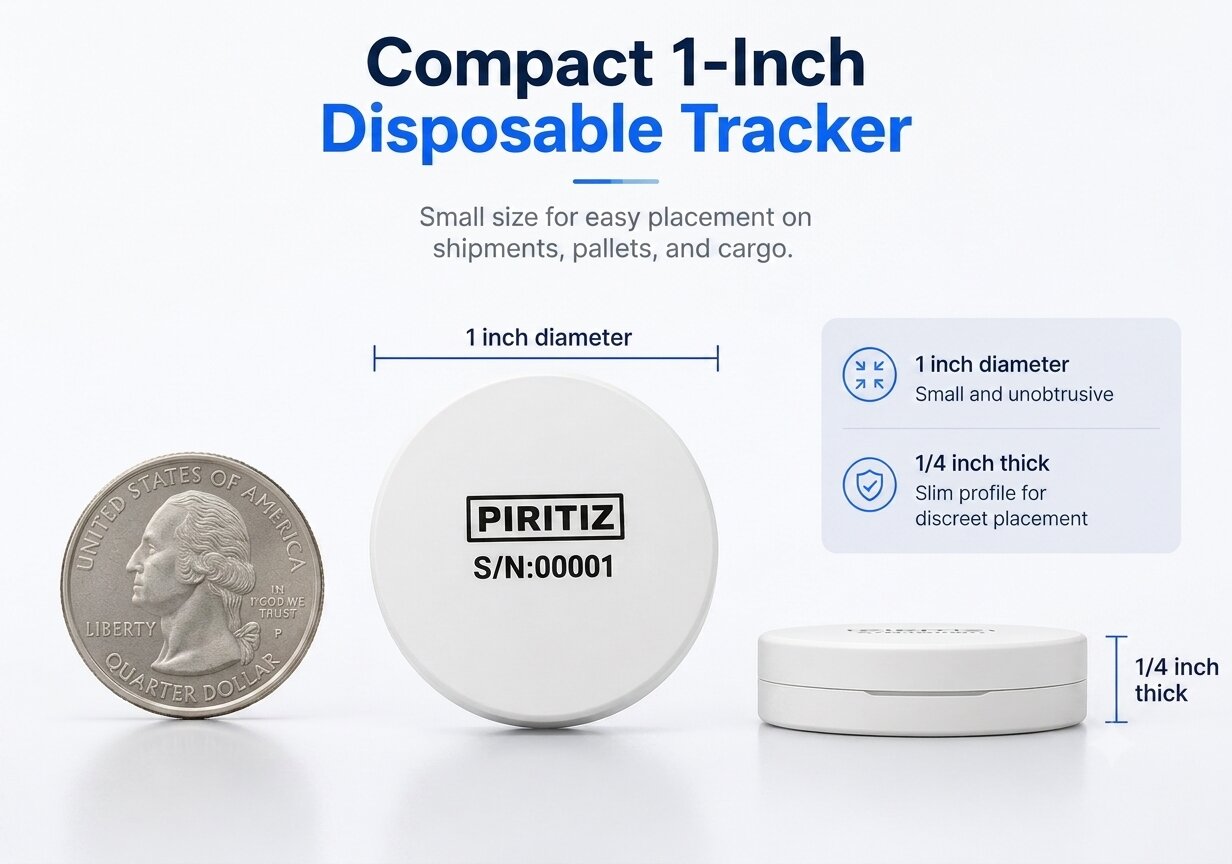
- 1″ × 1″ × ¼″
- Adhesive backing
- iOS, Android & web
What is a disposable freight tracker?
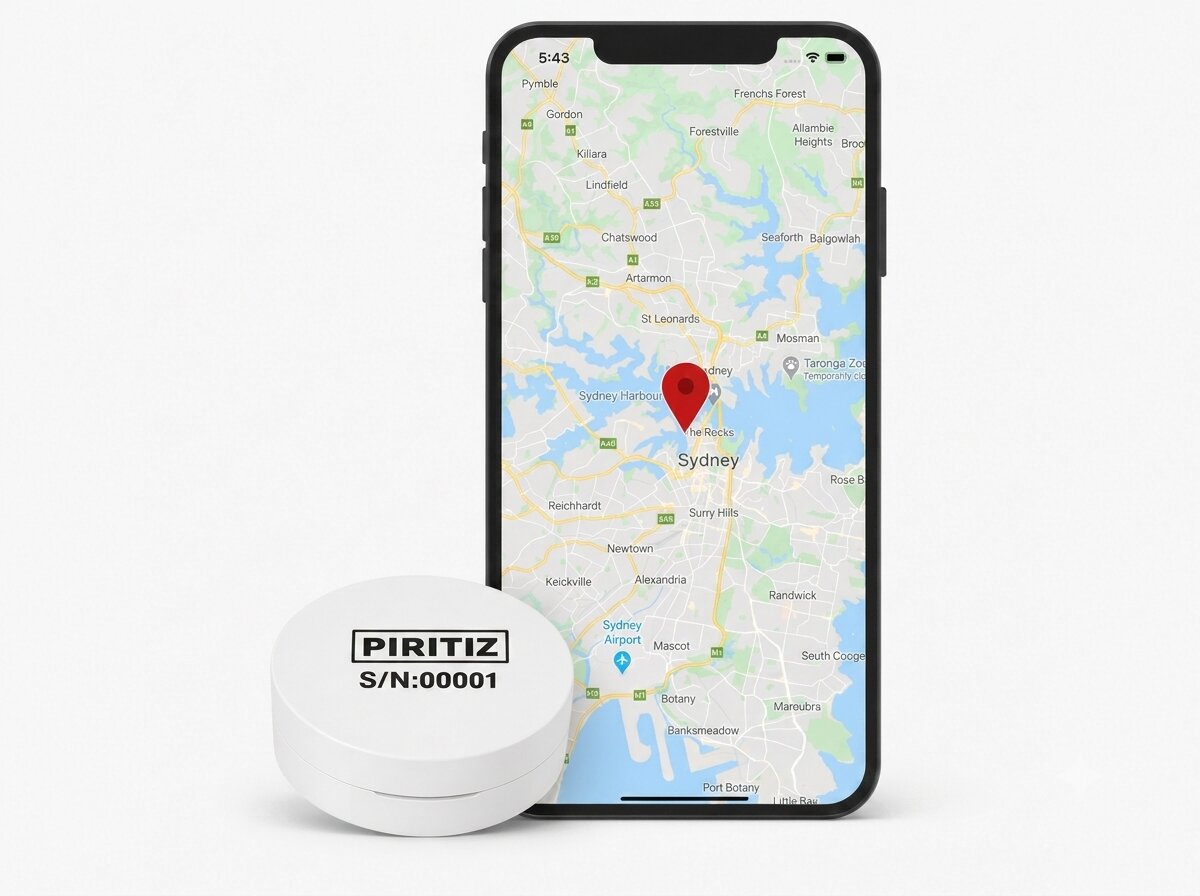
A disposable freight tracker is a small, single-use GPS device that travels with a shipment and is thrown away when the load is delivered. It has a sealed, non-rechargeable battery sized to outlast one trip, it reports its location to an online dashboard over the cellular network, and it is never collected or reused. That removes the reverse-logistics problem that makes conventional tracking hardware impractical on one-way freight.
Reusable trackers assume you get the device back. On one-way freight you usually do not. The pallet is broken down at a customer's dock hundreds of miles away, the trailer is dropped at a yard you do not control, and nobody at the receiving end has any reason to mail a $150 tracker back to you. In practice, that means a recovery rate low enough to wipe out the savings of reusable hardware.
A disposable shipment tracker prices that reality in. You buy the tracker for one load, you spend nothing on retrieval, and there is no device roster to maintain, no charging rotation, and no monthly service bill sitting on the books between shipments. For a freight broker verifying a single high-risk lane, or a shipper who moves forty loads a month and wants location history on the ten that matter, the math is straightforward.
The Piritiz tracker is a one-inch plastic disc a quarter of an inch thick — roughly the footprint of a US quarter. It sticks to a pallet corner, a crate wall, a trailer frame, or drops inside the carton with the bill of lading. Location check-ins post about once per hour to the Piritiz app or app.piritiz.com for the life of the battery.
How the tracker works — three steps, under a minute
No pairing, no configuration, no app account to provision before the truck leaves.
- 1
Attach
Peel the adhesive backing and press the tracker onto a pallet corner, crate, trailer frame, or the inside of a carton. No tools, no mounting hardware, no wiring. At a quarter-inch thick it does not interfere with stacking, wrapping, or scanning.
- 2
Activate
Activate the device with a one-time $5 fee. There is nothing to install and nothing to pair. The tracker comes online in seconds and begins reporting on the same trip it was attached to.
- 3
Track, then discard
Follow pickup, in-transit and delivery status from your phone or a laptop, with a full location history for the trip. When the load is delivered, the tracker is discarded — nothing to ship back, nothing to reconcile.
What shippers, brokers and 3PLs use it for
One device, four jobs that reusable hardware handles badly.
Pallet and LTL shipment tracking
An LTL pallet changes hands three or four times between origin and delivery, and carrier tracking only tells you what was scanned — not where the freight physically sat for two days. A pallet GPS tracker inside the wrap gives you your own location history, independent of the carrier's portal, so you can see the cross-dock delays and the unscheduled overnight stops that never appear on a status page.
Container and drayage visibility
Container numbers tell you what a terminal has recorded. They do not tell you where the box is between the port and the yard. Dropping a container GPS tracking device inside before the doors close gives you position updates through drayage, the chassis pool, and the final delivery — the legs where containers most often go quiet.
Trailers, drop lots and cross-docks
Unattended trailers in drop lots and cross-dock yards are where freight tends to disappear. A tracker riding in the load gives you a last-known position if a trailer is moved without notice. For powered and long-term trailer monitoring, our reusable GPS tracker for trailers is the better fit — the disposable is for the freight, not the equipment.
High-value and high-risk lanes
You do not need a tracker on every load. You need one on the loads that would hurt. A cargo GPS tracker at under thirty dollars is cheap enough to assign per-shipment on electronics, pharma, liquor, copper, or any lane with a claims history — without committing to fleet-wide hardware or an annual contract.
Evidence when a load goes dark
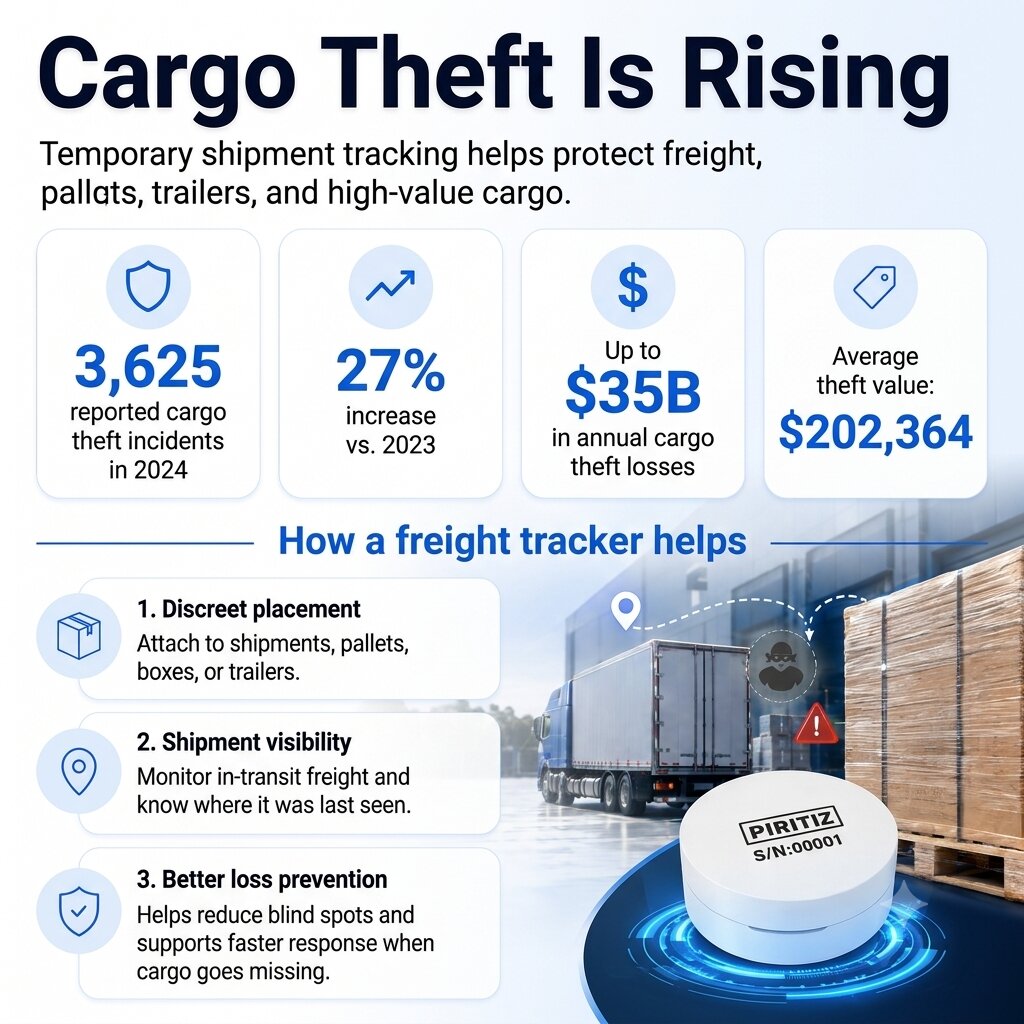
Cargo theft and double-brokering losses have climbed hard enough that most brokers now carry a lane they simply refuse to quote. The expensive part is rarely the first hour — it is the two weeks afterward, when nobody can say where the freight actually went, the carrier's story cannot be checked, and the claim comes down to one party's word against another's.
A tracker in the load changes what you are arguing about. Instead of reconstructing a route from call logs and scan events, you have a recorded position history: where the freight was picked up, the stops it made, how long it sat, and the last place it reported before it stopped moving.
- Verify the route actually run — not the route on the rate confirmation.
- Catch re-brokered loads when freight moves toward an address nobody agreed to.
- Give recovery a starting point with a last-known location instead of a guess.
- Support a claim with your own timestamped position history.
- Stay discreet — a one-inch disc inside a carton is not an obvious target the way an external label is.
Location check-ins post about once per hour. This is passive shipment monitoring for visibility and evidence — it is not a security service, a guarantee against loss, or a recovery guarantee.
Technical specifications
| Device type | Single-use, disposable GPS shipment tracker |
|---|---|
| Battery life | 30 days, sealed and non-rechargeable — no charging at any point |
| Location check-ins | About once per hour for the life of the battery |
| Dimensions | 1″ × 1″ × ¼″ (approx. 25 × 25 × 6.4 mm) |
| Enclosure | Rigid plastic with adhesive backing |
| Connectivity | Cellular and Bluetooth |
| Platform | Piritiz app for iOS and Android, plus app.piritiz.com in any browser |
| Activation | One-time $5 activation fee — no pairing or configuration |
| Subscription | None. No monthly fee, no contract, no cancellation |
| Attachment | Adhesive — pallet corner, crate, carton, or trailer frame |
| Sensors | Location only — no temperature, humidity or shock sensing |
| Warranty | 1 year |
| Unit price | $24.95 per tracker, plus a one-time $5 activation |
Need temperature or humidity logging for cold-chain freight? This tracker reports location only — it is not a cold-chain data logger, and we would rather say so here than have it turn up as a surprise at the receiving dock.
Disposable, reusable, or a Bluetooth tag?
These solve genuinely different problems. Picking the wrong one is the usual reason freight tracking gets abandoned after a quarter.
| Disposable freight tracker | Reusable GPS tracker | Bluetooth tag | |
|---|---|---|---|
| Best for | One-way freight you will not get back | Trailers and equipment you own | Items that stay near a phone |
| Needs retrieval | No | Yes | Yes |
| Battery | 30 days, sealed | Months to years, rechargeable or replaceable | Around a year, coin cell |
| Cost per shipment | Fixed and known up front | Low if recovered — high if not | Low |
| Ongoing fees | None | Often a monthly plan | None |
If the asset comes home to you, buy hardware once and keep it — see the Piritiz 5-year-battery tracker for trailers, equipment and vehicles. If the freight is gone the moment it is delivered, a disposable tracker is cheaper than a reusable one you never see again.
No subscription, no contract, no per-device plan
Most shipment tracking hardware is sold on a service model: a low device price, then a monthly line item per unit that continues whether or not anything is moving. That works for a fleet with steady utilization. It works badly for freight, where you might track thirty loads in March and four in July.
This tracker is a one-time purchase. You pay $24.95 for the device and a $5 activation, and that is the entire cost of tracking that shipment. There is no plan to cancel when the load is delivered, no seat count to manage, and no renewal to forget about. Buy them as you need them.
We list the $5 activation separately rather than folding it into the sticker price, because you should be able to compare total cost against anything else you are looking at without reading a footnote. Your total is $29.95 per tracked shipment.
Frequently asked questions
How does a disposable freight tracker work?
You stick the tracker to a pallet, crate or carton and activate it. It connects to the cellular network and posts a location check-in about once per hour to the Piritiz app or app.piritiz.com, building a position history for the trip. The sealed battery runs for about 30 days, and when the shipment is delivered the device is discarded rather than collected.
How long does the battery last?
About 30 days from activation. The battery is sealed and non-rechargeable — it is sized to outlast a single freight trip, including cross-country LTL runs and multi-stop routes, and it cannot be topped up.
Is there a monthly fee or subscription?
No. The tracker costs $24.95 with a one-time $5 activation fee, and that is the full cost. There is no monthly plan, no contract, and nothing to cancel after delivery.
How often does it report a location?
About once per hour. That interval is what allows a sealed battery to cover a 30-day shipping window without charging. It is designed for shipment visibility and location history across a trip — not second-by-second movement.
Can I use a disposable GPS tracker for pallets and LTL shipments?
Yes — that is the primary use case. The tracker is thin enough to sit under stretch wrap or in a pallet corner without interfering with loading, stacking or scanning, and it gives you position history that is independent of the carrier's own scan events.
What happens to the tracker after delivery?
It is discarded. There is nothing to ship back, no return label, no recovery process, and no device to reconcile against an equipment list. That is the entire point of a single-use tracker on one-way freight.
Does it track temperature or humidity?
No. This device reports location only. If you need temperature logging for cold-chain freight, a dedicated data logger is the right tool.
Is it legal to put a GPS tracker in my own shipment?
Tracking freight you own or are contractually responsible for is standard practice across logistics. What is not acceptable is using a tracker to follow a person or to monitor property you have no right to monitor. If you are unsure how this applies to a specific arrangement, check with your own counsel — we cannot give legal advice.
How many can I order?
Trackers are sold individually through Amazon, so you can buy one to test a lane before committing. If you need volume for a regular program, contact us at [email protected] and we will work out quantity pricing.
Track the load that would actually hurt to lose
$24.95 per tracker plus a one-time $5 activation. Thirty days of battery, no subscription, nothing to send back. Buy one, put it on your worst lane, and see what the carrier's status page was not telling you.
Prime delivery · 1-year warranty · questions: [email protected]