No-contract GPS devices provide flexibility with month-to-month or prepaid plans, making them ideal for businesses and individuals who want to track assets without long-term commitments or hidden fees. Here’s what to prioritize when choosing one:
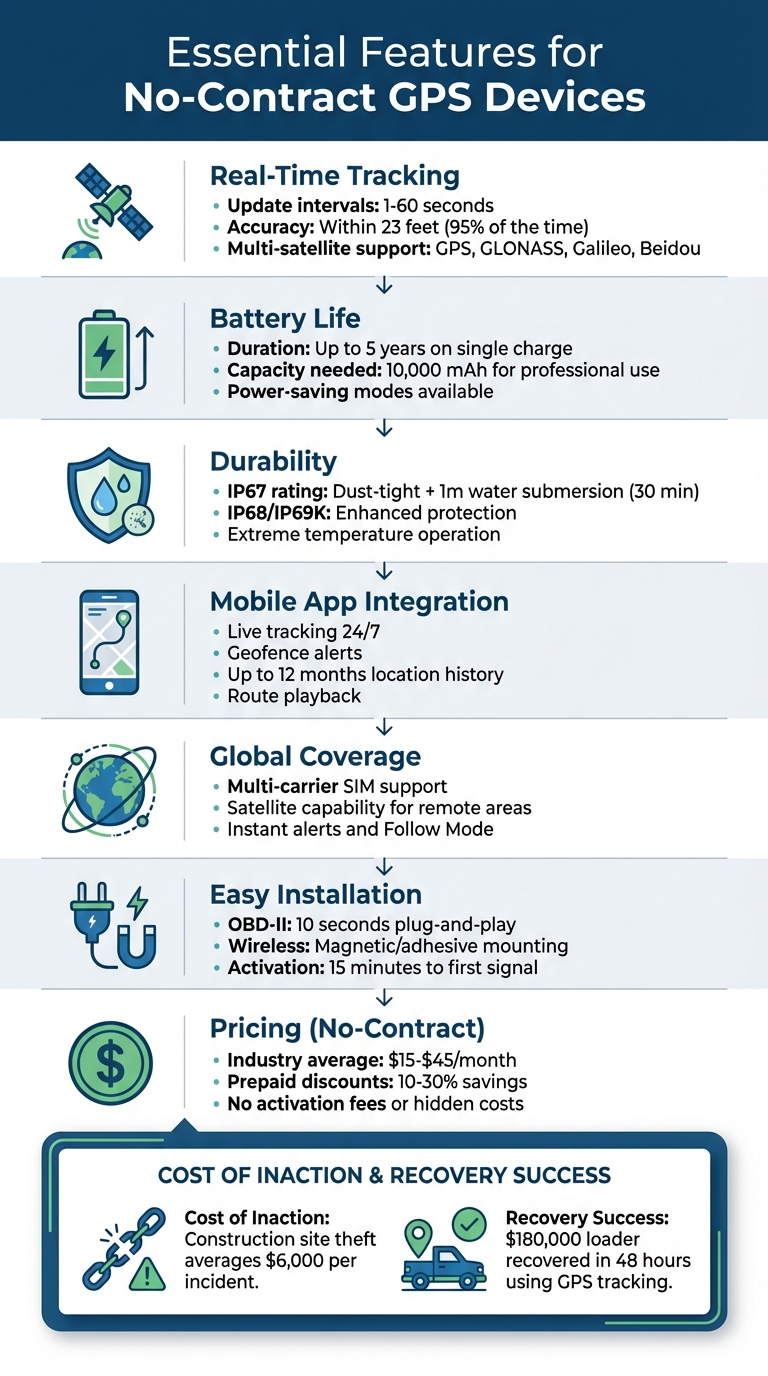
- Real-Time Tracking: Look for devices that connect to multiple satellite systems (e.g., GPS, GLONASS) for accurate location updates. Update intervals range from 1 second to 60 seconds, balancing precision and battery life.
- Battery Life: Opt for trackers with extended battery life – some last up to 5 years on a single charge. Features like motion-activated tracking and power-saving modes help conserve energy.
- Durability: Weatherproof designs (IP67 or higher) and rugged materials ensure reliability in harsh conditions. Tamper-proof mounting adds extra security.
- Mobile App Integration: A good app provides live tracking, geofence alerts, route history, and customizable notifications for better asset management.
- Global Coverage: Devices with multi-carrier SIMs or satellite capabilities ensure connectivity, even in remote areas.
- Easy Installation: Plug-and-play or wireless options make setup quick and simple.
- Transparent Pricing: No-contract plans range from $7–$25/month, with prepaid discounts available.
These features help protect assets, reduce theft risk, and streamline fleet management. For instance, construction site theft averages $6,000 per incident, making reliable GPS tracking a smart investment.
No-Contract GPS Device Features Comparison Guide
A GPS tracker for almost everything with no monthly fees. The best GPS tracker on the market.
Real-Time Tracking
Real-time tracking gives you immediate location updates, making it a powerful tool for recovering stolen assets and boosting security. What separates a decent tracker from an excellent one is how often it updates and how accurate its data is. Devices that connect to multiple satellite systems – like GPS, GLONASS, Galileo, and Beidou – offer greater precision and fewer blind spots. Standard GPS accuracy is within about 23 feet 95% of the time, but using multiple satellite networks can narrow that margin even further. Another factor to consider is how often your tracker updates its location, as this affects both accuracy and battery life.
Location Update Frequency
How often a tracker refreshes its location is key to keeping tabs on your assets. Most devices update anywhere from every second to every 60 seconds, and the interval you choose can significantly impact battery life. Shorter intervals provide more precise tracking but drain the battery faster. For theft recovery, updates set between 15 and 60 seconds create a clear breadcrumb trail. On the other hand, if you’re monitoring long-term asset storage, switching to a daily update or using motion-only mode can extend battery life to months or even years. Many trackers feature built-in accelerometers that wake the device only when movement is detected, helping conserve power without compromising security. Striking the right balance between update frequency and battery performance is essential, especially with no-contract GPS devices.
Mobile App Integration
A good mobile app transforms raw tracking data into actionable insights. The best apps send instant alerts for geofence breaches, unauthorized movement, and more, while also offering tools like historical route playback for in-depth analysis. Geofencing lets you set up virtual boundaries – whether circular or polygonal – around specific areas like job sites or parking lots. If an asset crosses one of these boundaries, you’ll get an alert via SMS, email, or push notification. Additionally, these apps often include time-stamped location history, which is useful for audits, incident investigations, or verifying completed services. Some apps even store up to 12 months of location data, which can help with compliance or payroll verification.
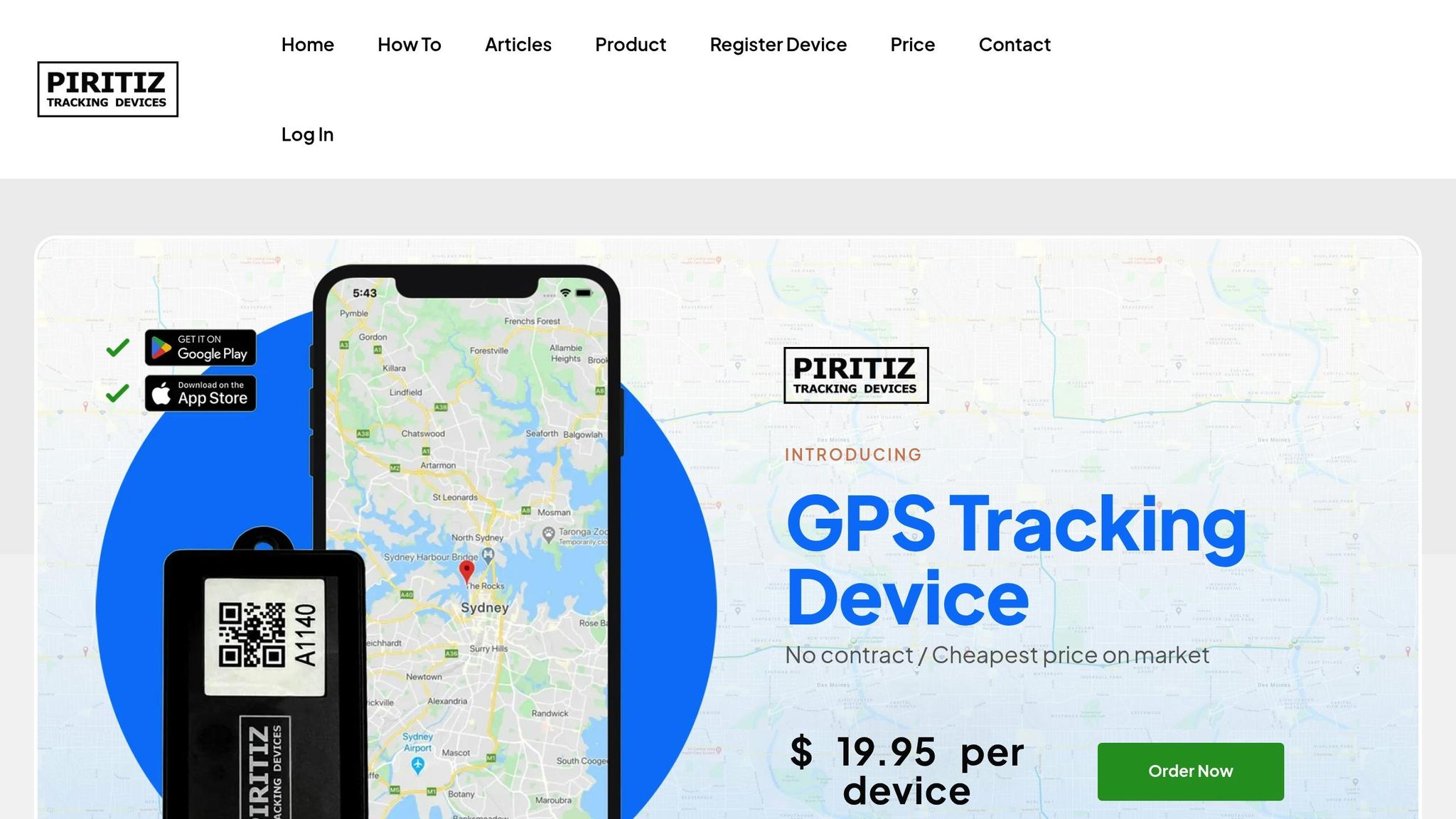
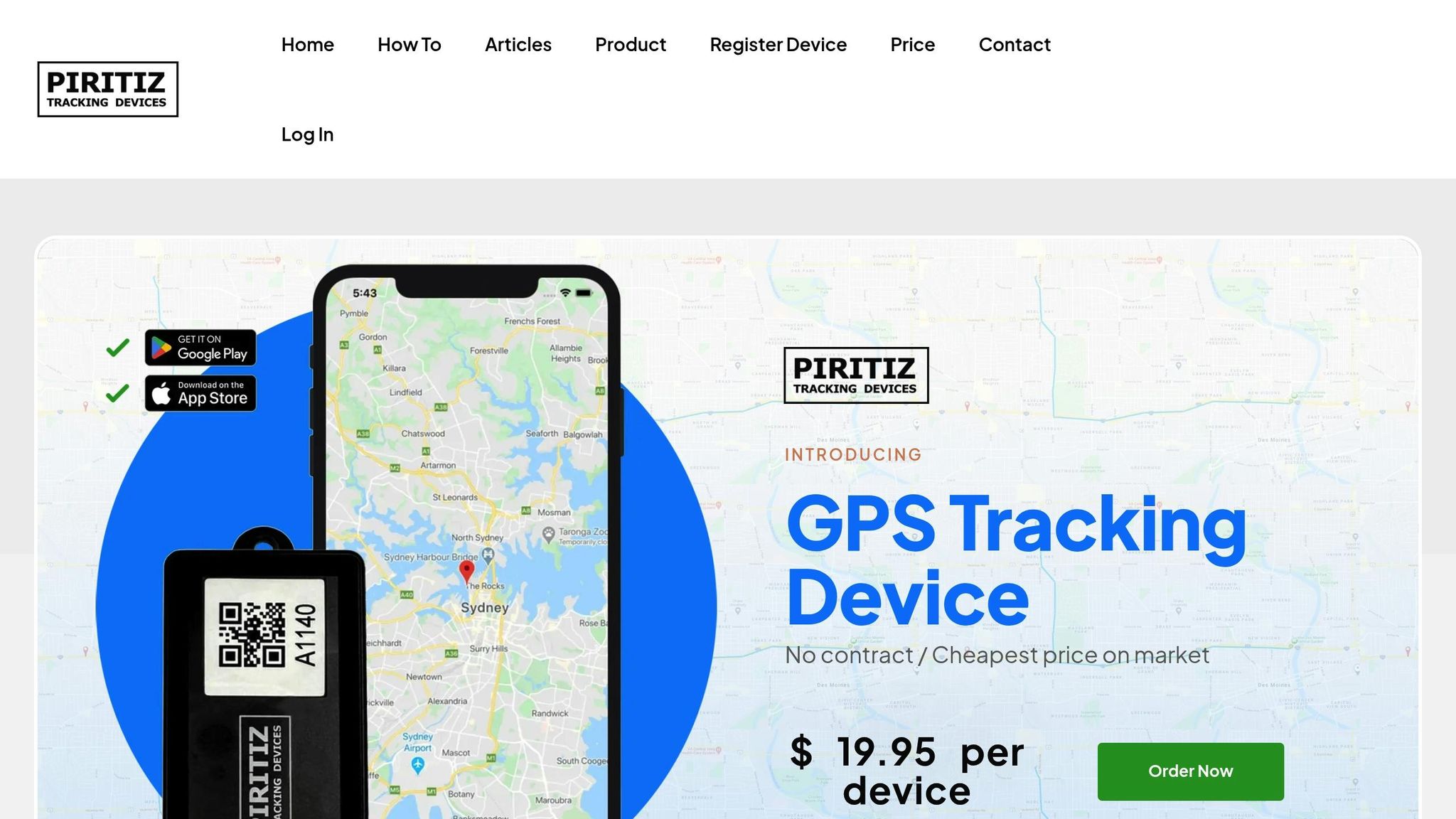
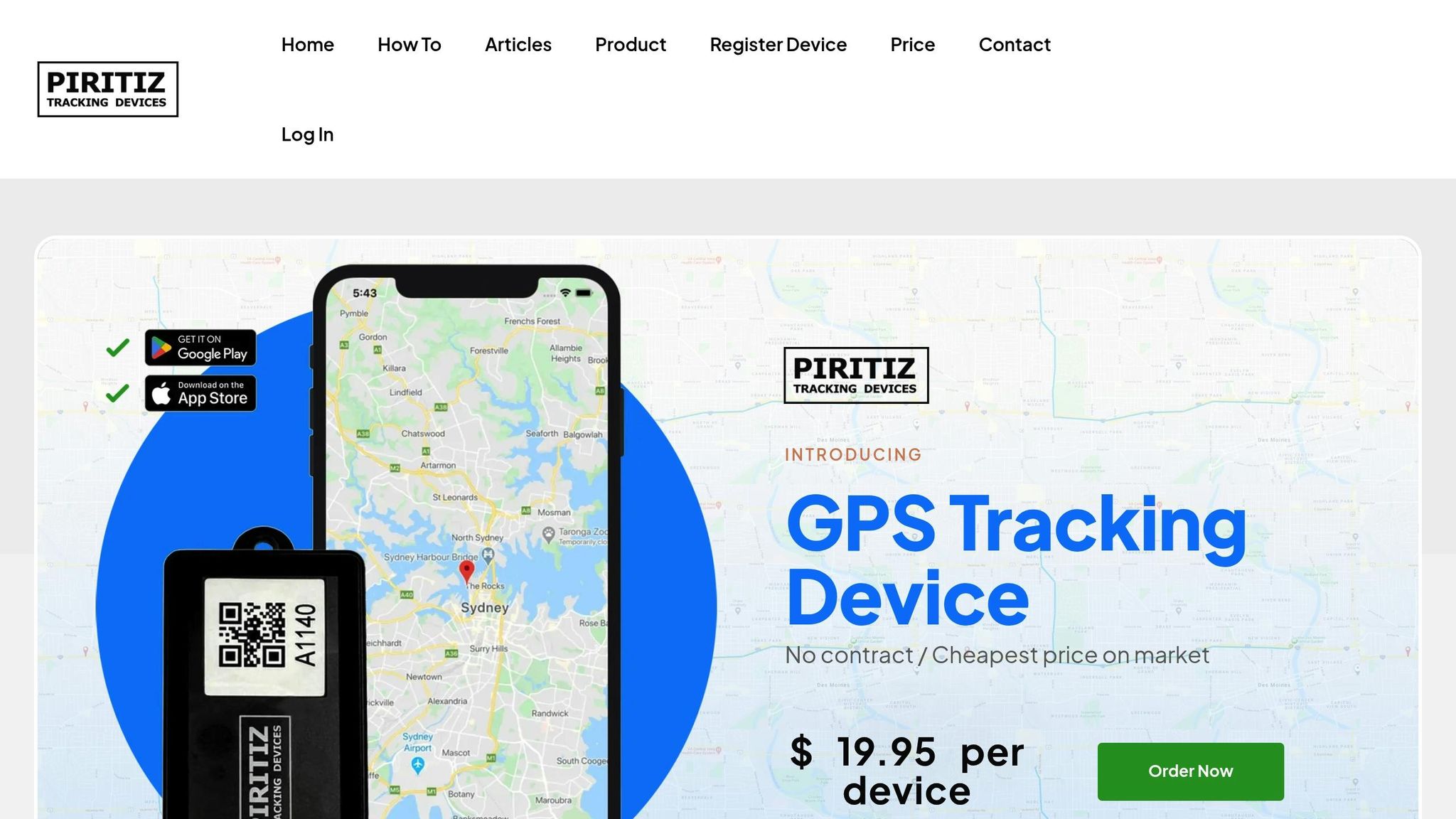
Piritiz Tracking Devices come with a mobile app offering live map tracking, instant movement alerts, and tools for managing fleets. You can access all of these features 24/7 from your smartphone. Plans start at $7/month with a 2-year prepay option, offering flexibility with no contracts or hidden fees.
Global Coverage and Alerts
For assets that move across state lines or internationally, global coverage is a must. Trackers with multi-carrier SIMs can switch between different cellular networks, ensuring connectivity across the country. In remote or off-grid areas, satellite-capable devices step in to provide tracking where cellular signals can’t reach. Instant alerts are your first line of defense against theft. Many trackers also include features like "Follow Mode" or a "Re-Sync" button, which triggers an immediate location update if suspicious movement is detected.
Battery Life
Battery life is a key factor for any tracker – after all, what good is a device if it dies when you need it most? Keeping your tracker powered is just as important as receiving accurate location updates. For assets like trailers, construction equipment, or shipping containers that might remain idle for extended periods, a long-lasting battery isn’t just convenient – it’s absolutely necessary. Here’s what you need to know to ensure your tracker stays operational for the long haul.
Extended Battery Duration
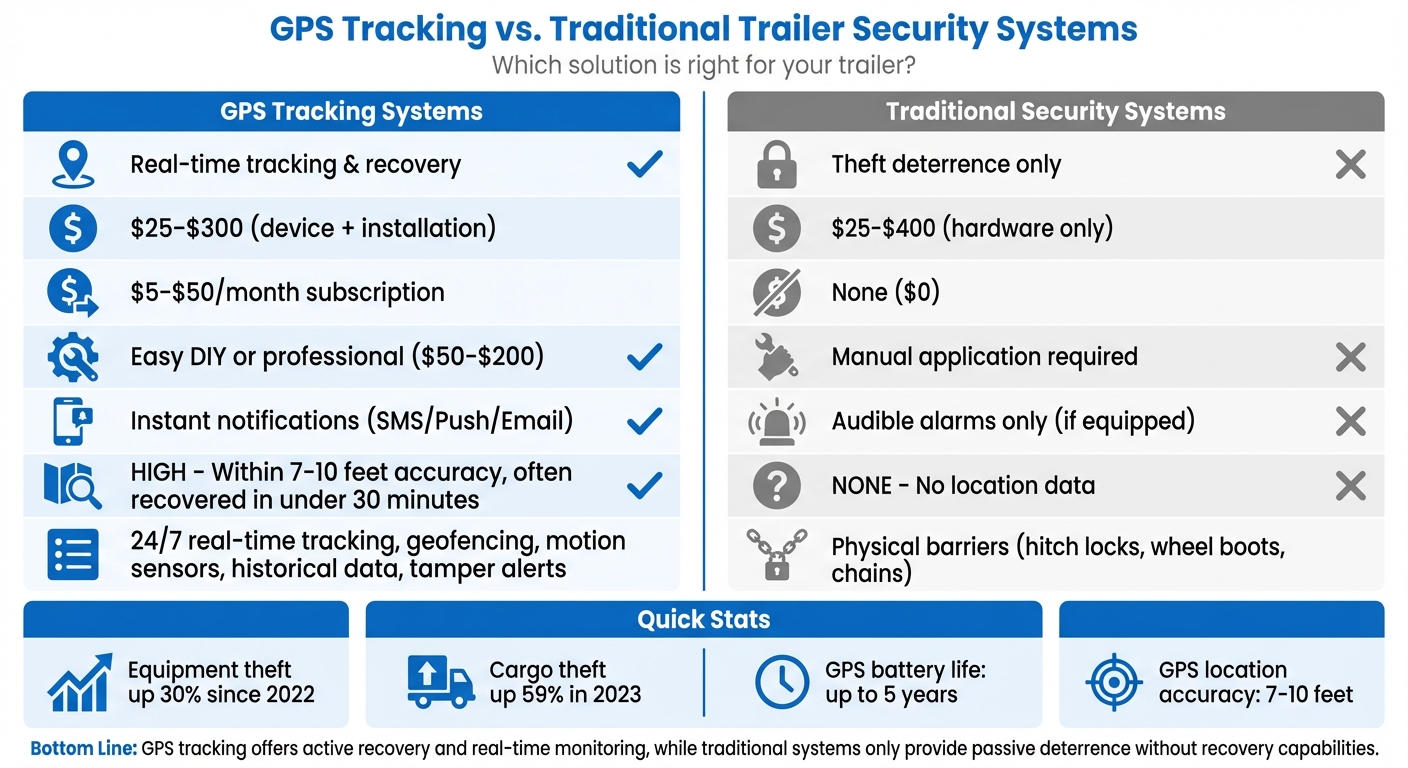
Top-tier no-contract GPS trackers can operate for months – or even years – on a single charge. For professional-grade tracking, devices typically require around 10,000 mAh to sustain extended use. Some models equipped with Lithium-Thionyl Chloride (Li-SOCl₂) batteries can last up to 5 years when configured for daily updates. This makes them perfect for remote assets that don’t require frequent monitoring, saving you from the hassle and expense of constant battery replacements or service visits.
For example, Piritiz Tracking Devices offer up to 5 years of battery life. They’re ideal for trailers, heavy equipment, and vehicles that don’t need constant tracking. Plus, with plans starting at just $7/month (on a 2-year prepay), you get reliable, long-term tracking without the usual maintenance headaches.
Low-Battery Alerts
Even the most durable batteries will eventually run out. That’s why low-battery notifications – sent via SMS, email, or push alerts – are indispensable. These alerts ensure you can recharge or replace your tracker before it powers down, preventing any gaps in tracking. This feature is especially important when monitoring high-value assets where uninterrupted data is critical for theft recovery.
Power-Saving Modes
Energy efficiency is just as important as battery capacity. Many trackers feature power-saving modes, such as deep sleep functions, which turn off non-essential components like the GPS receiver and cellular modem when the asset isn’t moving. This reduces consumption to mere microamps (µA). Motion-activated tracking, enabled by built-in accelerometers, wakes the device only when movement is detected, ensuring minimal battery drain while still providing timely alerts in case of theft.
Adjusting the reporting frequency is another way to conserve energy. For instance, switching from updates every few seconds to once per hour – or even once per day – can significantly extend battery life. However, keep in mind that increasing the ping frequency can cut battery life in half. Balancing these settings helps maximize both performance and longevity.
Weatherproof and Durable Design
A GPS tracker needs to work reliably no matter the weather. Whether it’s monitoring construction equipment, outdoor trailers used year-round, or vehicles that undergo frequent washing, durability is non-negotiable. Just like precise tracking and long-lasting batteries, a sturdy design ensures the tracker stays functional when it matters most.
"A vital component of a good GPS tracker is its ability to function under any conditions. Rain can disable non-weatherproof devices".
Waterproof Features
IP ratings are the standard for measuring a device’s resistance to water and dust. For example, an IP67 rating means the tracker is completely dust-tight and can handle being submerged in up to one meter of water for 30 minutes. This level of protection is enough for rain, splashes, or short-term water exposure. However, for harsher conditions like high-pressure washing or marine environments, you’ll want a device with IP68 or even IP69K ratings, which provide superior protection. Piritiz Tracking Devices are designed with built-in waterproof capabilities to handle such challenges.
Rugged Construction
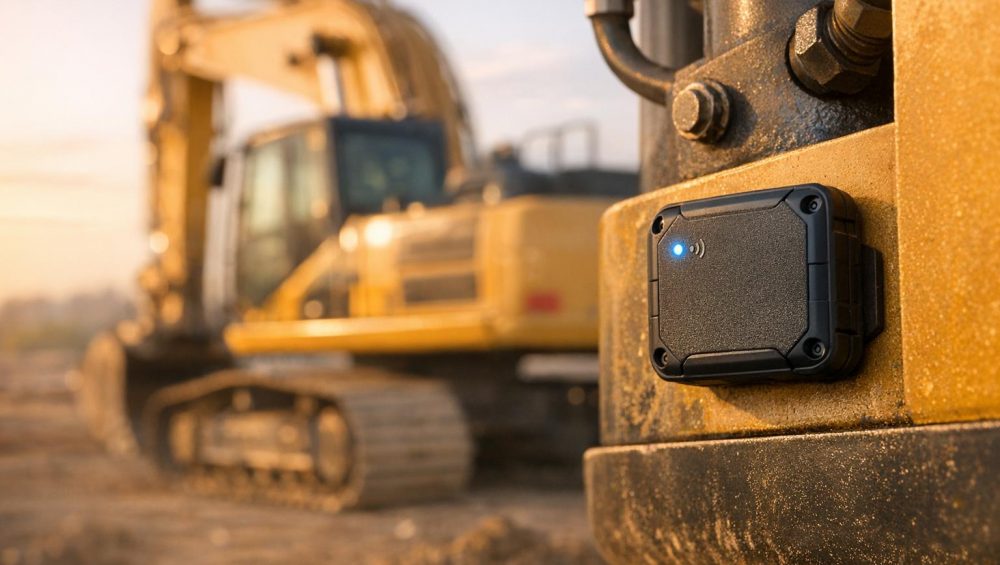
When trackers are mounted on heavy machinery or used in environments with constant vibrations and impacts, durable materials are a must. Industrial-grade models are often built with high-impact plastics, marine-grade seals, or aluminum housings to withstand physical stress, vibrations, and even corrosion. These trackers are also engineered to function in extreme temperatures.
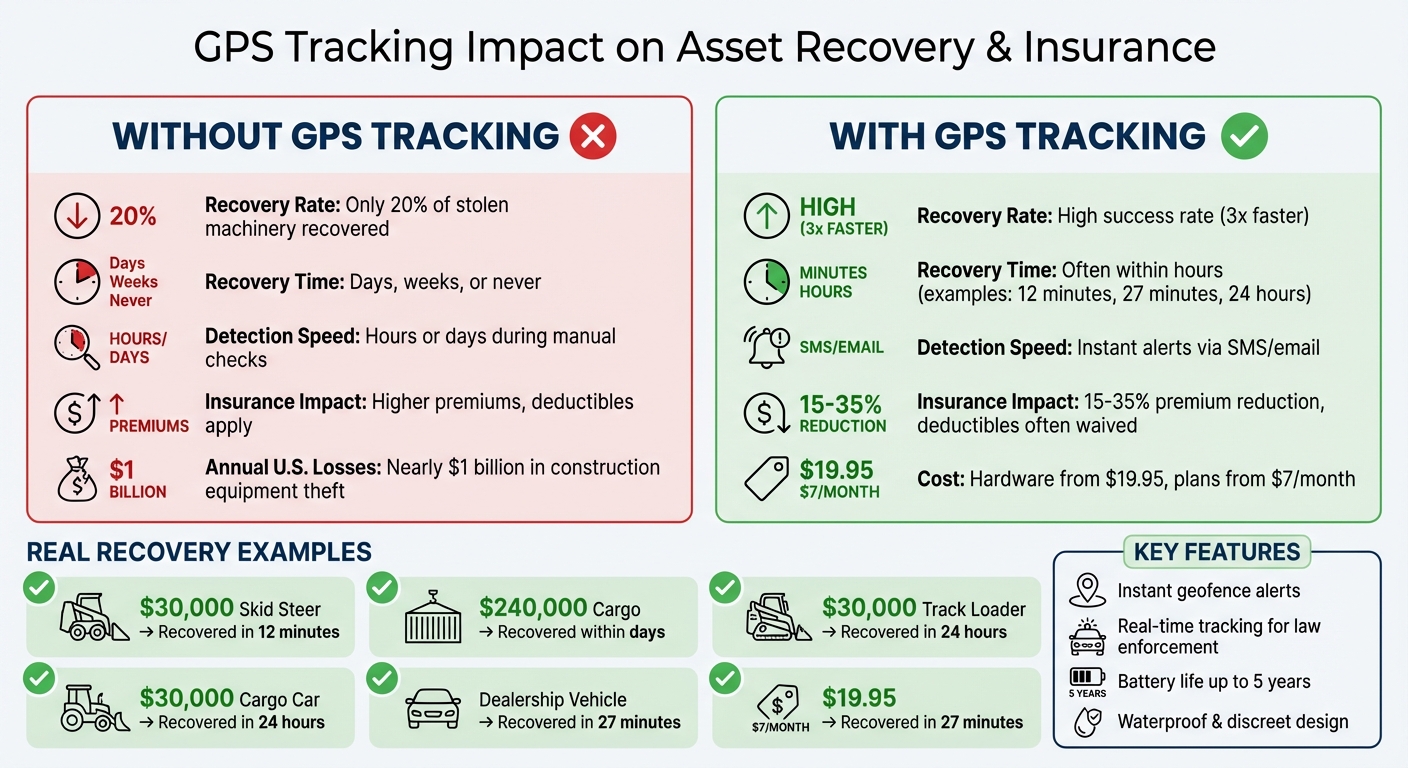
In one 2024 recovery operation, a GPS Insight customer recovered a $180,000 construction loader within 48 hours of theft using a rugged tracker.
When protecting high-value assets, this level of reliability is indispensable.
Tamper-Proof Mounting
Durability alone isn’t enough – secure mounting is just as critical to prevent tampering or removal. A tracker that’s easy to spot and remove provides minimal protection. Features like sealed enclosures with no external buttons, strong built-in magnets for metal surfaces, and screw-hole mounting options for permanent attachment help deter theft. Some advanced models even include light sensors that send instant alerts if someone tries to remove the device. For non-magnetic surfaces, adhesive or screw-mounted options are available.
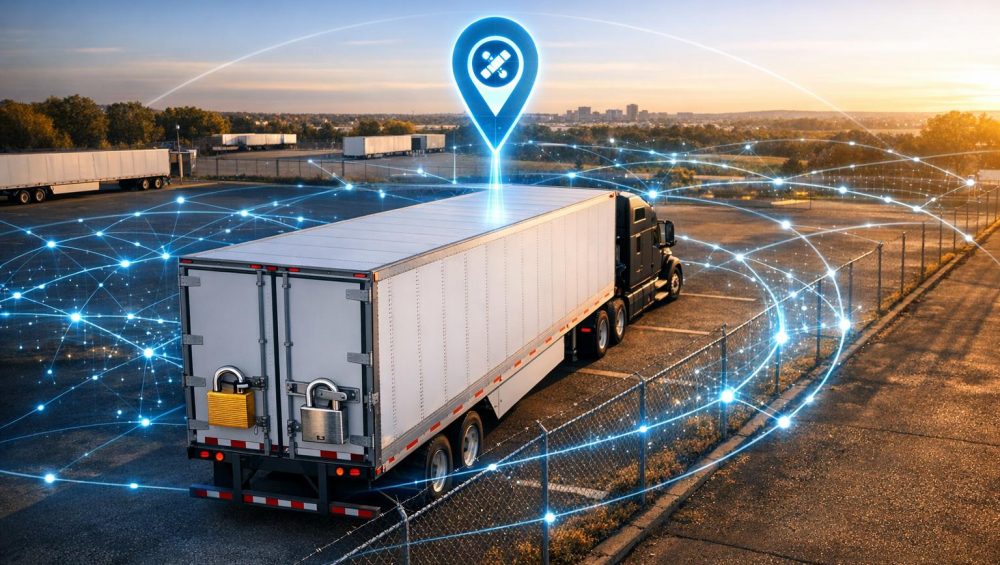
In another 2024 case, a commercial fleet equipped with IP69K-rated lithium trackers recovered two stolen dry van trailers in under 24 hours by sharing real-time location data with law enforcement.
These design elements, combined with real-time tracking and efficient batteries, provide a comprehensive solution for protecting valuable assets.
Easy Installation
A GPS tracker shouldn’t be a hassle to install. For business owners juggling multiple vehicles or equipment, the ideal solution is one that gets up and running in minutes – not hours or days. Quick setup goes hand-in-hand with the convenience and dependability that define great tracking features.
Wireless and Tool-Free Setup
Plug-and-play OBD-II trackers are as simple as they sound. These devices plug directly into the diagnostic port located under the dashboard of any car sold in the U.S. since 1996. The entire process takes about 10 seconds – no tools or wiring required. Gannon Burgett, Testing Editor at Car and Driver, highlighted the ease of use:
"Activating the device took mere moments since it has a true plug-and-play setup".
For even greater flexibility, battery-powered trackers offer wireless installation. Using built-in magnets or adhesives, they can be attached to vehicles, trailers, or equipment in seconds. Todd Morris, Founder and CEO of BrickHouse Security, adds:
"If you’re comfortable with simple automotive electrical work, you should be able to install a hardwired GPS tracker yourself. If not, your local car stereo shop or mechanic can usually do the job in less than a half-hour".
Piritiz Tracking Devices are engineered for effortless, tool-free installation, ensuring you’re ready to monitor assets immediately without any interruptions.
Compact Design
Smaller trackers are not only easier to install but also easier to conceal. Their compact size allows them to fit in tight spaces – under seats, behind trim, or other discreet locations – without compromising signal quality. This makes them a great theft deterrent. Lightweight, battery-powered models weighing just over an ounce can be placed virtually anywhere while still maintaining a strong GPS connection. Just make sure the tracker has a clear view of the sky to ensure consistent satellite communication.
Quick Activation
Once installed, activation is a breeze. Most trackers can be set up via a mobile app or web portal in just a few minutes. Typically, you’ll need to register the device, input an activation code, and follow a few simple steps to calibrate the GPS and cellular connection. Once motion is detected, the tracker starts transmitting location data within 15 minutes.
sbb-itb-4827db2
Mobile App Features
The mobile app serves as a central hub, giving you round-the-clock access to asset locations through interactive maps. It also tracks key metrics like mileage, idle time, and battery levels. Paired with reliable tracking devices and durable batteries, the app creates a complete asset management system. As Uma Mahesh from Propel Apps points out:
"A mobile asset management solution is no more a luxury but mandatory to optimize your maintenance efficiency."
With its user-friendly interface, the app minimizes the number of clicks needed to access information, allowing your team to get up to speed quickly without extensive training. The Piritiz Tracking Devices integrate seamlessly with the app, offering a simple dashboard that provides immediate insights into vehicles, trailers, and equipment.
Customizable Alerts and Reports
The app doesn’t just track assets in real time – it also boosts functionality with customizable alerts. You can set notifications for crucial events like speeding, unauthorized movement during specific hours (e.g., between 10:00 PM and 6:00 AM), geofence violations, and low battery levels. Additionally, detailed reports provide insights into asset usage, driver hours, and route history.
Real-time alerts for poor driving habits or excessive idling can help cut fuel costs by 5% to 10%. Some advanced systems even include over 25 pre-built reports, enabling you to analyze everything from maintenance schedules to driver behavior.
Fleet Management Tools
The app’s fleet management features include real-time mapping to monitor all vehicles simultaneously, two-way messaging, and geofencing alerts that notify you when an asset crosses predefined boundaries. Automated reminders based on mileage, engine hours, or calendar intervals, along with PTO (Power Take-Off) monitoring, further streamline operations.
In 2023, the global Mobile Asset Management Software market was valued at $2.3 billion and is expected to grow to $7.4 billion by 2033, with an annual growth rate of 12.5%.
No-Contract Pricing
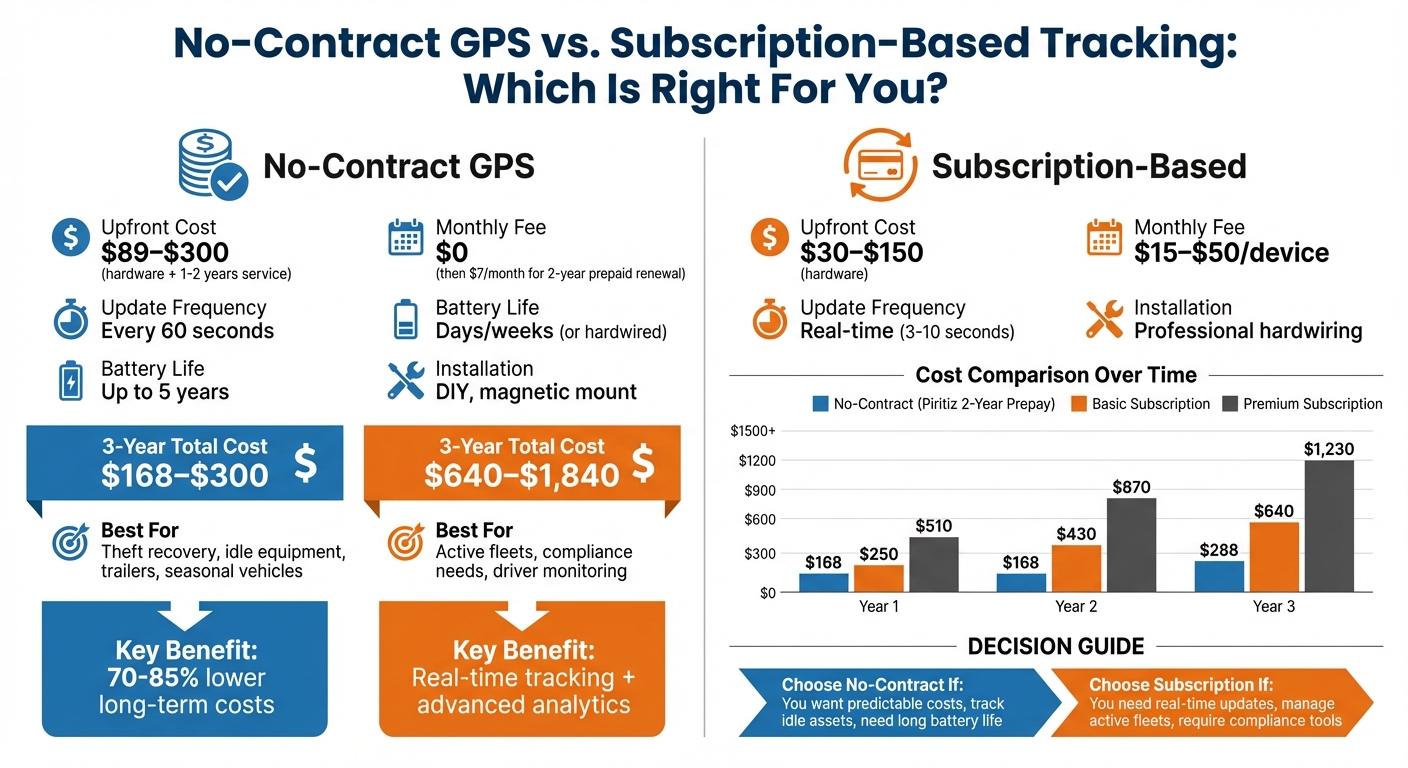
When it comes to GPS devices, flexibility in pricing can make a big difference. No-contract options free you from being tied to long-term commitments of 12 to 36 months. This is especially helpful if your tracking needs change often – whether you’re managing seasonal equipment, growing your fleet, or moving away from a service that no longer works for you.
Over a three-year period, subscription-based systems can cost anywhere from $390 to $1,150, while no-contract options range from $50 to $300. In fact, 72% of vehicle owners opt for one-time purchase trackers to avoid the hassle of recurring subscriptions. According to the 2025 GPS Industry Analyst Report:
"The shift toward no-monthly-fee GPS tracking reflects a growing consumer preference for predictable, one-time costs over recurring subscriptions, even if it means some feature compromises."
This pricing model gives you the freedom to adapt to your changing tracking needs.
Monthly Plans
Month-to-month plans offer major flexibility, allowing you to cancel or adjust your service without penalties. Unlike traditional contracts, you won’t face early termination fees or unexpected costs if you need to scale down. This is a great option for seasonal businesses. For example, you might only need to track construction equipment during the summer or boats during boating season, and you can pause the service during the off-season.
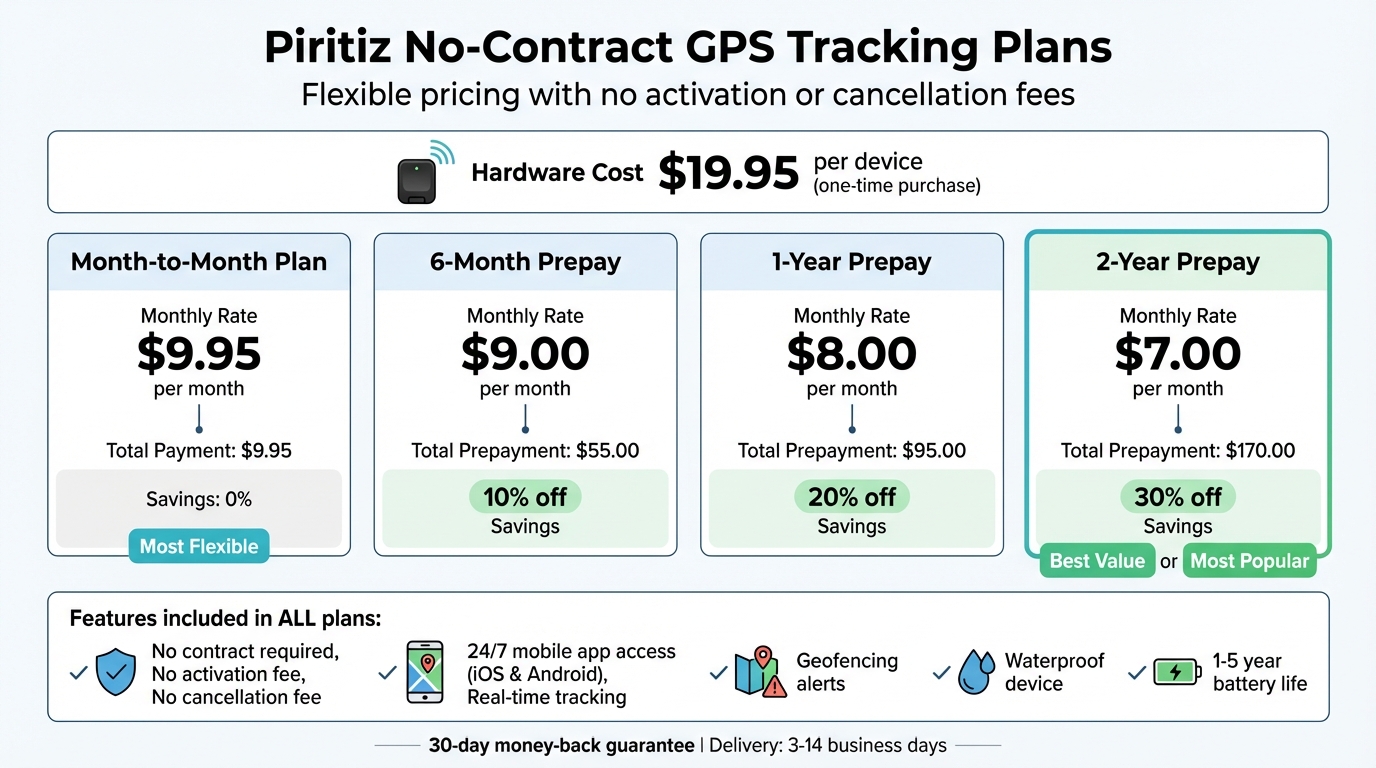
One example is Piritiz’s Month to Month plan, which costs $9.95 per month. Across the industry, entry-level plans typically range from $15 to $20 per vehicle, while more advanced plans with added reporting features cost between $25 and $45.
Prepaid Plan Discounts
Prepaid plans let you save money while still avoiding long-term contracts. Piritiz offers three prepaid options: a 6-month plan at $9 per month (10% savings), a 1-year plan at $8 per month (20% savings), and a 2-year plan at $7 per month (30% savings). These plans come with no contracts, no cancellation fees, and no hidden charges.
Some manufacturers also include the first year (or more) of service in the hardware’s purchase price, which works as a built-in prepaid discount. To make the best choice, calculate the total cost of ownership over your expected usage period instead of focusing solely on the monthly rate. This will help uncover any hidden expenses.
Clear Pricing
Transparent pricing means knowing exactly what you’ll pay upfront. This includes no activation fees, no roaming charges, and no surprise costs for basic features. Activation fees, for instance, can range from $0 to $50, though many providers waive them. Hardware prices also vary, from $39.95 for simple plug-and-play devices to $299 or more for rugged, hardwired units.
Be wary of additional fees. Some providers charge extra for faster location updates, while others add costs for optional features like ELD compliance ($10–$25 per month) or AI dashcams ($30–$60 per month). Even devices marketed as "no monthly fee" often include just a limited service period – usually 12 months – after which you’ll need to pay an annual renewal fee to continue tracking. Always confirm what’s included in the base price and what might cost extra before making a decision.
Security and Management Features
A GPS device isn’t just about tracking location – it’s also a powerful tool for safeguarding your assets. With advanced security features, these devices provide around-the-clock protection, turning them into a comprehensive security system.
Tamper Detection
Tamper detection ensures you’re immediately alerted if someone tampers with your device. Using internal light sensors, these devices can detect when their casing is opened or removed. Additionally, built-in 3-axis accelerometers pick up on unauthorized movements, vibrations, or tilting – even when the vehicle is off. Considering that thefts on construction sites average around $6,000 per incident, these alerts are a game-changer for protecting valuable equipment. Some devices even include panic or SOS buttons, which send emergency alerts along with location data to pre-set contacts. For added security, opt for trackers with covert mounting options like industrial-strength magnetic cases or "throw-and-go" designs that can be hidden in wheel wells or under the chassis.
Historical Trip Data
Historical trip data provides a detailed overview of how your assets are being used. Time-stamped stop records and route logs allow you to review travel patterns, identify frequently visited spots, and analyze trip durations. This data is especially helpful for spotting inefficiencies, such as overlapping assignments or unauthorized use during off-hours. Some devices can store up to two years of data, making them a valuable resource for audits and performance reviews. Additionally, these logs can highlight driving behaviors like speeding or hard braking, enabling you to score drivers and encourage safer, more fuel-efficient habits. To conserve battery life while retaining these records, many devices use motion-activated tracking that switches to "deep sleep" mode when no movement is detected.
Geofencing Tools
While historical data looks at past activity, geofencing focuses on real-time security. This feature allows you to create virtual boundaries around specific locations. If an asset enters or leaves these boundaries, you’ll receive instant notifications. Geofencing is not only a security measure but also boosts operational efficiency. For fleets, it can automatically track when vehicles arrive at customer sites or leave facilities, cutting down on manual check-ins and improving accountability. You can also set up safe zones around your home, business, or job sites and receive alerts if equipment moves beyond these authorized areas.
Conclusion
No-contract GPS devices offer a practical blend of tracking capabilities, durability, and user-friendly design to safeguard your assets effectively. Selecting a tracker that aligns with your specific needs – whether it’s tracking precision, ruggedness, or extended battery life – can make all the difference.
Choosing the right device can redefine how you secure and manage valuable equipment, especially with proven results in theft recovery and fleet protection. But don’t overlook the essentials: easy installation and reliable network coverage are key factors to ensure seamless operation. Make sure the device you choose supports strong cellular connectivity in your area.
When construction site theft costs an average of $6,000 per incident, opting for a reliable GPS tracker becomes more than just a choice – it’s a necessity. For dependable solutions offering real-time tracking, long-lasting batteries, and weather-resistant designs, visit Piritiz Tracking Devices. Protecting your assets has never been this straightforward.
FAQs
What are the advantages of choosing a no-contract GPS device instead of one with a subscription?
Choosing a no-contract GPS device is a smart way to sidestep recurring monthly fees while still enjoying dependable tracking. These devices offer real-time tracking without tying you to long-term agreements, giving you more freedom to manage your budget.
They’re especially appealing for those who value simplicity and affordability while still having access to key features like mobile app support, extended battery life, and round-the-clock location tracking. Whether you’re keeping tabs on vehicles, equipment, or trailers, these devices let you avoid the hassle of ongoing payments while meeting your tracking needs.
How do motion-activated tracking and power-saving modes help extend battery life?
Motion-activated tracking and power-saving modes are built to stretch battery life by cutting down on energy use when it’s unnecessary. These features kick in by either slowing down location updates or pausing tracking altogether when the device notices minimal or no movement.
In practice, this helps the device save power during inactive times, making it perfect for extended use or situations where recharging often isn’t convenient.
Why does multi-satellite connectivity improve GPS accuracy?
Multi-satellite connectivity enhances GPS accuracy by enabling devices to tap into multiple satellite networks, including GPS (United States), GLONASS (Russia), and Galileo (European Union). By using signals from these diverse systems, devices can determine locations with greater precision and maintain dependable tracking, even in tricky areas like crowded cities or thick forests.
This capability is crucial for delivering consistent and precise location data, which plays a key role in applications such as vehicle tracking, theft prevention, and fleet management.