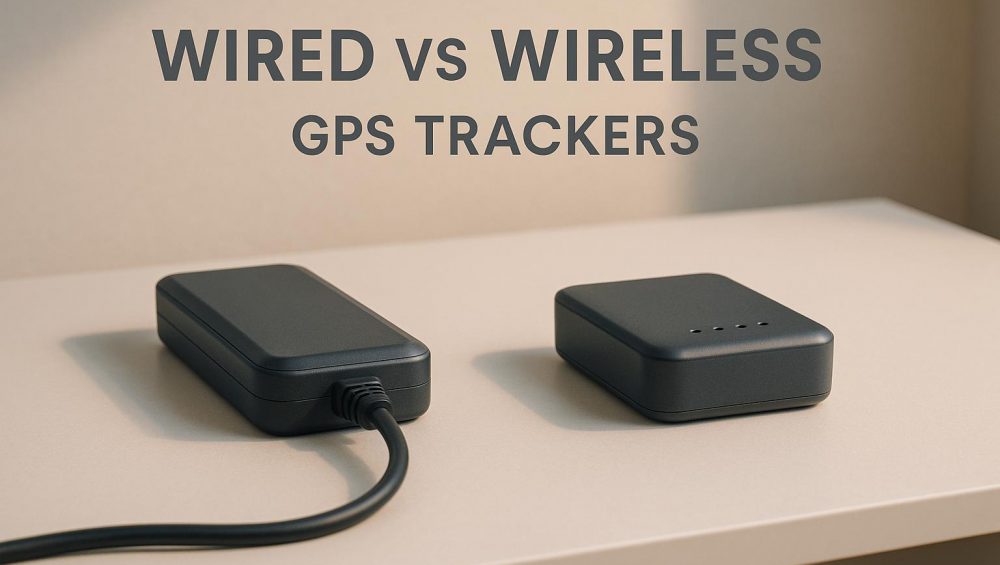
When choosing a GPS tracker, the decision boils down to wired vs wireless. Each option serves different needs:
- Wired GPS Trackers: Powered by a vehicle’s electrical system, these provide real-time tracking and advanced features like engine diagnostics. Perfect for fleet vehicles, long-haul trucks, and high-value assets. Installation is permanent and requires professional setup, but they’re low-maintenance once installed.
- Wireless GPS Trackers: Battery-powered and portable, these are ideal for non-powered assets like trailers, construction equipment, or rental vehicles. They’re easy to install and can be moved between items, but require periodic battery maintenance.
Key Factors to Consider:
- Power Source: Wired trackers use the vehicle’s battery; wireless trackers rely on internal batteries.
- Cost: Wired trackers have higher installation costs but lower maintenance. Wireless trackers are cheaper upfront but may require ongoing battery replacements.
- Use Case: Wired trackers are best for vehicles in constant use. Wireless trackers excel for portable or temporary tracking needs.
Quick Comparison
| Factor | Wired GPS Trackers | Wireless GPS Trackers |
|---|---|---|
| Power Source | Vehicle’s electrical system | Rechargeable battery (up to 5 years) |
| Installation | Requires professional installation | Simple DIY setup |
| Portability | Permanently installed | Easily transferable |
| Update Frequency | Continuous real-time updates | Configurable intervals |
| Cost | Higher upfront, lower maintenance | Lower upfront, ongoing battery costs |
For fleet managers, wired trackers offer reliability and advanced features. For mobile or non-powered assets, wireless trackers provide flexibility. A hybrid approach (using both) often yields the best results.
Top 4 Best GPS Trackers (2025) | Features & Installation
How Wired GPS Trackers Work
Wired GPS trackers connect directly to a vehicle’s electrical system, ensuring uninterrupted tracking as long as the vehicle has power. These devices receive location data from GPS satellites and transmit it through cellular networks. Thanks to their hardwired connection, they operate continuously without the need to worry about battery life or recharging.
Power Source and Installation
Wired GPS trackers draw power directly from the vehicle’s battery. They work with both 12-volt systems (commonly found in standard cars, vans, and light trucks) and 24-volt systems (used in heavy-duty trucks and commercial vehicles). Installation can be done in two main ways: hardwiring to the fuse box or plugging into the OBD-II port.
- Hardwired Installation: This method involves connecting the tracker’s power cables directly to the vehicle’s fuse box. The device is then hidden in a concealed location, making it secure and difficult to tamper with. This setup is ideal for theft prevention because removing it requires tools and electrical expertise.
- OBD-II Installation: For a quicker and more straightforward setup, the tracker plugs into the OBD-II port, which is standard in all U.S. vehicles manufactured after 1996. This option provides instant access to diagnostics like engine RPM, fuel consumption, and trouble codes. However, because the port is more visible, the tracker is easier to spot and remove, which could be a drawback for theft protection.
Many businesses prefer professional installation to ensure proper wiring and to avoid any potential warranty issues. Costs for installation can vary depending on the complexity of the setup, but some fleet management providers include installation as part of their service packages.
Once installed, the tracker begins sending location updates as soon as the vehicle’s ignition is turned on. Even when the engine is off, many wired trackers operate in a low-power mode, allowing them to monitor movement or detect unauthorized starts. This constant connection forms the backbone of the advanced features discussed below.
Features and Capabilities
The continuous power supply of wired trackers unlocks a range of advanced features, making them a valuable tool for fleet management beyond simple location tracking.
- Real-Time Tracking: Updates are sent every 10 to 60 seconds while the vehicle is in motion. This allows fleet managers to monitor routes, identify delays, and provide accurate ETAs to customers.
- Engine Diagnostics: OBD-II connected trackers can access critical data from the vehicle’s computer system. Managers can monitor fuel consumption, engine temperature, battery voltage, and diagnostic trouble codes, helping to catch maintenance issues early.
- Geofencing: Virtual boundaries can be set on a map. Alerts are sent when a vehicle enters or exits a designated area, such as a job site, customer location, or restricted zone.
- Idle Time Monitoring: These trackers measure how long a vehicle idles with the engine running, helping businesses identify inefficient fuel use and coach drivers on better practices.
- Driver Behavior Analysis: Data on acceleration, harsh braking, sharp turns, and speeding can be collected to improve safety and potentially lower insurance premiums.
- Tamper Alerts: If someone tries to disconnect the tracker or interfere with the vehicle’s electrical system, managers are immediately notified. This feature is especially useful for theft prevention, as it makes disabling the device more difficult.
Best Use Cases
Wired GPS trackers shine in scenarios where vehicles are in regular use and require consistent oversight. These trackers are particularly well-suited for specific industries and operational needs.
- Daily-Use Fleet Vehicles: Delivery vans, service trucks, and company cars benefit from the uninterrupted tracking provided by a wired connection. For example, a plumbing company with 15 service vans can track technician locations, optimize routes, and confirm customer visits without worrying about recharging or replacing batteries.
- Long-Haul Trucking: For trucks traveling thousands of miles weekly across state lines, wired trackers ensure continuous tracking throughout multi-day trips. Dispatchers can manage loads efficiently and monitor hours of service.
- High-Value Vehicle Protection: Businesses with expensive equipment, like construction companies with $80,000 excavators or landscaping firms with $50,000 trucks, rely on hidden wired trackers for theft recovery. Real-time tracking and tamper alerts help law enforcement quickly locate stolen assets.
- Vehicles Requiring Diagnostics: Fleet managers can use OBD-II connected trackers to monitor maintenance schedules, fuel efficiency, and mechanical issues, reducing the risk of unexpected breakdowns.
- Temperature-Sensitive Cargo: Wired trackers with additional sensors are ideal for refrigerated trucks carrying food or pharmaceuticals. Temperature probes can alert managers if cooling systems fail, protecting valuable cargo and ensuring compliance with regulations.
While wired trackers are excellent for vehicles in regular service, they aren’t the best choice for assets that frequently move between vehicles, equipment without electrical systems, or items requiring portable tracking. For vehicles with consistent power availability, however, wired trackers provide dependable performance with minimal upkeep.
How Wireless GPS Trackers Work
Wireless GPS trackers run on built-in rechargeable batteries, allowing them to function independently without relying on external power sources. This design makes them incredibly versatile, especially for fleet management and asset tracking, where equipment and vehicles often need to be monitored in varying locations. Plus, since they’re not tied to a specific vehicle or asset, they can be quickly moved between different items as needed.
Power Source and Portability
Piritiz wireless trackers boast a battery life of up to 5 years, significantly reducing the hassle of frequent recharging. Their waterproof design and straightforward installation make them easy to mount securely on different surfaces, whether it’s a vehicle, trailer, or piece of equipment. This portability is a game-changer for assets that are constantly on the move or lack a dedicated power connection.
Update Frequency and Battery Life
These trackers are designed with smart power management, allowing users to configure how often location updates are sent. This feature ensures reliable, 24/7 tracking while maximizing battery life. By balancing update frequency and power usage, wireless trackers provide dependable performance in dynamic and ever-changing environments.
Best Use Cases
The portability and ease of deployment make wireless trackers ideal for a variety of applications. They’re particularly effective in fleet management, theft prevention, and monitoring mobile assets such as vehicles, trailers, and equipment. Whether you need to keep tabs on a fleet of trucks or safeguard valuable equipment, these devices offer a practical and efficient solution.
Wired vs Wireless GPS Trackers: Side-by-Side Comparison
Choosing between wired and wireless GPS trackers can help you make smarter investment decisions. Each type has its own strengths, tailored to specific operational needs and budgets.
Comparison Table
| Factor | Wired GPS Trackers | Wireless GPS Trackers |
|---|---|---|
| Power Source | Powered by the vehicle’s electrical system | Built-in rechargeable battery (lasting up to 5 years) |
| Installation | Requires professional installation and wiring | Simple DIY setup using magnets or adhesive |
| Update Style | Provides continuous, real-time updates | Sends updates at intervals to conserve battery life |
| Portability | Permanently installed, not easily moved | Portable and transferable between vehicles or equipment |
| Stealth | Often hidden in areas like the dashboard or wiring | Compact and discreet, allowing for flexible placement |
| Features | May integrate with vehicle diagnostics for added insights | Offers core tracking features like location, alerts, and geofencing |
| Lifespan | Continuous power ensures long-term operation | Battery-powered with a lifespan designed for up to 5 years |
This breakdown highlights how each tracker type aligns with different operational goals.
What These Differences Mean for U.S. Businesses
Understanding these distinctions can help businesses make informed choices based on their specific needs.
For fleet managers overseeing long-haul trucks or delivery vehicles, wired trackers provide consistent, real-time data without interruptions. On the other hand, wireless trackers are ideal for businesses managing construction equipment, trailers, or rental vehicles. Their portability makes it easy to switch the device between assets, offering flexibility without sacrificing functionality.
When theft prevention is a priority, both systems shine in different ways. Wired trackers are harder to locate or disable since they’re integrated into the vehicle. Wireless trackers, thanks to their compact design, can be discreetly placed in unexpected spots, making them difficult to tamper with.
Cost and setup time are also key considerations. Wired trackers typically require higher upfront costs for professional installation and take longer to deploy. In contrast, wireless trackers are more budget-friendly upfront, with quick DIY installation and flexible subscription plans, such as those offered by Piritiz.
Lastly, environmental conditions play a role. Wired trackers perform reliably even in extreme temperatures. Wireless units, while durable, may need adjustments in very cold weather to maintain optimal performance.
sbb-itb-4827db2
Choosing the Right Tracker for Your Needs
Selecting the best GPS tracker depends on what you’re monitoring, how you’ll use it, and the level of visibility you need. Your specific situation will guide the decision.
For Fleet Management
Fleet managers rely on constant updates to keep vehicles running smoothly and drivers accountable. Wired GPS trackers are a great fit here because they draw power directly from the vehicle’s electrical system, ensuring uninterrupted location tracking without worrying about battery life.
These trackers provide real-time updates, allowing dispatchers to optimize routes, cut down on idle time, and maintain accurate mileage logs. They also supply diagnostic data, which simplifies both route planning and vehicle maintenance. This not only prevents breakdowns but also extends the life of the vehicles. For businesses with fleets of 10 or more vehicles, these features often lead to noticeable cost savings and improved compliance within just a few months.
Since the trackers are permanently installed, there’s no risk of them being misplaced or needing frequent recharging. However, for assets that don’t have a built-in power source, a different type of tracker is necessary.
For Non-Powered Assets
When it comes to equipment that’s frequently moved or stored between jobs – like trailers, construction machinery, or RVs – wireless trackers are the way to go. These devices are perfect for assets that don’t have a constant power supply.
Battery-powered and waterproof, wireless trackers can last up to five years, making them a reliable choice for outdoor conditions. Whether the equipment is sitting in a yard or being transported through tough weather, these trackers continue to perform. They’re especially handy for managing rental equipment or seasonal items like boats and RVs, offering an easy and hassle-free way to monitor mobile assets.
For Theft Prevention
Protecting your assets is just as important as managing them. With over one million vehicles stolen in 2023 – a 1% increase from the previous year – theft prevention remains a top priority. Both wired and wireless trackers can send immediate alerts if unauthorized movement is detected. Wired trackers are harder to disable, while wireless models offer the advantage of being easily hidden. Either option helps safeguard your investments and reduces potential losses.
Cost and Maintenance Considerations
When evaluating GPS tracking systems, it’s essential to account for both upfront and ongoing expenses. These include the cost of the device, installation, maintenance, and subscription fees.
Device and Installation Costs
Wired GPS trackers typically range in price from $50 to $300 for the device alone. However, the significant expense often lies in installation. Since these devices need to be hardwired into your vehicle’s electrical system, professional installation is usually required. Labor costs for this service can vary between $50 and $250 per vehicle. For a fleet of 20 vehicles, installation costs could add up to $1,000–$5,000. These initial costs are a key factor when planning your budget.
Wireless trackers, on the other hand, are more varied in price and don’t require installation. For example:
- Magnetic trackers: $100–$300
- OBD plug-in models: $30–$150
- Bluetooth trackers: $10–$50
With no installation fees, wireless trackers may appeal to those looking to reduce upfront costs.
Ongoing Maintenance
Maintenance needs differ significantly between wired and wireless trackers. Wired trackers, once installed, operate continuously without requiring battery replacements or recharging. This makes them a low-maintenance option.
Wireless trackers, however, rely on internal batteries, which means you’ll need to replace or recharge them periodically. While this adds a layer of upkeep, wireless models offer the convenience of being easily transferable between vehicles or assets.
Subscription Plans and Service Costs
Monthly subscription fees are another critical expense to consider. These fees cover real-time tracking and cloud-based services, and they typically range from $5 to $50 per month, with most vehicle tracking plans falling between $15 and $40 per month.
For example, Piritiz offers simple, no-contract pricing with the following options:
- Month-to-Month plan: $9.95 per month, cancel anytime.
- Prepaid plans:
- $9 per month for 6 months (10% savings)
- $8 per month for 1 year (20% savings)
- $7 per month for 2 years (30% savings)
All plans come with 24/7 tracking access, no activation fees, and no cancellation charges.
Total Cost of Ownership
When planning your budget, it’s essential to factor in both the initial device and installation costs alongside ongoing subscription fees. Here’s a quick comparison:
- A wireless tracker priced at $150 with a $7 monthly subscription would cost approximately $318 over two years.
- A wired tracker costing $200, with $150 in installation fees and a $10 monthly subscription, would total around $590 over the same period.
Your choice will depend on whether you prioritize lower upfront costs and portability or prefer a permanent, low-maintenance solution.
Conclusion
Choosing between wired and wireless GPS trackers comes down to understanding your specific needs and how each option aligns with them. Both types bring distinct strengths to the table, making them useful tools for fleet management, asset tracking, and theft prevention in different scenarios.
Wired trackers are perfect for permanent installations, offering consistent and tamper-resistant monitoring. Powered directly by the vehicle, they deliver continuous, real-time updates, making them an excellent choice for fleets in daily operation. While installation involves a higher upfront cost, the reliability and long-term benefits often justify the investment.
Wireless trackers, on the other hand, provide unmatched flexibility. They are ideal for assets that move between job sites, rental equipment, or vehicles where professional installation isn’t practical. These devices may require occasional battery maintenance and often update less frequently to conserve power, but their portability and ease of use make them a go-to solution for temporary or mobile tracking needs.
Key Takeaways
Understanding the unique advantages of each system helps you identify the best fit for your needs. If your priority is constant, real-time monitoring, wired trackers are the way to go. For portable or temporary assets, wireless trackers shine. In fact, many businesses find that combining both systems provides the most effective coverage.
For U.S. businesses, the choice may also depend on operational environments. Fleets covering long distances or crossing state lines benefit from the reliability of wired systems. Meanwhile, wireless trackers are ideal for monitoring remote or portable assets without the need for a fixed installation.
A hybrid approach is often the smartest strategy. Using wired trackers for your primary vehicles and wireless devices for supplementary equipment can balance costs while ensuring comprehensive tracking. Armed with these insights, you can confidently select a GPS tracking solution tailored to your operational strategy.
FAQs
What are the benefits of combining wired and wireless GPS trackers?
Using both wired and wireless GPS trackers can give you the best of both worlds when it comes to tracking solutions. Wired trackers are great for long-term use, like managing a fleet or keeping tabs on a vehicle over time, because they’re powered directly by the vehicle and come packed with advanced features.
On the flip side, wireless trackers shine in situations where portability and ease of use are key. They’re simple to set up, discreet, and work well for short-term tracking or keeping an eye on assets in tricky-to-access locations.
Combining these two types of trackers offers a flexible and reliable solution. You can depend on wired trackers for consistent, real-time tracking of fixed assets while using wireless options for temporary or mobile needs. This mix ensures you’re covered for just about any tracking scenario.
What are the key differences in installation between wired and wireless GPS trackers, and how do you decide between professional or DIY setup?
Wired GPS trackers are directly integrated into a vehicle’s electrical system, which usually means you’ll need a professional to handle the installation. This ensures everything is set up correctly and functions as it should. On the flip side, wireless GPS trackers are far easier to manage. They’re often designed for simple plug-and-play use or straightforward DIY placement.
When choosing between professional installation and a DIY approach, think about a few key factors: your comfort with technical tasks, how complex the tracker is, and how much time you can dedicate to the setup. If you’re looking for a secure, long-term solution, professional installation might be worth considering. But if you want something quick and flexible, a wireless tracker is likely your best bet.
What are the maintenance costs for wired vs. wireless GPS trackers, and how can I reduce them?
Wired GPS trackers often prove to be more cost-effective in the long run since they draw power directly from the vehicle or equipment they’re attached to. This setup eliminates the hassle and expense of frequent battery replacements. On the other hand, wireless trackers depend on batteries, which means you’ll need to replace them periodically – adding to ongoing costs.
When deciding which tracker suits your needs, think about the specific requirements of your application. For wired trackers, make sure they’re installed correctly to avoid electrical problems down the line. If you’re leaning toward wireless options, look for models with energy-efficient designs or batteries that last longer to cut down on replacement costs. Keeping up with routine maintenance and monitoring can also help you get the most out of both wired and wireless trackers while keeping expenses manageable.