When it comes to protecting your trailer, GPS tracking systems and physical security measures (like locks and alarms) serve very different purposes. GPS systems focus on real-time tracking and recovery, while physical tools aim to deter theft. Here’s a quick breakdown:
- GPS Tracking Systems: Provide live location updates, geofencing alerts, and motion sensors. They’re ideal for recovering stolen trailers and managing fleets. Costs include hardware ($25–$300) and monthly fees ($5–$50).
- Physical Security Tools: Include hitch locks, wheel boots, and alarms. These are one-time purchases ($25–$400) but lack tracking or recovery features.
Quick Comparison
| Feature | GPS Tracking Systems | Physical Security Tools |
|---|---|---|
| Purpose | Real-time tracking & recovery | Theft deterrence only |
| Cost | $25–$300 (plus $5–$50/month) | $25–$400 |
| Setup | Easy (DIY or professional) | Manual application required |
| Alerts | Instant notifications | Audible alarms (if equipped) |
| Recovery Capability | High (precise location data) | None |
Bottom Line: If recovery and fleet management are priorities, GPS tracking is the better choice. Locks and alarms can slow thieves but won’t help find your trailer if it’s stolen.
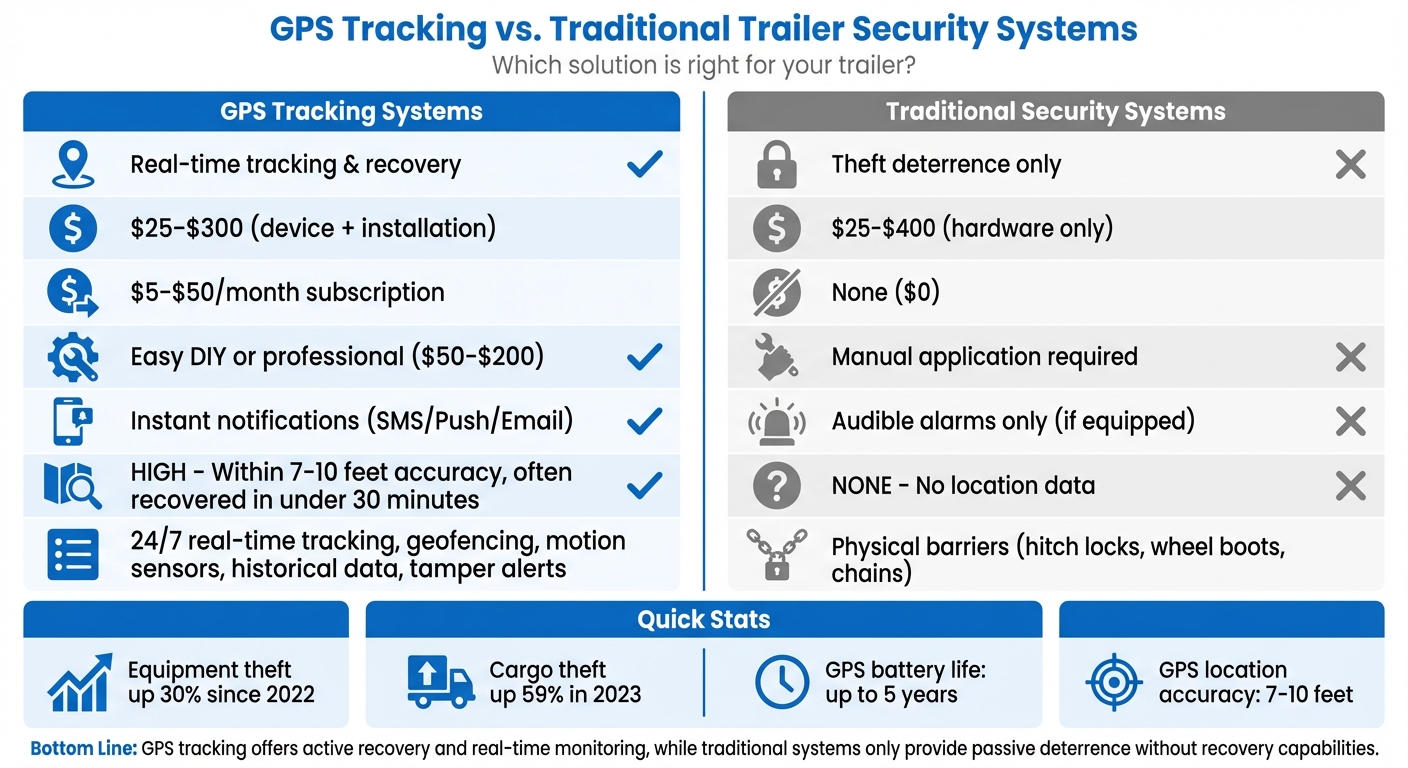
GPS Tracking vs Traditional Trailer Security: Cost, Features & Effectiveness Comparison
GPS Tracking & Locking Your Utility Trailer
What Are GPS Apps for Trailer Tracking?
GPS apps act as the software link between you and a tracking device installed on your trailer. These devices use satellite signals to determine precise coordinates, which are then sent to your device through cellular or satellite networks. This data is displayed on an interactive map – often integrated with platforms like Google Maps – allowing you to track your trailer’s location in real time. Update intervals can vary, ranging from every few seconds during critical situations to once a day for routine monitoring.
These apps take raw location data and turn it into practical security tools. Whether you’re keeping tabs on one utility trailer or managing a fleet, the app ensures you’re always aware of your assets’ locations and movements. The system typically includes three key components: a battery-powered tracker, a 4G LTE connection, and a mobile app.
Modern GPS trackers are incredibly precise, often pinpointing a trailer’s location within 7 to 10 feet. This level of accuracy can be crucial for law enforcement when recovering stolen property.
Main Features of GPS Apps
Real-time location updates are the foundation of any GPS tracking app. You can monitor your trailer’s position live, with update intervals that you can adjust – faster for emergencies or slower to conserve battery life. The app also logs historical route data, giving you a complete record of where your trailer has been.
Geofencing is another powerful tool. It lets you create virtual boundaries around specific areas, such as job sites or storage facilities. If your trailer crosses these boundaries, the app immediately notifies you through push alerts, text messages, or even automated phone calls. Phone call notifications, in particular, are hard to miss.
Motion and tamper alerts add an extra layer of security. Built-in sensors detect unauthorized movement, such as someone hitching your trailer or tampering with the tracking device. Some systems even include light sensors that trigger alerts if the tracker’s hidden location is exposed. These alerts are sent within seconds, giving you time to act before the trailer is moved far.
The app also keeps you informed about the tracker’s health, showing battery levels and connectivity status to ensure the system stays operational. For fleet managers, additional data – like mileage, idle times, and maintenance schedules – can help streamline operations.
Together, these features turn GPS tracking from a passive monitoring tool into an active security system.
How GPS Apps Help Protect Trailers
GPS apps take trailer security to the next level by enabling active recovery. While traditional locks and other physical deterrents may slow down a thief, they don’t help you locate your stolen trailer. With GPS apps, you can share real-time coordinates with law enforcement, significantly boosting the chances of recovery.
James R., a contractor, shared his experience:
"My trailer was stolen from a job site overnight. Because I had the tracker installed… I gave the police the GPS coordinates, and they found it two towns over, with all my tools still inside".
Many apps also offer an aggressive mode that increases location update frequency during theft situations, providing even more precise tracking.
For fleet managers, these apps provide constant oversight. You can monitor multiple trailers at once, get instant alerts if a trailer leaves its designated area, and analyze historical data to spot unusual activity or unauthorized detours. As Sherwood Construction noted:
"What really pushes you to telematics is the data. The data you can gather is just amazing".
Additionally, these apps make it easy to share evidence. Temporary location links can be generated and sent to law enforcement or insurance companies, simplifying investigations and speeding up the recovery process.
What Are Traditional Trailer Security Systems?
Traditional trailer security systems rely on physical barriers to deter theft. These include hitch locks, wheel boots, and alarm systems. The idea is simple: make stealing your trailer so difficult that thieves decide it’s not worth the effort. With a vehicle theft happening every 28 seconds in the U.S., these tools are designed to slow down criminals and buy precious time. While effective to a degree, these systems also highlight the limitations of older methods when compared to newer, tech-driven solutions.
Physical locks are the go-to option for many trailer owners. Hitch and receiver locks, which secure the trailer to the tow vehicle, usually cost between $35 and $45. Coupler locks, like "The Collar", offer additional protection for the hitch coupler and are priced around $39.95. For even tougher security, advanced door locks like the War-Lok CTL-10 are built with die-cast zinc and hardened steel to resist tools like bolt cutters and hammers. Wheel immobilizers, or boots, clamp around the tire to prevent it from rolling. High-end versions even cover the lug nuts to stop thieves from simply swapping out the wheel.
Alarm systems add another layer of defense. These setups include a control unit connected to wireless door sensors and shock detectors. When triggered, they activate a siren, flash exterior lights, and may even engage the trailer’s electric brakes. A system with two door sensors typically costs about $420. However, as Lyle Clark from Trailer-Alarms.com notes, professional thieves often ignore alarms because the public rarely reacts to them.
Some owners opt for hardwired anti-theft systems like Ravelco. These systems block the fuel pump, ignition, and starter circuits, requiring a uniquely coded physical plug to start the vehicle. This makes hotwiring nearly impossible. Installation for such systems typically costs around $400. Meanwhile, older passive tracking systems only log data for later retrieval, offering no real-time updates during a theft.
The main goal of these traditional systems is theft prevention. However, as Rich Lagasse pointed out in MotorTrend, once these barriers are bypassed, they offer no assistance in recovering a stolen trailer. This lack of recovery capability has paved the way for advanced GPS solutions to take center stage as the preferred choice for trailer security.
Cost Comparison: GPS Apps vs. Traditional Security Systems
When choosing between GPS tracking systems and traditional trailer security measures, it’s essential to weigh both the upfront costs and any ongoing expenses. Here’s how they stack up:
GPS App Costs
The cost of GPS tracking includes both hardware and a subscription service. Basic plug-and-play devices start at around $39.95, while more durable, hardwired systems can exceed $299. Installation costs vary too – magnetic trackers are DIY-friendly and require no extra fees, but professional hardwiring can cost anywhere from $50 to $200 per vehicle.
Recurring expenses include monthly subscription fees, which range from $5 to $50, and occasional battery replacements priced between $10 and $30. However, GPS tracking systems often pay for themselves within 6–12 months by reducing costs related to fuel, maintenance, and insurance. Some insurance companies even offer 5–10% discounts for vehicles equipped with active GPS tracking.
For example, Piritiz devices offer competitive subscription plans starting at $7/month on a two-year prepay plan or $9.95/month for a month-to-month option. Designed to last, these devices boast up to 5 years of battery life, minimizing long-term maintenance needs.
On the other hand, traditional security systems typically have no recurring fees but lack the operational savings GPS tracking provides.
Traditional System Costs
Traditional security systems involve a one-time hardware purchase, with costs ranging from $25 to $400. Unlike GPS systems, these don’t require monthly fees, making them more straightforward in terms of budgeting.
However, this simplicity comes at a cost. Traditional systems lack real-time tracking and theft recovery capabilities, which are key advantages of GPS solutions. As Chris Brown from Work Truck Online points out:
"While your initial cost will be lower in a subscription plan, you may end up paying more in the long run."
This perspective shifts when considering the added savings from GPS tracking, such as improved efficiency and insurance discounts.
| Feature | GPS Tracking Systems | Traditional Security Systems |
|---|---|---|
| Initial Cost | $25–$300 (device and installation) | $25–$400 (hardware only) |
| Ongoing Fees | $5–$50 per month (subscription) | None |
| Installation | DIY available; professional: $50–$200 | Manual; some may need professional setup |
| Maintenance | Battery replacement ($10–$30) | Physical wear, key replacement, or re-installation |
| Long-term Value | ROI through fuel, maintenance, and insurance savings | One-time cost with limited benefits |
When you factor in long-term savings, operational efficiency, and potential insurance discounts, GPS tracking systems often present a more appealing financial option.
Ease of Use: Which System Is Simpler?
When it comes to safeguarding your trailer, the time and effort involved in setup and daily use can significantly impact your security routine. GPS tracking systems and traditional security methods offer distinctly different experiences in this regard.
Installation and Setup
Installing a GPS tracker is incredibly straightforward. Many models attach using industrial-strength magnets, allowing you to secure them in place within seconds – no tools, technical skills, or professional assistance required. Similarly, Piritiz devices feature a plug-and-play design that’s battery-powered and mounts discreetly without the need for drilling or wiring. The whole process takes less than 15 minutes from start to finish.
On the other hand, traditional security measures are more time-consuming. Devices like hitch locks, wheel boots, and alarms must be manually applied every time you park your trailer. Hardwired alarm systems can be even more cumbersome, often requiring complex electrical work and, in many cases, professional installation. This not only takes more time but can also add to your expenses. Once installed, however, GPS systems streamline daily monitoring, making them far easier to manage.
Daily Use and Access
GPS tracking systems turn trailer security into a seamless, 24/7 experience. With dedicated smartphone apps or web dashboards, you can check your trailer’s exact location anytime, no matter where you are. Geofencing features add another layer of convenience by sending instant alerts to your phone if your trailer moves without permission.
Traditional systems, however, lack this level of accessibility. They don’t provide remote monitoring, meaning theft is only discovered after the trailer is gone. As Todd Morris, Founder and CEO of BrickHouse Security, points out:
"Trailers are often unpowered, which means traditional vehicle GPS trackers that rely on an engine or OBD-II port won’t work".
The table below highlights the key differences in user experience between GPS tracking systems and traditional security methods:
| Feature | GPS Tracking Systems | Traditional Security Systems |
|---|---|---|
| Installation Time | Seconds (magnetic) to under 15 minutes | Varies; manual setup each use |
| Technical Know-How | Low; easy-to-use smartphone apps | Moderate to high (for alarms and wiring) |
| Daily Monitoring | 24/7 remote access | Physical inspection required |
| Alert Type | Instant notifications | Audible alarm only (if equipped) |
| Theft Discovery | Immediate motion detection | Manual (when absence noticed) |
| Maintenance | Occasional battery checks | Key/lock upkeep |
sbb-itb-4827db2
Effectiveness: Real-Time Tracking vs. Passive Security
When it comes to safeguarding your trailer and recovering it in case of theft, the contrast between GPS tracking and traditional security methods is striking. While locks and chains might slow down a thief, they neither prevent theft outright nor help you locate your stolen trailer. GPS tracking transforms this static approach into an active recovery tool.
The numbers tell a concerning story: equipment thefts have risen by over 30% since 2022, and recovery rates for trailers without GPS tracking remain disappointingly low. In contrast, trailers equipped with GPS tracking are often recovered in under 30 minutes, compared to the days or even weeks it can take with just physical security measures. This difference underscores why real-time tracking is essential compared to the limited functionality of traditional locks.
Real-Time Tracking with GPS Apps
As mentioned earlier, GPS tracking devices deliver precise location data with pinpoint accuracy. Their true strength lies in instant notifications – features like motion detection, geofencing, and tamper sensors send alerts via SMS, email, or push notifications the moment your trailer moves without authorization. Instead of finding out hours after a theft has occurred, you’re informed as it happens.
Some advanced systems even include an "Aggressive Mode", which updates the trailer’s location every few seconds. This allows you to share real-time coordinates directly with law enforcement, ensuring quick action. GPS Insight explains it best:
"GPS tracking bridges this gap by alerting you the moment unauthorized movement occurs, turning a passive deterrent into an active response system."
These features not only make recovery faster but also enhance the overall security benefits of GPS tracking systems.
Where Traditional Security Systems Fall Short
Traditional locks and chains provide a barrier but no real-time situational awareness. They might delay a theft but offer no tools for quick recovery. In most cases, theft is only discovered during a manual inspection, often hours or even days after the incident.
Here’s a side-by-side comparison of how GPS tracking outperforms traditional security measures:
| Metric | GPS Tracking Systems | Traditional Security (Locks/Chains) |
|---|---|---|
| Tracking Accuracy | Within 7–10 feet | None (No location data) |
| Theft Recovery Rate | High (Millions in assets recovered) | Low recovery rates |
| Alert Speed | Instant (Seconds via SMS/Push) | Manual discovery (Hours/Days) |
| Recovery Time | Often under 30 minutes | Days to weeks |
| Tamper Detection | Remote alerts for vibration/removal | None (No notification) |
| Visibility | 24/7 real-time map access | None (Asset is "offline") |
Traditional locks simply don’t offer the real-time insights needed during a theft. GPS tracking, on the other hand, provides instant updates and actionable information, giving you and law enforcement the tools to act swiftly and recover your trailer efficiently.
Performance in Real Situations
When it comes to real-world scenarios, GPS tracking proves its worth time and again, especially in recovering stolen trailers – something traditional locks simply can’t match. Take the example of a landscaping business in Texas. During a routine morning check, they discovered their equipment trailer missing. Thankfully, their GPS tracker had already recorded the trailer’s unauthorized movement hours earlier. By reviewing the tracker’s historical route data, they pinpointed its exact location and worked with law enforcement to recover it the very same day. Without GPS, this level of precision and speed would have been impossible.
The benefits extend far beyond individual cases. Fleet managers, for instance, rely heavily on GPS technology for day-to-day operations. At Navajo DOT, supervisors use GPS applications to track trailer locations from their office. This allows them to monitor whether drivers are reaching their destinations on time. One manager shared:
"My boss and I can be in office and see who’s where and whether they are getting to their destination on time. It makes my job considerably easier".
This kind of real-time visibility simply isn’t achievable with physical locks or chains.
Small businesses also gain an edge with geofencing – a feature that sets up virtual boundaries around trailers. If a trailer moves outside these boundaries during high-risk periods, like overnight hours, owners receive instant alerts. This allows them to act quickly, often contacting authorities while the thief is still nearby. In contrast, traditional security measures only notify you once someone physically inspects the site, which can be far too late.
But GPS tracking isn’t just about theft prevention – it’s also a game-changer for operational efficiency. Sherwood Construction, for example, uses GPS data to optimize routes, cut down on idle time, and schedule maintenance based on actual mileage instead of guesswork. As their team put it:
"What really pushes you to telematics is the data. The data you can gather is just amazing".
Traditional systems simply can’t provide these kinds of insights.
The growing issue of cargo theft makes GPS tracking even more critical. In North America, cargo thefts surged by 59% in 2023, with an estimated $31 million in shipments stolen in Q3 alone. In such a climate, businesses need more than just passive deterrents. GPS tracking transforms security from a reactive measure into an active recovery solution, helping companies stay one step ahead.
Why Advanced GPS Devices Beat Both Options
While GPS apps and traditional security systems serve distinct purposes, dedicated GPS tracking devices from Piritiz stand out with their superior performance tailored specifically for trailers. These devices are designed to offer real-time tracking, unmatched durability, and the reliability trailers demand.
One of their biggest advantages is power efficiency. GPS apps can drain a smartphone battery within hours, and traditional security systems don’t offer tracking capabilities at all. In contrast, advanced GPS trackers can operate for up to five years on a single battery charge. This makes them perfect for trailers that may remain idle for extended periods.
Trailers often face tough conditions – rain, dust, extreme temperatures, and constant vibrations. Unlike smartphones, which are fragile and prone to damage from moisture, advanced trackers are built to endure. Featuring IP67-rated waterproof enclosures, these devices can handle temperatures ranging from -22°F to 140°F. Their rugged design ensures they stay functional, no matter how harsh the environment.
Another standout feature is their ability to toggle between power-saving and real-time tracking modes. In sleep mode, the device conserves energy by updating once daily. But when needed, it switches to "Aggressive Mode", delivering real-time location updates every few seconds. This capability provides law enforcement with precise, continuous data, speeding up recovery efforts. With 4G LTE connectivity, these trackers can pinpoint locations within 7 to 10 feet, ensuring recovery teams know exactly where to go.
Installation flexibility is another area where advanced GPS devices shine. With compact designs – about the size of a candy bar – and magnetic mounts, you can discreetly hide them in unexpected spots like under the chassis, inside the ceiling, or even within a tail light. Unlike traditional security systems, which are often visible and prone to tampering, or GPS apps that rely on a phone staying with the trailer, Piritiz trackers are wireless, waterproof, and require no complicated wiring or professional installation. This means you can set them up quickly and easily move them between assets as needed.
Conclusion: Choosing the Right Trailer Security Solution
When it comes to protecting your trailers, traditional security measures like locks, chains, and alarms only go so far. They act as passive deterrents and, unfortunately, can be bypassed. Worse, they offer no way to recover your trailer once it’s been stolen. On the other hand, GPS apps provide real-time tracking but often rely on consumer-grade hardware that struggles to handle the tough conditions trailers endure. This leaves a clear path forward: advanced GPS tracking devices.
Take devices like those from Piritiz, for example. They combine the best of both worlds – real-time tracking and rugged durability. With features like up to five years of battery life, IP67-rated waterproofing, and easy, no-wiring installation that takes just seconds, these devices are built to last. And the cost? A manageable $7 to $9.95 per month, depending on your plan. That’s a small price to pay for robust protection, especially when you consider that cargo theft surged by 59% in 2023, with $31 million worth of shipments stolen in Q3 alone.
"GPS tracking devices are a cost-effective solution to prevent trailer theft as they provide 24/7 monitoring without the need for additional security personnel." – Eugene Fedorenko, PosiTrace
For fleet managers and trailer owners, the benefits go beyond theft prevention. Advanced GPS trackers let you monitor every asset from one app, streamline operations, and even cut costs. You can optimize routes, reduce fuel usage, and get instant geofence alerts if a trailer strays from its designated area. Thanks to their magnetic mini design, these trackers can be quickly moved between assets without tools or permanent setups, adding flexibility to their list of advantages.
Whether you’re looking for a trailer GPS tracker, a vehicle locator, or equipment tracking devices, advanced GPS technology stands out as the smarter, more reliable option. It outperforms traditional security methods and basic GPS apps, ensuring your assets stay visible, protected, and recoverable around the clock.
FAQs
What makes GPS tracking better than traditional trailer security systems?
GPS tracking offers something traditional locks and alarms simply can’t: real-time updates on your trailer’s location. With a GPS tracker, you can keep tabs on your trailer from anywhere using a mobile app. You can even set up geofences – virtual boundaries – and get instant alerts if your trailer moves outside those limits. This makes it much easier to act fast and recover stolen trailers.
Another advantage? GPS trackers are surprisingly budget-friendly. Many come as a one-time purchase with no recurring fees, making them a cost-efficient alternative to maintaining mechanical locks or alarm systems. Plus, installation is straightforward. Most trackers are battery-powered, waterproof, and attach magnetically or with minimal effort – no wires or complicated setups required.
When it comes to performance, GPS tracking stands out. It provides 24/7 monitoring, aids in theft prevention, and even helps with route planning. These features go well beyond what traditional security options offer, giving you a smarter way to protect and manage your trailers.
How can GPS apps help recover a stolen trailer?
GPS apps make recovering stolen trailers much easier by offering real-time location tracking and sending instant alerts if the trailer moves unexpectedly or crosses a set boundary (geofence). These features allow owners to provide precise location details to law enforcement, streamlining the recovery process.
With around-the-clock tracking and detailed updates, these apps can drastically cut down recovery times – sometimes enabling owners to reclaim their trailers in just minutes. This technology provides a practical and efficient way to safeguard your property and act quickly in the event of theft.
Do GPS tracking systems for trailers have ongoing costs?
Yes, many GPS tracking systems for trailers come with recurring costs, such as monthly or annual subscription fees. While some options are available as a one-time purchase without ongoing charges, others require subscriptions to unlock features like real-time tracking, alerts, and data storage. These fees usually fall between $10 and $20 per month or approximately $120 per year after an initial trial or term.
When selecting a GPS tracker for trailers, it’s important to weigh both the upfront price and any recurring costs to ensure it aligns with your budget and tracking requirements.