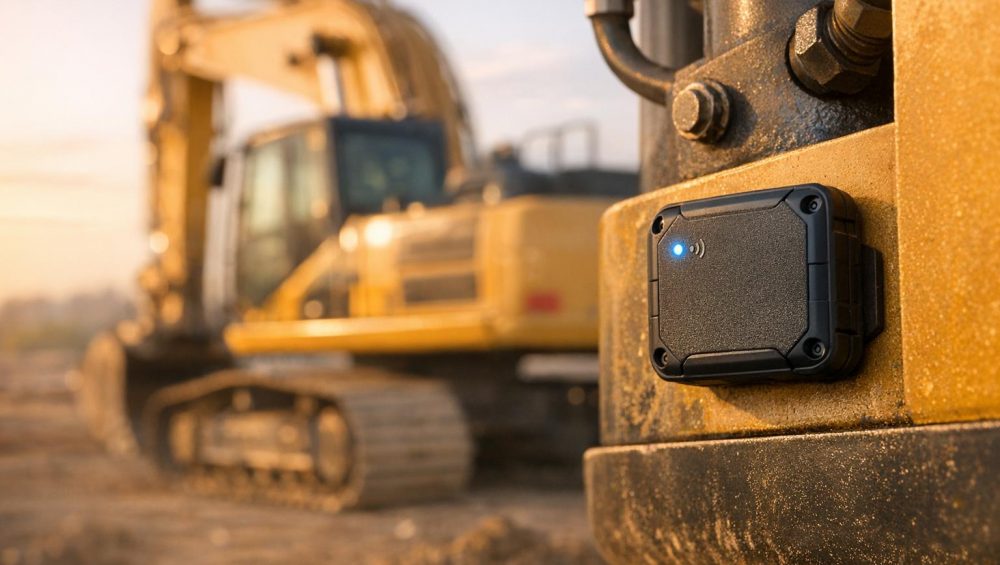
Heavy equipment theft costs U.S. construction businesses up to $1 billion annually, with individual losses often exceeding $150,000. Without GPS tracking, recovery rates are as low as 7-20%. However, tools like GPS trackers, geofencing, and real-time alerts can significantly improve recovery chances. Here’s a quick breakdown:
- Install GPS Trackers: Hidden devices can provide real-time location data, boosting recovery rates. Choose between wired or battery-powered models based on your equipment’s needs.
- Use Geofencing and Alerts: Set virtual boundaries and receive instant notifications if equipment moves unexpectedly.
- Act Fast During Theft: Share GPS data with law enforcement and provide detailed asset information for quick action.
- Choose the Right Tracker: Durable, waterproof models with long battery life and features like tamper alerts and live tracking are key.
Proactive measures like GPS tracking can save time, money, and stress, turning potential losses into recoverable assets.

Heavy Equipment Theft Statistics and GPS Tracker Recovery Rates
Police recover stolen trailer and equipment using tracking device
sbb-itb-4827db2
Step 1: Install a GPS Tracker Before Theft Occurs
Installing a GPS tracker before theft happens is the cornerstone of fast recovery efforts. Without one, recovering stolen equipment becomes almost impossible – thieves often quickly relocate or dismantle stolen assets, leading to recovery rates as low as 7% to 20%. Instead of giving law enforcement actionable data, you’re left filing reports and hoping for the best.
By installing a tracker in advance, you ensure immediate action if theft occurs. This can save you from losses that often exceed $150,000 per incident. Plus, it helps keep your projects on track, eliminating the need for costly rental equipment while waiting for insurance claims. Some insurers even waive up to $10,000 in theft deductibles for properly registered and tracked equipment. Installing a tracker isn’t just about recovery – it’s a proactive step to protect your operations and bottom line.
How to Choose the Right GPS Tracker
Picking the right GPS tracker means finding the perfect balance between durability, battery life, and stealth. The device needs to survive tough construction conditions while staying hidden from potential thieves.
Start by considering the power source. Battery-powered trackers work well for trailers and idle equipment, often lasting 7 to 10 years with optimized settings. On the other hand, hardwired units offer constant power but are easier to locate. If flexibility is key, a portable tracker can be moved between assets and hidden in less obvious spots.
Look for a tracker built to withstand harsh environments. Devices with IP67 or IP68 ratings resist dust, mud, and water effectively. Update frequency is another important factor – standard trackers might update every 1 to 10 minutes to conserve battery, while advanced models can provide location updates as often as every 3 seconds. Some systems even feature a "Recovery Mode", which switches to real-time updates when theft is detected.
Key features to prioritize include:
- Geofencing: Alerts you if equipment leaves a designated area.
- Tamper notifications: Warns if someone tries to remove or interfere with the device.
- Low-battery alerts: Ensures you’re aware of power levels at all times.
- Reliable connectivity: 4G LTE or CAT-M1 ensures smooth operation even in remote areas.
For example, Piritiz offers wireless GPS trackers specifically designed for heavy equipment and trailers. These battery-powered devices last up to 5 years, are waterproof, and can be installed in minutes without wiring. Their system includes geofencing, instant movement alerts, and 24/7 tracking via a mobile app, with subscription plans starting at $7 per month for prepaid options.
Installation Tips for Heavy Equipment
Proper installation is essential to keep your GPS tracker effective and undetected. A well-hidden device not only improves recovery chances but also ensures timely alerts and law enforcement intervention.
Good hiding spots include:
- Under the chassis
- Inside storage compartments
- Behind the rear bumper
- Within the trailer frame
Avoid obvious locations like dashboards or easily accessible panels.
"Find a good secure place for the GPS tracker inside or outside your heavy-equipment assets. The harder it is to see or reach, the better."
Before permanently installing the tracker, test its signal strength to ensure reliable GPS and cellular connectivity, even in concealed locations. Clean the mounting surface thoroughly to remove dirt, oil, or grease, ensuring adhesive or magnetic mounts stay secure despite vibrations. Use industrial-strength magnets, zip ties, screws, or brackets to firmly attach the device.
"Installing a GPS tracking device typically takes around 15 minutes per asset."
Once installed, verify the connection through your mobile app and set up geofencing around your job sites to receive movement alerts. Assign each tracker a unique asset ID in your tracking software to avoid confusion when managing multiple devices. Finally, schedule regular checks to confirm the trackers remain securely mounted and are transmitting data reliably.
Step 2: Set Up Geofencing and Alerts
Once your GPS tracker is installed, the next step is to activate geofencing and real-time alerts. This setup transforms your tracker from a simple location tool into a proactive theft detection system. By enabling alerts through SMS, email, or push notifications, you can respond instantly to unauthorized equipment movement – critical for improving recovery rates. Without these alerts, you might not even realize equipment is missing until it’s too late.
Geofencing works by creating virtual boundaries around your job sites and storage areas. If equipment crosses these boundaries, you’ll receive immediate notifications. Early detection is key, especially since an estimated 1,000 heavy equipment thefts occur every month in the United States. The ability to quickly notify law enforcement while the equipment is still in motion significantly increases the chances of recovery. Configuring geofencing and alerts is a natural next step after installing your tracker, providing an essential layer of security.
Creating Geofences for Job Sites and Storage Areas
Establishing geofences is simple but requires thoughtful planning. Using the Piritiz mobile app, you can define precise perimeters around your job sites and storage yards. The system relies on GPS coordinates to monitor whether equipment is inside or outside these virtual zones.
Start by setting up geofences around all active job sites and your main equipment storage yard. For added protection, you can create smaller geofences around specific areas, like trenches or unstable ground, to alert managers if equipment gets too close. Another smart move is to configure off-hours alerts, which notify you if equipment moves outside of designated working hours. Since thefts often happen during non-working periods, these alerts can help you catch suspicious activity when your equipment is most vulnerable.
For example, over a four-year period ending in 2025, Cable East monitored more than 400 assets using geofences and alerts. This approach led to the recovery of $2.5 million worth of equipment that might have otherwise been lost.
Setting Up Real-Time Alerts for Unauthorized Movement
Once your geofences are in place, real-time alerts complete your theft prevention strategy. These alerts can be customized to address different theft scenarios. For instance, motion sensors can detect movement even when the engine isn’t running, making them invaluable for spotting thieves who tow equipment on trailers. Ignition alerts provide instant notifications if an engine starts outside of authorized hours, and tamper alerts let you know if someone tries to disable or remove the GPS device.
To ensure rapid response, configure alerts to be sent via SMS, email, and push notifications to key personnel. Adjust the update rate for your tracker based on risk levels – set it to faster intervals during high-risk periods and slower intervals for lower-risk situations or unpowered equipment. If theft is suspected, you can manually increase the update rate to provide real-time location data. Piritiz trackers offer flexible update options through their mobile app, and subscription plans start at just $7 per month, making this an affordable yet effective solution.
A real-world example of this system in action comes from June 2018, when Eran Blitzblau, owner of Blue Lightning Logistics, successfully recovered two stolen trailers worth about $70,000 each. By using his tracking dashboard, he located the trailers in real time and shared live tracking data with law enforcement, leading to their immediate recovery.
"Being able to recover the equipment shows our insurance carrier… that we’re proactive about watching our equipment and taking care of it, and secondly, that we’re limiting our damages and claims." – Eran Blitzblau, Owner, Blue Lightning Logistics
This highlights how properly configured alerts and quick access to location data can make all the difference in preventing a total loss.
Step 3: What to Do When Theft Occurs
When you discover that your heavy equipment has been stolen, it’s time to act fast. The odds of recovery without tracking technology are slim – only about 20% of stolen machinery is ever found. However, if you’ve equipped your equipment with a GPS tracker and set up alerts, you’re already ahead of the game.
Start by securing any remaining equipment to prevent further losses. Then, gather all relevant documentation, including the year, make, model, color, PIN, serial numbers, and photos of unique markings. This information will be crucial for both police reports and insurance claims.
Contact local law enforcement immediately to file an official police report. Be sure to mention that the stolen equipment is equipped with a GPS tracker, as this can help expedite the process of obtaining a search warrant. Provide officers with your complete inventory details, including photos and real-time GPS coordinates from your tracking system. At the same time, notify your insurance provider within 24 hours and report the theft to the National Equipment Register (NER).
Once you’ve informed the authorities, your GPS tracker becomes your best tool for recovering the stolen equipment.
Using GPS Tracking to Locate Stolen Equipment
After filing your report, use your GPS tracker to monitor the equipment’s location. Platforms like the Piritiz mobile app give you 24/7 access to location data, making it easy to track movement patterns and share precise coordinates with law enforcement.
Most stolen equipment is recovered within 65 miles of where it was taken. If you notice that the equipment is on the move, keep an eye on its direction and provide real-time updates to the police. Some tracking platforms even allow you to generate a live tracking link that can be shared directly with responding officers.
For example, in 2024, a contractor in Sterling, Virginia, used GPS tracking to pinpoint the location of his stolen tools. This led the Howard County Police Department to uncover a massive cache of over 15,000 stolen items, valued between $3 million and $5 million, impacting at least 80 victims. This case highlights how effective GPS data can be in recovering stolen assets.
In addition to GPS tracking, set up keyword alerts on platforms like Facebook Marketplace, Craigslist, and eBay for your equipment’s make and model. In March 2025, police departments in White Settlement and Dallas recovered over $150,000 in stolen equipment after a theft victim spotted the items listed online and notified detectives. It’s also a good idea to alert local scrap yards, pawn shops, and equipment dealerships with photos and serial numbers, as stolen goods are often sold locally for quick cash.
All of this information is essential for coordinating with law enforcement to ensure a speedy resolution.
Working with Law Enforcement
Once your GPS data confirms the equipment’s location, shift your focus to working closely with law enforcement. Providing detailed and accurate information can significantly speed up the recovery process. Officers need specific details to confirm ownership and distinguish your equipment from similar, legally owned machinery.
| Information Category | Specific Details to Provide |
|---|---|
| Primary Identifiers | VIN, PIN, Serial Number, License Plate |
| Physical Description | Year, Make, Model, Color, Unique Markings |
| GPS Data | Real-time Coordinates, Last Known Location, Travel History |
| Supporting Evidence | Recent Photos, Purchase Date, Theft Circumstances |
If necessary, share your tracking platform credentials with officers so they can monitor the equipment’s movement on their own. The GPS data you provide can serve as "probable cause", enabling detectives to secure search warrants for private storage units, homes, or scrap yards where the stolen equipment might be hidden. Don’t forget to record the case number from your police report – you’ll need it for registering the theft with the NER and for filing your insurance claim.
Never attempt to recover the equipment yourself. Confronting thieves can be dangerous and may interfere with the investigation. Instead, focus on equipping law enforcement with all the data they need to handle the recovery safely and effectively.
Step 4: Comparing GPS Tracker Options
Choosing the right GPS tracker comes down to understanding the differences between wired and battery-powered models. Each type has unique benefits depending on how your equipment is used and powered.
Wired vs. Battery-Powered GPS Trackers
Wired trackers connect directly to your equipment’s electrical system, ensuring a constant power source. This allows for continuous, real-time location updates without the hassle of recharging. They’re ideal for powered machinery like excavators, bulldozers, and skid steers. However, installation can be more complex as it involves integrating the device with the machine’s electrical system. One downside is that these trackers can be disabled if the wires are cut or the power supply is interrupted.
Battery-powered trackers, on the other hand, rely on internal batteries that can last anywhere from 12 months to 5 years. These are much easier to install – just attach them with magnets or screws in a hidden spot. Their discreet placement makes them harder to locate and tamper with, which is a major advantage for unpowered assets like trailers, generators, and attachments. While many models conserve battery life by checking in periodically (e.g., once a day), some can switch to real-time tracking if theft is suspected.
| Feature | Wired GPS Trackers | Battery-Powered GPS Trackers |
|---|---|---|
| Power Supply | Equipment’s electrical system | Internal battery or solar energy |
| Update Frequency | Real-time/continuous | Periodic (e.g., daily) or real-time on demand |
| Installation | Complex (requires wiring) | Simple (magnetic, bolt-on, adhesive) |
| Concealment | Moderate | High (can be hidden anywhere) |
| Maintenance | No battery maintenance | Requires battery upkeep |
| Best For | Powered machinery, trucks | Trailers, attachments, unpowered tools |
Once you’ve decided on the type of tracker, focus on features that enhance tracking and recovery.
Key Features to Look for in a GPS Tracker
To maximize the effectiveness of your GPS tracker, look for features that improve security and usability. Waterproofing is non-negotiable – opt for devices with an IP67 rating or higher to ensure durability in rain, mud, and tough job site conditions. For battery-powered models, prioritize long battery life. Some devices, such as those from Piritiz, offer up to 5 years of battery life, minimizing maintenance and keeping your assets protected even during downtime.
Geofencing is another must-have. This feature lets you set up virtual boundaries around your job sites or storage areas, sending instant alerts if equipment moves outside the designated zone. Tamper and movement alerts are equally important. Devices equipped with accelerometers can detect unauthorized movement or attempts to remove the tracker. For added stealth, choose wireless trackers with magnetic mounts that can be hidden under the chassis, inside bumpers, or other inconspicuous spots.
Subscription costs are another factor to consider. Some trackers charge monthly fees ranging from $9 to $18.98, while others offer annual plans or even no ongoing fees. Piritiz provides flexible pricing, starting at $7/month with prepaid plans or $9.95/month on a month-to-month basis, free from contracts, cancellation fees, or hidden charges. Their platform includes a mobile app for 24/7 tracking, live map updates, and instant notifications for movement or tampering – features that can make all the difference in recovering stolen equipment quickly.
Conclusion
Protecting your assets starts with proactive measures like installing hidden GPS trackers, setting geofences, and keeping detailed records of serial numbers and PINs. Without tracking tools, recovery rates linger around 20%. But with real-time GPS data, law enforcement can often locate stolen equipment within hours.
Acting quickly is key. Sharing GPS coordinates with police, notifying registries like the National Equipment Register, and keeping an eye on online marketplaces can significantly boost recovery efforts. Take the 2024 case in Sterling, Virginia, for example: real-time GPS tracking not only helped recover millions in stolen equipment but also uncovered an entire theft ring. These examples highlight how the best GPS tracker for trailer owners can make all the difference.
Choosing a tracker that resists tampering and works reliably is crucial. Portable, battery-powered models from Piritiz, for instance, offer up to 5 years of battery life, waterproof designs, and discreet setups. Plus, their pricing is flexible, starting at $7/month with no contract fees.
"The cost of implementing GPS Asset Tracking is minimal compared to potential losses from theft. One recovered asset can pay for the entire system."
– Safety Track
With theft costing the U.S. economy roughly $1 billion annually, a wireless GPS tracker equipped with real-time alerts, geofencing, and anti-tamper features provides a powerful way to recover stolen assets. By adopting these tools, you can turn potential losses into recoverable assets, protecting both your operations and your bottom line.
FAQs
How does geofencing improve the security of heavy equipment?
Geofencing adds an extra layer of security for heavy equipment by setting up a virtual perimeter around a designated area, like a construction site or storage yard. If a GPS tracker detects that the equipment crosses this boundary, an alert is instantly sent to the owner through a mobile app or dashboard. This quick notification allows for immediate action to stop theft or recover the equipment before it’s relocated too far.
One of the key advantages of geofencing is its adaptability. You can easily adjust the boundaries as projects move to new locations, giving you precise control over your equipment’s security. If a breach occurs, alerts can trigger immediate steps, such as notifying on-site staff or contacting law enforcement. This not only discourages theft but also boosts the chances of recovering stolen items by pinpointing their last recorded location.
Piritiz offers portable, wireless GPS trackers with built-in geofencing features that provide round-the-clock alerts. Designed specifically for heavy equipment, trailers, and vehicles, these trackers are battery-powered, waterproof, and deliver up to five years of battery life. Plus, they offer dependable, long-term protection with no monthly fees.
What are the benefits of using battery-powered GPS trackers for heavy equipment?
Battery-powered GPS trackers provide a practical way to monitor and secure heavy equipment. These devices are simple to set up, often relying on magnetic or adhesive mounts, which means there’s no need for hardwiring or external power connections. Equipped with batteries that can last for years – sometimes up to five – they minimize the hassle of frequent maintenance, saving both time and effort.
Built to withstand tough conditions, these trackers are durable and waterproof, making them perfect for use on construction sites or in outdoor storage areas. Thanks to their compact and discreet design, they can be easily concealed, making it harder for thieves to spot or tamper with them. With round-the-clock real-time tracking and instant alerts for theft, these trackers offer a reliable way to protect your equipment and ensure swift recovery if something goes missing. They’re a smart investment for keeping valuable assets secure and streamlining operations.
What should I do right away if my heavy equipment is stolen?
If your heavy equipment gets stolen, taking immediate action can improve the chances of getting it back:
- Contact local law enforcement right away: Share as much information as possible, such as the make, model, year, serial number, VIN, unique identifiers, photos, or GPS data. Quick action helps authorities issue alerts before the equipment is moved too far.
- Notify your insurance company: Report the theft promptly to start a claim and check what recovery or replacement costs might be covered.
- Leverage GPS tracking data: If your equipment has a GPS tracker, pull the latest location details and pass them to the police. Portable, battery-powered trackers are especially useful, offering real-time updates and geofence alerts to improve the chances of recovery.
To prevent future thefts, invest in a dependable tracking system like Piritiz. Their wireless, waterproof trackers boast a battery life of up to five years and offer 24/7 monitoring through a mobile app, making it easier to protect and recover your equipment.