GPS tracking transforms how businesses manage routes and assets by providing real-time data for smarter decisions. It helps reduce drive time by up to 30%, lowers fuel costs by 10–30%, and cuts overall expenses by 20–40%. For fleets, this means saving money, improving efficiency, and enhancing safety. Key benefits include:
- Real-time route adjustments: Respond to traffic, weather, or road closures instantly.
- Fuel and cost savings: Optimized routes reduce wasted miles and idle time.
- Enhanced asset security: Geofencing and live tracking protect trailers and equipment from theft.
- Better customer satisfaction: Accurate ETAs and live updates improve reliability and transparency.
GPS trackers, like those from Piritiz, use 4G LTE networks for fast data updates and offer features like waterproof designs, 5-year battery life, and mobile app access. These tools integrate seamlessly with routing software, helping businesses monitor vehicles, trailers, and equipment while improving overall efficiency.
How GPS Tracking Works for Route Optimization
Real-Time Data Collection and Monitoring
GPS trackers work by using signals from Global Navigation Satellite Systems (GNSS), such as the U.S. NAVSTAR system. To pinpoint a location, the device connects with signals from at least four satellites and calculates its position using a method called trilateration. This involves measuring the time it takes for signals to travel from the satellites to the device, allowing it to determine an accurate 3D location.
Once the location is calculated, the tracker sends this data to a central server or cloud-based platform via 4G LTE cellular networks. Most modern trackers provide real-time updates while balancing power efficiency. Battery-powered GPS units are especially useful for trailers, as they don’t require hardwiring but still deliver continuous tracking.
For example, Piritiz offers trailer GPS tracking systems that are waterproof, wireless, and simple to install on various trailers or equipment. These devices feature up to 5 years of battery life and can be accessed 24/7 through a mobile app, making it easy to monitor your assets – whether they’re parked at a depot or on the move.
Dynamic Data Integration for Routing
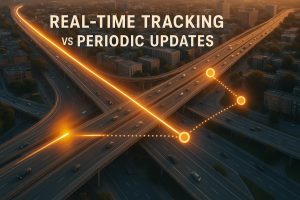
Real-time GPS data is a game-changer for dynamic route adjustments, especially when combined with external factors like traffic updates, weather conditions, and road closures. Routing software can integrate live feeds from traffic monitoring services and weather APIs to adapt routes on the fly, minimizing delays and ensuring efficiency . For instance, if a sudden road closure occurs, the system can instantly reroute drivers to avoid disruptions.
Historical GPS data also plays a crucial role in improving route planning. By examining past traffic trends – such as rush hour congestion or delays near school zones – routing algorithms can predict and plan around common bottlenecks. This proactive approach helps create more efficient initial routes and reduces unnecessary mileage.
For fleets managing trailers and equipment, geofencing adds another layer of functionality. Managers receive alerts if a trailer moves outside a designated area, enhancing both theft prevention and operational readiness . Together, these features ensure that multi-stop routes are not only planned efficiently but also adapt seamlessly to real-world conditions.
Benefits of GPS-Enabled Route Sequencing
Improved Efficiency and Reduced Fuel Costs
Using GPS tracking systems can significantly cut down on wasted miles and improve the order of stops, leading to measurable savings. When routes adjust in real time to account for traffic and road conditions, driving time can drop by 20% to 30%. This reduction directly impacts fuel consumption, with fleets typically seeing fuel costs decrease by 10% to 30% after implementing GPS fleet management.
Additionally, these systems allow for real-time monitoring of driver behavior and idle times, which can lower fuel usage by up to 30% and cut idle time by as much as 40%. For example, idling at stops unnecessarily burns fuel, but identifying these patterns enables fleets to coach drivers for better habits. Considering that fuel expenses account for about 60% of a fleet’s overall operating budget, even small improvements can result in substantial cost reductions.
For trailers and equipment frequently moved between job sites, trailer GPS tracking systems offer critical visibility into asset usage. Companies like Piritiz provide waterproof, wireless GPS trackers for trailers, boasting up to 5 years of battery life. These devices make it easy to monitor both powered and unpowered assets. With precise tracking, fleets can reduce unauthorized movements, curb unnecessary mileage, and improve overall efficiency. Beyond operational benefits, these systems also enhance security and driver safety by keeping assets where they belong.
Better Driver and Asset Safety
Real-time GPS tracking plays a vital role in securing high-value assets, especially trailers and equipment left unattended at job sites or depots. With equipment thefts rising by over 30% since 2022, theft prevention has become more critical than ever. Trailer GPS trackers provide continuous location updates and instant alerts if unauthorized movement is detected.
Geofencing adds another layer of protection by creating virtual boundaries around specific areas like depots or job sites. If a trailer moves outside these zones during off-hours, managers receive immediate alerts via SMS or mobile apps, allowing for swift action with exact location details.
Monitoring driver behavior also improves safety. Tracking patterns like speeding and harsh braking can enhance safety scores by 30% to 50%, giving managers the opportunity to provide timely coaching. Some systems even offer real-time crash notifications, enabling faster emergency responses to precise locations.
On top of that, GPS systems can track engine diagnostics and mileage, sending maintenance alerts before mechanical issues arise. This proactive approach not only keeps vehicles in peak condition but also reduces maintenance costs by 15% to 25%. As Verizon Connect emphasizes, "By not tracking your most important equipment, you could be putting your business and employees at risk".
Increased Customer Satisfaction
Better route sequencing and enhanced safety measures don’t just protect assets – they also lead to happier customers. Accurate delivery windows foster trust, and GPS tracking makes this level of precision achievable. Instead of providing vague timeframes, dispatchers can share real-time ETAs that adjust automatically based on traffic or other delays. If a driver hits unexpected congestion, the system recalculates arrival times instantly, keeping customers informed without the need for manual updates.
Live tracking features further boost transparency. Customers can see real-time driver locations and updated ETAs, reducing the stress of waiting and cutting down on "Where’s my delivery?" calls.
Flexibility is another key advantage. GPS tracking allows routes to adapt to changing conditions, improving reliability. Andy Yearout, Senior Vice President of Supply Chain at Mohawk Industries, shared how GPS tracking transformed their operations: "Samsara enabled conversations with drivers about route deviations. We learned our plan wasn’t always correct based on external factors… so drivers would adjust their route in real time". This adaptability ensures that commitments are met even when challenges arise. For fleets using trailer GPS systems, the added visibility ensures that the right trailer is available exactly when and where it’s needed, further enhancing customer satisfaction.
Implementing GPS Tracking for Route Sequencing
Choosing the Right GPS Tracking Device
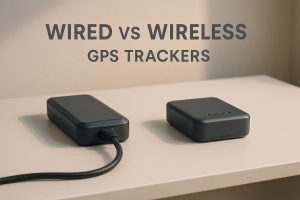
When selecting GPS tracking devices, it’s important to match them to your operational needs. Battery-powered devices are portable and ideal for rental fleets or trailers that are frequently swapped. On the other hand, hardwired devices provide continuous tracking without the hassle of battery maintenance, making them better suited for high-volume fleets that need round-the-clock visibility.
Durability is another key consideration, especially for trailer tracking systems. Devices with IP65 or IP67 ratings can handle harsh conditions like rain, snow, extreme temperatures, and constant road vibrations. For installation, you have several options: magnetic mounts for quick deployment, DIY screw-on kits for semi-permanent setups, or professional embedded installations for maximum security against tampering. To minimize theft risks, place trackers in discreet locations such as inside the trailer frame, under the tongue, or behind a wheel well.
Connectivity also plays a crucial role. Devices with 4G LTE technology transmit data up to 10 times faster than older 3G models, ensuring accurate real-time updates for route sequencing. Companies like Piritiz offer durable GPS trackers with features like extended battery life (up to five years), waterproof construction, and 24/7 tracking via mobile apps. These tools are suitable for both powered vehicles and unpowered trailers, making it easier to integrate with route optimization software.
Integrating GPS with Route Optimization Software
Once you’ve chosen the right devices, the next step is integrating them with routing software to allow real-time adjustments. Using open APIs, you can overlay GPS data onto your existing software, creating a seamless workflow for dispatchers. This integration helps compare planned routes with actual driver paths, revealing inefficiencies and areas for improvement.
Another powerful tool is geofencing, which creates virtual boundaries around depots, job sites, and customer locations. These zones automate notifications for arrivals and departures, enhancing dispatch accuracy and keeping customers informed without manual intervention. Additionally, mobile app integration ensures that both drivers and managers receive real-time updates on routes and estimated times of arrival (ETAs).
A real-world example comes from Mohawk Industries, which used Samsara Fleet Telematics to improve their first-mile fleet operations. Covering five million miles annually in Georgia, they identified route deviations and adjusted plans based on external factors like customer delivery windows. This approach reduced their total mileage by 4.2 million miles, saving over $7.75 million annually.
"Samsara enabled conversations with drivers about route deviations. We learned our plan wasn’t always correct based on external factors, like customer delivery windows, so drivers would adjust their route in real time." – Andy Yearout, Senior Vice President, Supply Chain, Mohawk Industries
Training Staff and Monitoring Performance
Successful GPS tracking implementation goes beyond technology – it requires a well-trained team and consistent performance monitoring. Clearly communicate the benefits to your staff, emphasizing how GPS tracking enhances safety, reduces paperwork, and simplifies their work instead of framing it as a surveillance tool. Provide both drivers and dispatchers with mobile app access so they can view routes, ETAs, and performance metrics in real time.
Dispatchers should be trained to leverage live location data for dynamic routing, allowing them to adjust routes in response to traffic, weather, or canceled orders instead of sticking to static daily plans. For drivers, consider introducing a scoring system to monitor behaviors like speeding, hard braking, and rapid acceleration. This helps identify risky habits early and promotes safer driving. For instance, Midwest Respiratory and Rehab saw an 80% reduction in safety incidents after adopting fleet management technology.
To prevent tracking gaps and ensure timely interventions, configure automated alerts for events like geofence breaches, speeding, unauthorized movement, and low battery levels. Use historical data to spot trends, such as consistently delayed routes or top-performing drivers, and refine your route sequencing strategies over time.
sbb-itb-4827db2
How Route Optimization Boosts Fleet Revenue by $700K
Measuring Success with GPS Tracking
Static vs GPS-Driven Routing: Key Differences and Benefits
Key Metrics to Track
To measure the impact of GPS tracking, focus on metrics like fuel consumption, delivery times, and asset utilization. Fuel alone accounts for about 60% of a fleet’s operating costs, so even small improvements in routing or reducing idle time can lead to major savings. Delivery and arrival times, along with the accuracy of estimated time of arrival (ETA), are crucial for assessing how well your routes align with customer expectations. Asset utilization, which compares active work time to idle time, helps determine whether vehicles and trailers are being used effectively.
Another critical metric is dwell time, which identifies delays caused by unscheduled stops or customer-related issues, offering insights into productivity. Job completion data also reveals gains in efficiency – many companies report up to a 10% boost in productivity after adopting GPS tracking. Additionally, geofencing technology sends alerts when vehicles approach their destinations, streamlining operations by allowing teams to prepare shipments and reduce driver wait times.
"By providing increased visibility into fleet operations, GPS tracking gives you more information about your vehicles so you can make more impactful decisions for the business and its bottom line." – Samsara
A great example of real-world results comes from Flying Star Transport. After implementing GPS tracking and geofencing, they reduced their average time per load on a 130-mile haul from five hours to four hours on a 120-mile haul – a 15% improvement in efficiency. Furthermore, 40% of businesses report achieving a return on investment within six months of implementing GPS tracking, with another 35% seeing ROI within 7 to 12 months.
These metrics demonstrate how GPS tracking transforms static planning into dynamic, performance-focused routing.
Static Routing vs. GPS-Driven Routing
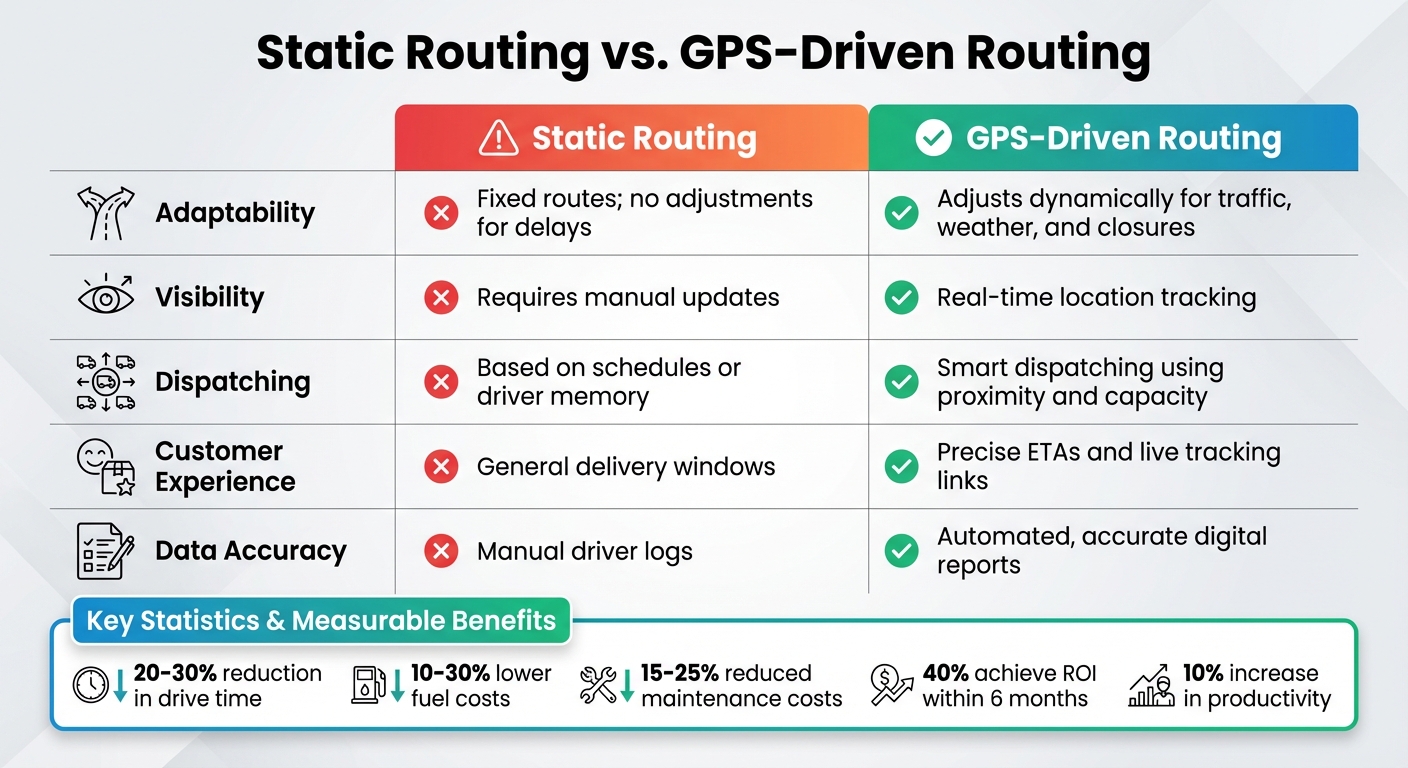
When comparing traditional static routing to modern GPS-driven methods, the advantages of GPS tracking become clear. Static routing relies on manual planning and doesn’t adapt to real-time conditions, while GPS-driven systems adjust dynamically to factors like traffic, weather, and road closures. Analyzing planned routes against GPS-recorded paths can uncover inefficiencies and trends that static methods often miss.
| Feature | Static Routing | GPS-Driven Routing |
|---|---|---|
| Adaptability | Fixed routes; no adjustments for delays | Adjusts dynamically for traffic, weather, and closures |
| Visibility | Requires manual updates | Real-time location tracking |
| Dispatching | Based on schedules or driver memory | Smart dispatching using proximity and capacity |
| Customer Experience | General delivery windows | Precise ETAs and live tracking links |
| Data Accuracy | Manual driver logs | Automated, accurate digital reports |
This comparison highlights how GPS technology elevates route planning from rigid schedules to flexible, efficient operations. Historical GPS data can also reveal inefficiencies or unusual activities that static routing might overlook. Moreover, GPS-driven scheduling often allows fleets to handle more deliveries without increasing the number of vehicles.
These benefits apply across various fleet types. Whether you’re tracking trailers with dedicated GPS units or monitoring other fleet vehicles, leveraging accurate, real-time data is key to optimizing routes and improving overall efficiency.
Conclusion
GPS tracking has revolutionized route planning, turning rigid schedules into adaptable, data-driven processes. This shift has led to noticeable improvements in drive times, fuel consumption, and maintenance expenses, with many organizations seeing a full return on investment within 12 to 18 months.
But it’s not just about cutting costs. GPS tracking also boosts operational security and agility. Real-time updates allow for smarter dispatch decisions based on driver location and capacity, while geofencing technology can reduce unauthorized vehicle use by up to 95%.
For businesses managing trailers and equipment, specialized trailer GPS tracking systems provide critical insights. With nearly 6 million trailers in operation across the U.S. – and trailers outnumbering trucks three to one – knowing exactly where each asset is can eliminate wasted time searching for equipment and improve utilization rates by 15–35%. The growing need for accurate trailer tracking underscores the importance of dependable solutions.
Piritiz offers tailored GPS tracking devices for trailers, vehicles, and equipment. These battery-powered, waterproof devices provide up to five years of battery life and 24/7 tracking through a user-friendly mobile app. Plus, they come with flexible, competitive pricing to suit different business needs.
FAQs
How does GPS tracking help fleets save on fuel costs?
Fleet managers can cut down on fuel expenses by using GPS tracking to streamline routes, reducing unnecessary mileage and fuel consumption. The system also offers real-time insights to help limit idle time, keep an eye on driver habits like speeding or aggressive driving, and send alerts for maintenance issues that can waste fuel – think underinflated tires or engine troubles.
With these tools in place, fleets can save as much as 30% on annual fuel costs, making GPS tracking a practical choice for improving efficiency and managing expenses effectively.
What features should I look for in a GPS tracker to improve route optimization?
When selecting a GPS tracker to improve route planning, prioritize tools that deliver precise, real-time data and practical insights. A tracker with live location tracking is essential, allowing you to monitor trailers in real time and quickly adjust routes when necessary. Geofencing features are equally important, enabling you to set virtual boundaries and receive alerts when a trailer crosses those limits – helpful for avoiding theft or unplanned detours.
If you manage multi-stop routes, consider a tracker with built-in route planning and optimization tools. These can help determine the best stop sequences, estimate travel times, and adjust for delays. Durability is another key factor – look for a waterproof, wireless device with a battery life of up to five years to ensure it can withstand tough conditions. Finally, an easy-to-use mobile app or web dashboard simplifies route management, provides analytics, and helps streamline operations.
How does real-time GPS tracking improve delivery services and customer satisfaction?
Real-time GPS tracking transforms delivery services by offering precise, up-to-the-minute location updates and estimated arrival times. This means dispatchers can keep customers informed with accurate ETAs and notify them of any unexpected delays, fostering trust through transparency.
By providing consistent updates and streamlining route sequencing, businesses can operate more efficiently, cutting delivery times and enhancing the customer experience. GPS tracking also plays a key role in optimizing multi-stop delivery routes, minimizing delays and boosting the overall quality of service.