Managing a small fleet can be challenging, but GPS tracking simplifies it. Whether you’re preventing theft, improving efficiency, or cutting costs, GPS trackers offer solutions tailored to your needs. Here’s what you need to know:
- Theft Prevention: GPS trackers with geofencing and motion alerts help recover stolen trailers quickly. In 2020, over 22,000 trailers were stolen in the U.S., costing billions. Some providers claim 100% recovery rates for tracked assets.
- Efficiency Gains: Trackers identify idle vs. active trailers, optimize routes, and cut fuel costs by 15–20%. Automated maintenance reminders prevent breakdowns and keep your fleet running smoothly.
- Battery Life: Update frequency impacts battery life. Daily updates can last over 10 years; real-time updates every 60 seconds may last 38 days. Advanced trackers use sleep modes to extend battery life.
- Tracker Options:
- Battery-Powered: Ideal for unpowered assets like trailers. Easy to install and portable but requires periodic battery checks.
- Hardwired: Powered by a vehicle’s electrical system, perfect for constant real-time tracking without recharging.
Choose a tracker with features like real-time alerts, weatherproof design, and easy installation to secure and monitor your fleet effectively. Whether it’s battery-powered for flexibility or hardwired for continuous updates, GPS tracking ensures your assets are always accounted for.
GPS Tracking for Small Fleets $199 yr OBD. Save $50 off first year. Sale ends 12/31/24. Limited Qty
sbb-itb-4827db2
Battery Life in GPS Trackers
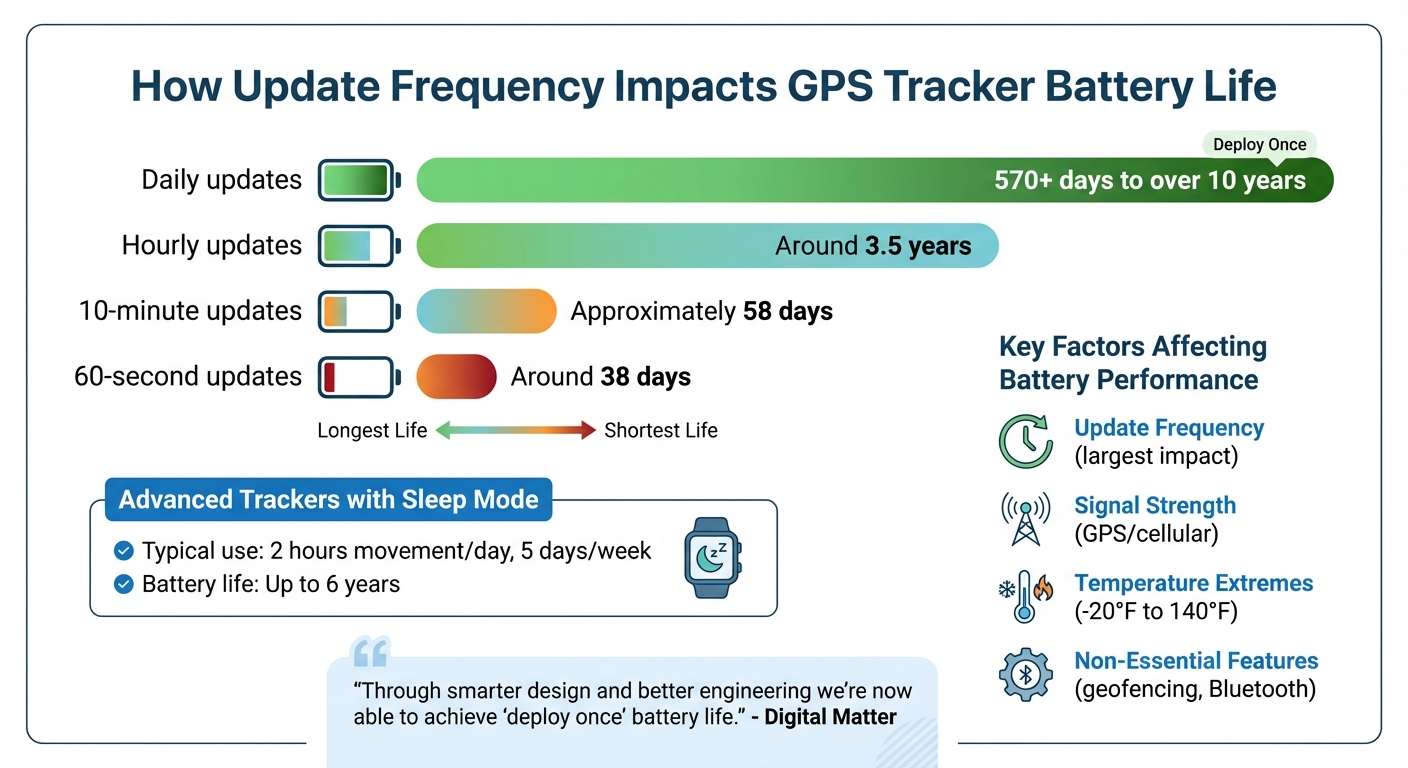
GPS Tracker Battery Life by Update Frequency Comparison Chart
Battery life isn’t just another feature – it’s a cornerstone of reliability. For small fleet operators, a GPS tracker that constantly needs recharging can cause unnecessary downtime, increase labor costs, and leave gaps in tracking coverage.
Let’s break down how long these batteries last and what factors can influence their performance.
How Long Does a Trailer GPS Tracker Battery Last?
The lifespan of a trailer GPS tracker battery depends heavily on how often it updates its location. For example, a tracker set to send updates once a day can last over 10 years on a single battery. But if that same tracker is configured for real-time updates every 60 seconds, the battery might only last about 38 days .
Here’s a quick look at how update frequency impacts battery life:
| Update Frequency | Battery Life Range |
|---|---|
| Daily updates | 570+ days to over 10 years |
| Hourly updates | Around 3.5 years |
| 10-minute updates | Approximately 58 days |
| 60-second updates | Around 38 days |
Some advanced trackers are designed to conserve power by switching to a sleep mode when idle. When movement is detected, they activate high-frequency tracking. Under typical use – about 2 hours of movement per day, 5 days a week – this setup can extend battery life to roughly 6 years.
"Through smarter design and better engineering we’re now able to achieve ‘deploy once’ battery life, significantly reducing operating costs and enabling deployments at scale." – Digital Matter
For small fleet operators, this means you can install a tracker and forget about it for years, avoiding the hassle of frequent battery replacements or maintenance – even in tough weather conditions.
What Affects GPS Tracker Battery Performance?
Several factors influence the battery life of a GPS tracker beyond just update frequency:
- Update Frequency: This is the biggest factor. Each time the tracker calculates its position and sends data through the cellular network, it uses power. Short update intervals significantly drain the battery .
- Signal Strength: Poor GPS or cellular signal can drain the battery faster, especially if the tracker is placed inside a thick metal enclosure. Positioning it near windows or within plastic casings can help maximize battery efficiency.
- Temperature Extremes: Batteries perform poorly in extreme temperatures. Anything below –20°F or above 140°F can degrade battery capacity and slow its performance. Most high-quality trackers use Lithium Thionyl Chloride (LTC) batteries, which are better suited for extreme conditions and have lower self-discharge rates .
- Non-Essential Features: Features like geofencing, Bluetooth, or high-frequency impact detection can drain the battery unnecessarily. Disabling these features and opting for less frequent updates – like daily or hourly instead of real-time tracking – can stretch battery life from weeks to years, especially for static assets like parked trailers.
Battery-Powered vs. Hardwired GPS Trackers
Choosing the right GPS tracker for your fleet involves weighing ease of installation against the need for uninterrupted tracking. Both battery-powered and hardwired options have their strengths, depending on your specific needs.
Benefits of Battery-Powered GPS Trackers
Battery-powered GPS trackers are perfect for unpowered assets like trailers, shipping containers, and equipment. These trackers are easy to install using built-in magnets or industrial adhesives, making them portable and quick to deploy. This flexibility allows for seamless reallocation between assets, which is especially useful for rental fleets. Another advantage? Their lack of wiring makes them harder to spot and tamper with, allowing for discreet placement in spots like frame rails, behind wheel wells, or under the trailer tongue.
In a real-world example from September 2025, James R., a contractor from Ohio, successfully recovered his stolen trailer and tools. Thanks to a battery-powered tracker housed in a magnetic case under the frame, he received an instant motion alert and was able to provide the police with GPS coordinates. The trailer was found two towns away, fully intact.
"My trailer was stolen from a job site overnight. Because I had the Spark Nano installed in a magnetic case under the frame, I got an alert the second it moved. I gave the police the GPS coordinates, and they found it two towns over, with all my tools still inside." – James R., Contractor in Ohio
While these trackers are highly convenient, they do require regular battery checks. Monitoring and occasionally recharging or replacing batteries is a necessary trade-off for their portability and ease of use.
When to Use Hardwired GPS Trackers
Hardwired GPS trackers connect directly to a vehicle’s electrical system – whether through tail lights, an OBD-II port, or the battery – ensuring a constant power supply. This eliminates the need for manual charging, making them ideal for fleet vehicles like trucks, vans, or powered machinery that are frequently in motion.
With continuous power, hardwired trackers excel at real-time tracking. They can provide updates every 5 to 60 seconds, delivering precise details about location, speed, and even engine diagnostics. This level of detail is invaluable for delivery fleets or vehicles carrying high-value cargo.
Installation is straightforward, often taking less than 15 minutes with quick-connect kits. Once installed, these devices require little maintenance, making them a reliable "set-and-forget" solution. Some hybrid models even feature a backup battery, allowing them to operate for 7 to 10 days after being disconnected from the primary power source, such as when a trailer is unhitched.
"The waterproof fleet tracker will run off the power of trailer tail lights or limited power source… when it’s disconnected from the hauler, it still has power [via backup battery]." – GPS and Track
For fleets that need constant updates without the hassle of recharging, hardwired trackers are the way to go. However, for assets like unpowered trailers or equipment used less frequently, battery-powered trackers offer a simpler and more cost-effective solution.
Key Features in GPS Trackers for Small Fleets
Managing a small fleet comes with its own set of challenges, and having the right GPS tracker can make a world of difference in keeping your assets secure. But not all trackers are created equal. Knowing the key features to look for can help you make an informed decision and maximize your investment.
Real-Time Tracking and Alerts
Real-time tracking provides updates every 3 to 5 seconds, giving you precise location data and enabling quick action in the event of theft. Features like geofencing and motion alerts add an extra layer of security by keeping you informed of any unauthorized activity.
With geofencing, you can set virtual boundaries around key locations, such as job sites, depots, or parking areas. If a trailer crosses those boundaries during off-hours, you’ll receive an immediate alert, allowing you to act fast.
Motion detection alerts are another safeguard, notifying you when an asset moves without permission. This is particularly useful for contacting law enforcement, as you can provide exact GPS coordinates for recovery.
Some advanced trackers also include a theft recovery mode. When activated, this mode switches to high-frequency updates, delivering second-by-second location data to help recover stolen assets quickly. Additional alerts for overspeeding, impacts, and low battery levels further enhance safety and help you stay ahead of maintenance needs.
These features form the backbone of a strong asset management system, ensuring your fleet remains secure and efficient.
Durability and Weatherproof Design
Trailers often face tough conditions – rain, snow, dust, mud, extreme temperatures, and constant vibrations. A GPS tracker built to handle these challenges is essential for reliable performance and asset protection.
Look for devices with IP67 or IP68 ratings. IP67-rated trackers can resist dust and temporary water immersion, while IP68 models offer even greater protection against harsh environments.
Temperature tolerance is another critical factor. High-quality trackers can operate reliably in a wide range – from -22°F to 140°F – ensuring they perform consistently whether it’s the heat of summer or the dead of winter.
Impact resistance is also key. Many premium trackers come with an IK06 rating, designed to withstand physical shocks. Rugged housings with built-in antennas further protect the device from road debris and rough handling. This durability ensures that your tracker keeps working, even in the most demanding conditions.
"Rain, dust, and extreme temperatures can damage trailer GPS trackers. A weatherproof, rugged device ensures reliability in any environment." – LandAirSea
Easy Installation and Portability
For small fleets, ease of installation is a must. A tracker that’s quick to deploy minimizes downtime while offering flexibility for various assets. Portable, battery-powered designs with versatile mounting options make setup fast and hassle-free.
Many portable trackers can be attached using magnets, adhesives, or cable ties, making them compatible with both metal and non-metal surfaces. This flexibility allows you to move the tracker between different assets as needed. Discreet installation options, like mounting on frame rails or behind wheel wells, also help protect the device from tampering.
Most modern trackers feature a plug-and-play design, requiring no wiring or special tools. Simply charge the device, activate it through a mobile app, and mount it in place. Many models are ready to go in under 60 seconds, making them ideal for small fleets looking for quick and effective solutions.
How to Install a Trailer GPS Tracker
Installation Steps
Installing the best GPS tracker for trailer owners is is straightforward and only takes a few minutes. You won’t need any special tools, as most devices are designed for quick and easy setup.
Start by fully charging the tracker before mounting it. This ensures you get the maximum battery life right from the start. Many trackers are shipped in the "OFF" position to comply with shipping regulations, so you might need a flat-blade screwdriver to turn the internal power to "ON." Look for LED indicators – typically, a blue light confirms a cellular connection, while a green light shows a GPS signal.
Next, register your tracker through the mobile app or web portal. Use the device ID to link it to your account. Once the device is activated, clean the mounting area thoroughly. Removing dirt, grease, and debris is crucial to ensure adhesives or magnets stick securely.
When it’s time to mount, you have a few options. For metal surfaces, the built-in magnets work well. If you’re mounting on aluminum, use high-strength double-sided tape or a reliable adhesive like 3M Marine 5200 polyurethane. For a more permanent setup, secure the tracker with heavy-duty zip ties or stainless steel self-tapping screws. Tighten screws by hand to avoid damaging the O-ring seal, which keeps the device weatherproof.
After mounting, test the tracker by sending a test ping through the app. Confirm that the location appears accurately on the map. This quick step ensures everything is functioning as it should before you leave the trailer unattended.
With the tracker installed and working, here’s how to ensure it performs at its best. Choosing a long battery life GPS tracker is the first step toward reliable monitoring.
Placement and Performance Tips
Where you place the tracker makes a big difference in signal strength and security. To maintain a strong signal, avoid mounting it directly on solid metal surfaces. For the best reception, position the tracker with the label side facing the sky. If installing it underneath a metal trailer, the device will rely on GPS signals bouncing off the ground.
Some ideal exterior spots include under the trailer tongue, inside the trailer frame, behind a wheel well, or under the axle. These locations keep the tracker hidden while still allowing it to receive a reliable signal. Avoid placing it inside fully enclosed metal compartments like toolboxes or trunks, as these can block GPS signals.
"If thieves can’t see it, they can’t remove it. Hidden trackers also help you monitor trailers more securely and increase your odds of recovering stolen trailers." – Todd Morris, Founder and CEO, BrickHouse Security
For extra security, use heavy-duty zip ties as a backup for trackers mounted in areas like wheel wells or under the frame. This prevents the device from falling off due to road vibrations. After installation, take a short test drive (15–30 minutes) to confirm the tracker provides accurate, real-time data. Finally, set up low-battery alerts via SMS or email so you’re notified if the device is running low on power, ensuring it stays online when you need it most.
Conclusion
Managing a fleet effectively depends on dependable tracking, straightforward installation, and devices built to perform. A long-lasting battery ensures your trackers stay operational with minimal upkeep, reducing interruptions caused by frequent charging. Features like real-time tracking, geofencing alerts, and weatherproof designs work together to boost efficiency and keep your equipment secure in all conditions.
"The best unpowered GPS asset trackers have one thing in common: a long battery life." – Hapn
Piritiz GPS trackers are tailored for small fleets seeking affordable, no-contract options. With a battery life of up to 5 years, no activation fees, and plans starting at just $7 per month, you get reliable tracking without hidden charges or lengthy commitments. Whether you’re overseeing trailers, equipment, or vehicles, these trackers deliver the performance and reassurance you need to keep operations running smoothly.
Take advantage of low-battery alerts, customize update frequencies to match asset usage, and mount devices where they can maintain strong signals. With the right tracker, you’ll have round-the-clock visibility and the confidence that your assets are always accounted for.
FAQs
How can GPS trackers help protect trailers from theft?
GPS trackers are a game-changer when it comes to keeping your trailer safe. They provide real-time location tracking and send instant alerts if your trailer is moved without permission or leaves a designated area (geofence). This means you can act fast to recover your trailer and involve law enforcement if necessary.
Designed with features like long-lasting batteries and portable builds, these devices are built to keep working whether your trailer is in use or stored away for long periods. They’re an effective way to stay one step ahead of theft, giving you the confidence that your valuable trailer is secure at all times.
What affects the battery life of a GPS tracker?
The battery life of a GPS tracker is influenced by a mix of factors. One major element is how often the device updates its location – frequent updates consume more power. Signal strength also matters; weaker GPS or cellular signals force the tracker to work harder, draining the battery faster. Features like sleep modes or geofencing can help conserve energy by reducing activity when the device isn’t in use.
Another critical aspect is the tracker’s battery capacity and how efficiently its hardware operates. To get the most out of your device’s battery, try extending the time between location updates and activate any available energy-saving options. These small adjustments can make a noticeable difference.
When is it better to use a battery-powered GPS tracker instead of a hardwired one?
A battery-powered GPS tracker is a practical choice for situations where your trailer or equipment lacks a steady power source. These trackers are built for portability, featuring extended battery life and the ability to keep tabs on unhitched trailers or assets in hard-to-reach areas. Plus, they’re simple to set up and often engineered to handle harsh weather conditions.
This type of tracker is ideal if you’re looking for a wireless option that requires minimal effort to install, especially for equipment or trailers that are frequently relocated or stored without access to power. Some models boast batteries that can last up to 5 years, making them a dependable, low-maintenance solution for tracking your valuable assets.